Content
U.S. warehouse costs climbed from $8.31 per square foot in 2024 to $9.47 in 2025—and available space keeps shrinking. For operations managers, that gap between what you're paying and what you're actually using has never been more expensive to ignore. The good news: most warehouses are sitting on untapped capacity without realizing it. The solution rarely involves building more square footage. More often, it comes down to using what you already have far more intelligently.
Most warehouses operate between 40% and 80% utilization—and that range is intentional. Running at 100% isn't the goal, because you need buffer space for worker safety, equipment movement, and inventory fluctuations. But many facilities fall well below even the 40% mark, leaving enormous value trapped in underused corners and poorly configured aisles.
The global warehouse market reached $1.08 trillion in 2024 and is projected to hit $1.72 trillion by 2030. E-commerce alone demands three times the logistics space of traditional retail for the same sales volume. That pressure means every square foot needs to work harder—not just for cost reasons, but to keep pace with fulfillment expectations. An 80% utilization rate is widely considered the operational sweet spot, providing enough capacity buffer while ensuring your facility isn't hemorrhaging overhead costs on empty shelving.
Optimization isn't a one-time project. It's an ongoing discipline that touches layout design, equipment selection, storage systems, and process efficiency simultaneously.
Floor space is finite. Ceiling height is often overlooked. One of the fastest wins in warehouse space optimization is extending storage vertically—treating the cubic volume of your facility, not just its footprint, as the true unit of capacity.
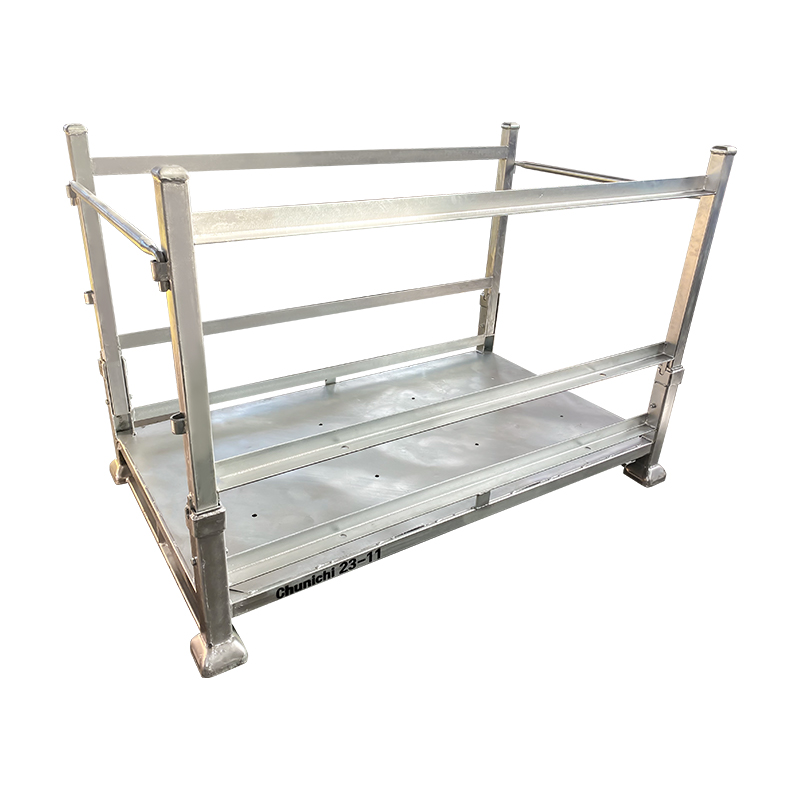
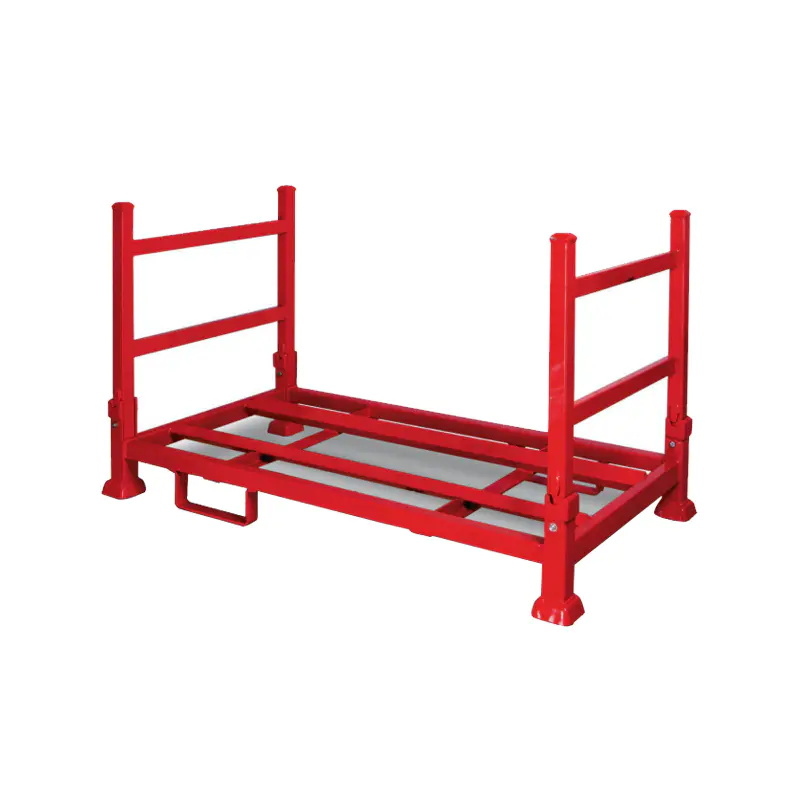
The math is straightforward: a warehouse with 20-foot ceilings that only stacks product to 8 feet is leaving 60% of its vertical capacity unused. stackable metal racks for high-density vertical storage are purpose-built for this scenario—allowing loads to be tiered safely without relying on oversized fixed racking infrastructure. They're particularly effective when SKU mix changes frequently or seasonal peaks demand flexible reconfiguration.
For operations handling mixed goods, wire mesh containers for visibility and airflow in racking offer a dual advantage: they stack securely while allowing staff to identify contents at a glance, eliminating the time lost to opening and searching through opaque bins. Visibility reduces handling errors, and reduced handling errors reclaim labor time that would otherwise compound into larger inefficiencies.
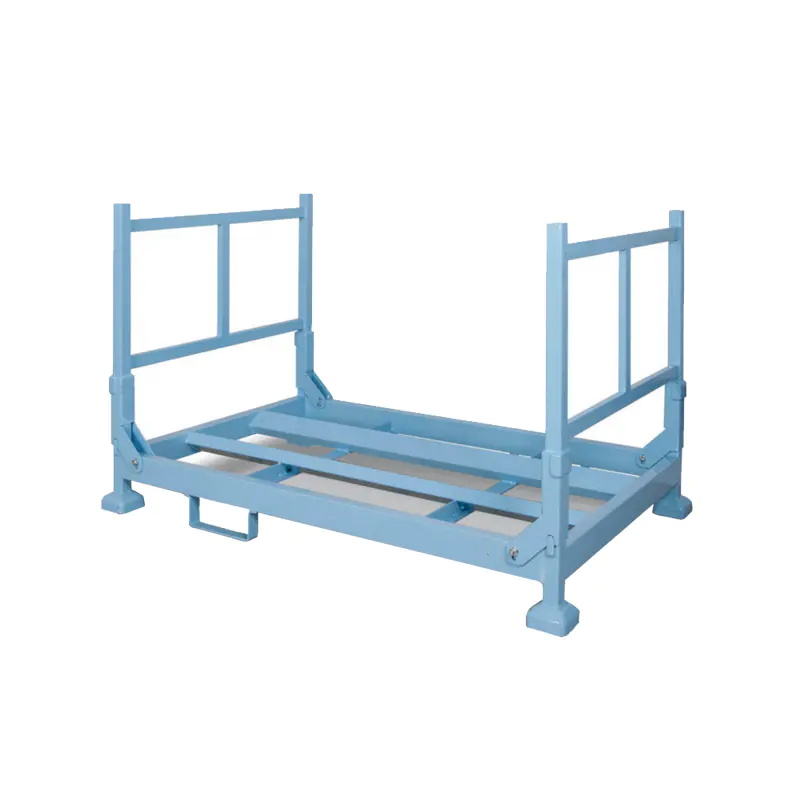
For bulkier or heavier items, foldable steel stillage solutions for compact storage provide rigid structural support while remaining adaptable—a key trait when your product mix doesn't fit neatly into standard rack configurations.
Aisle width is one of the most impactful—and most mismanaged—variables in warehouse layout. Standard aisle configurations designed for counterbalanced forklifts often consume 30–40% of total floor space. Switching to narrow-aisle equipment, reach trucks, or very-narrow-aisle (VNA) systems can dramatically shift that ratio in favor of storage density.
Beyond aisle width, layout zoning drives operational efficiency. Dividing your facility into clearly defined zones—fast-moving SKUs near dispatch, slow-moving stock in deeper storage, returns processing isolated from outbound flow—eliminates the cross-traffic that creates bottlenecks and inflates pick times. Dynamic slotting takes this further: rather than assigning fixed locations, inventory positions are periodically reassigned based on velocity data, seasonality, and order patterns.
For high-density applications, mobile wide-span storage racks for high-density warehouse solutions offer a compelling option—entire rack rows mounted on rails that consolidate multiple aisles into a single movable access point, dramatically increasing storage density per square meter.
One practical starting point: map your current layout with actual traffic data rather than assumptions. Where do forklifts slow down? Which aisles are constantly congested? Where does product wait for hours before being slotted? Real movement data almost always reveals layout inefficiencies that aren't visible from a floor plan alone.
Fixed equipment that occupies floor space when empty is a silent drain on warehouse capacity. Rigid containers, non-collapsible cages, and permanent trolleys that take up the same footprint loaded or empty are a particular problem in operations with seasonal demand swings—during off-peak periods, empty equipment can consume floor space that should be available for active inventory.
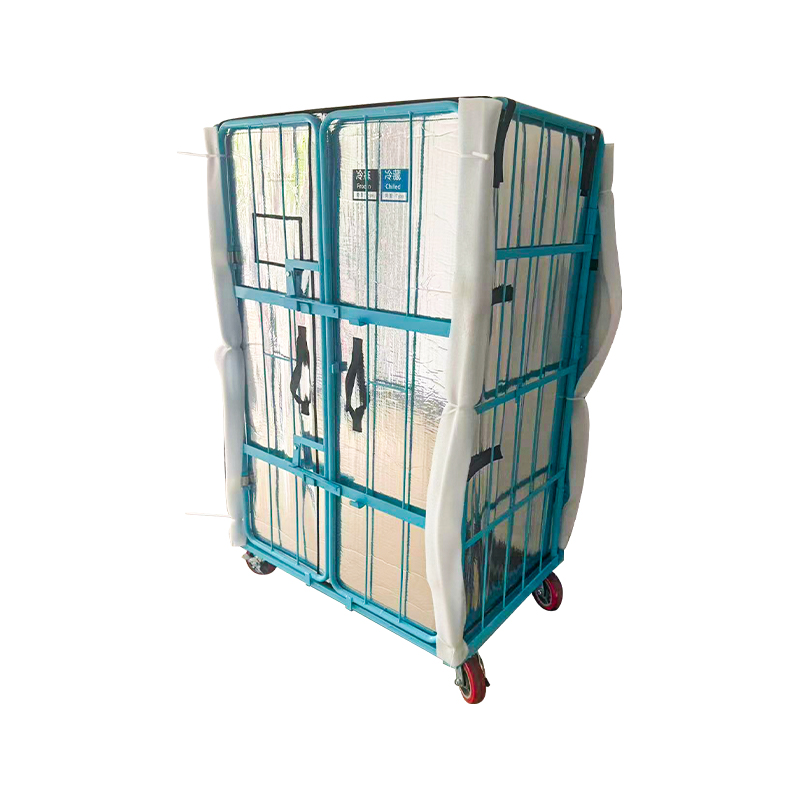
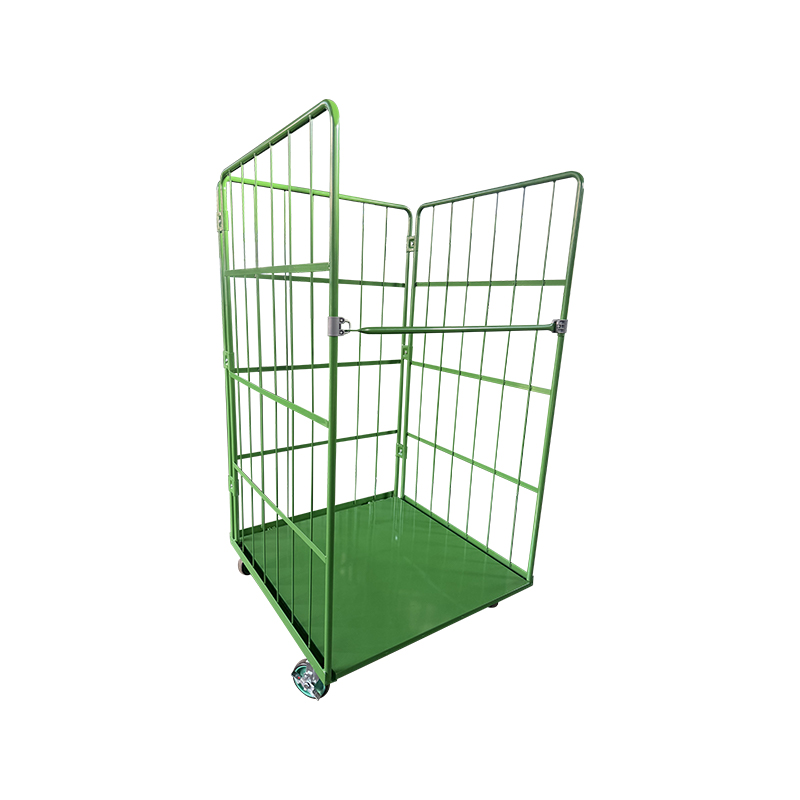
Foldable and modular equipment solves this directly. Roll cage trolleys that fold flat when not in use can reduce the floor space consumed by idle equipment by 60–80% compared to fixed-wall alternatives. That reclaimed space becomes immediately usable for staging, overflow stock, or temporary buffer zones during peak periods.
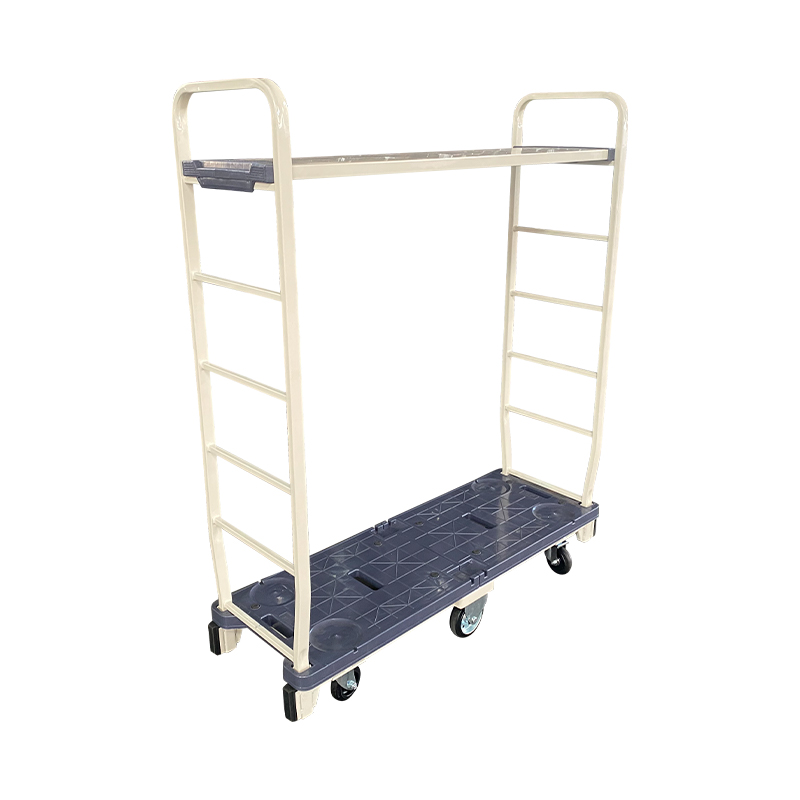
Foldable platform trucks follow the same logic. When not in active transit, they collapse to a fraction of their deployed footprint—freeing docking areas and transit lanes that fixed alternatives would permanently occupy. The operational discipline required is minimal; the spatial return is significant.
This approach is especially valuable in 3PL environments or facilities handling multiple clients, where space allocation needs to flex dynamically with contract volumes. Modular equipment enables that flexibility without requiring physical warehouse reconfiguration every time client volumes shift.
Standard racking solves standard problems. For warehouses handling automotive components, stamped parts, door frames, bumpers, or other irregular geometries, generic storage systems create compounding inefficiencies: wasted cube from poor fit, damage from improper support, and excessive handling time from difficult access.
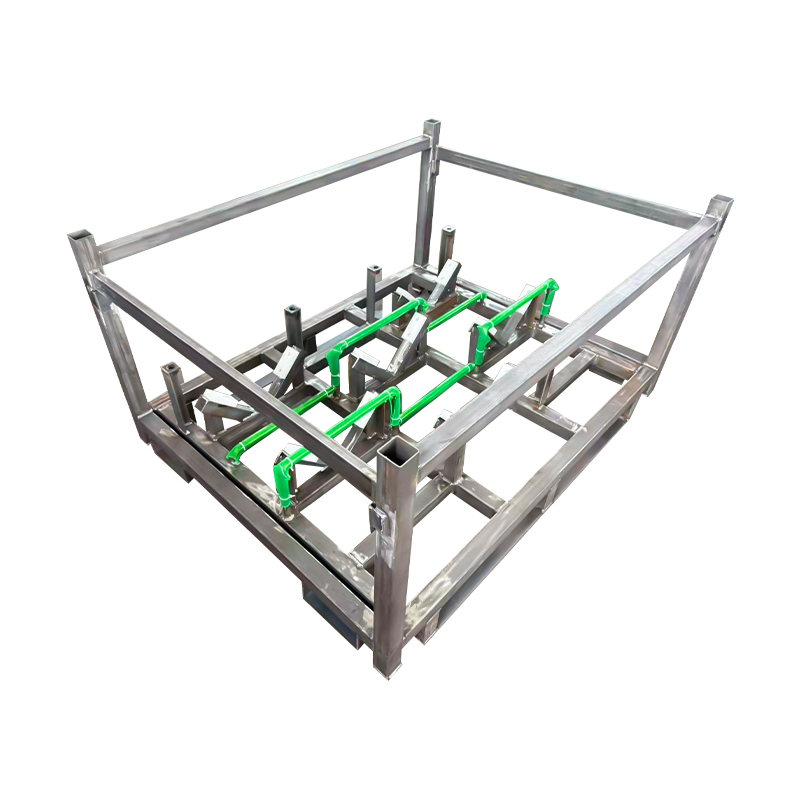
Custom storage implements designed for automotive parts address these issues at the source—engineered to match the geometry of specific components, protecting part integrity while maximizing how densely they can be stored and how efficiently they can be retrieved. For high-mix, low-volume automotive supply chains, this specificity translates directly into reduced damage rates and faster pick cycles.
Custom stillages for door frames and stamped body parts are a prime example: designed to hold parts upright in precise orientations, they eliminate the nesting and stacking inefficiencies that force standard warehouses to dramatically over-space their automotive storage zones. The result is often a 20–35% reduction in the floor area required to store the same component volume—without any change to the facility itself.
The broader principle applies beyond automotive: wherever your SKU mix contains non-standard geometries, bespoke storage solutions pay for themselves quickly in recovered space and reduced handling damage.
A common misconception is that OSHA compliance and space optimization are in tension—that maintaining safe clearances and aisle widths necessarily limits how densely a facility can be configured. In practice, well-designed compliance often improves space efficiency by forcing layouts that are orderly, clearly marked, and logically organized.
OSHA § 1910.176 governing material storage and aisle clearance requires that aisles and passageways be kept clear, properly marked, and free of obstructions—standards that align naturally with the traffic flow principles of an optimized layout. Facilities that maintain these standards tend to also have better product slotting discipline, cleaner staging areas, and fewer instances of misplaced inventory consuming prime space.
Racking compliance adds another dimension. All storage racks must display maximum load capacities prominently, be properly anchored, and undergo regular inspection for structural damage. These requirements aren't bureaucratic friction—they're the foundation for confidently stacking inventory to maximum rated heights, which is where vertical density gains are realized. See also: pallet rack types, selection guide, and safety standards for a detailed breakdown of compliance requirements by rack system type.
Since 2023, OSHA's National Emphasis Program has increased surprise inspections at warehouses and distribution centers through July 2026. Facilities that treat compliance as an integrated part of their space optimization strategy—rather than a separate checklist—are better positioned for both operational efficiency and inspection readiness.
Space optimization without measurement is guesswork. The foundational metric is straightforward:
Space Utilization (%) = (Total Inventory Volume / Total Warehouse Volume) × 100
But raw utilization percentage tells only part of the story. Cube utilization—how effectively you're using vertical height within your storage systems—often reveals larger gaps than floor utilization alone. A warehouse with 75% floor utilization but only 40% cube utilization has significant untapped vertical capacity that won't show up in a standard space audit.
Warehouse Management Systems (WMS) provide the data infrastructure to move from static snapshots to dynamic optimization. By tracking product velocity, slotting efficiency, and pick path length over time, a WMS enables continuous layout refinement rather than periodic manual audits. The smart warehousing market is projected to grow to $78.6 billion by 2033 at an annual rate of 14.5%—driven precisely by this shift from reactive space management to data-driven optimization.
Practically speaking, even without a full WMS implementation, establishing a monthly review cadence for space utilization KPIs—and tying those reviews to specific layout or slotting adjustments—creates the feedback loop that separates facilities that gradually reclaim capacity from those that perpetually feel too small. The warehouse that feels crowded today often has the same square footage as the one running smoothly next door. The difference is discipline, not square footage.
Copyright © 2024 Shanghai Betis Logistics Equipment Co., Ltd. All Rights Reserved.
 Custom Metal Storage Cages Manufacturers

 English
 中文简体
中文简体 日本語
日本語