Content
A warehouse running out of floor space isn't a square-footage problem — it's a racking problem. Facilities that deploy the right pallet storage system routinely reclaim 40–50% more usable space without adding a single square foot of building. The challenge is that "pallet rack" isn't one product; it's a category of systems with very different performance profiles, and choosing the wrong type costs real money in either wasted space, reduced throughput, or safety incidents down the line.
This guide walks through the main system types, what actually drives selection decisions, and the standards that govern safe operation — so your next racking investment works harder from day one.
Rack selection is a long-term infrastructure decision. Most industrial pallet racking stays in place for 10–20 years, and reconfiguring mid-lifecycle is expensive. A system sized for today's SKU count but not tomorrow's throughput growth will force a costly retrofit within three to five years.
Beyond space utilization, racking directly affects picking speed, forklift traffic patterns, and workplace safety. According to industry safety data, overloaded or structurally compromised racks are among the top causes of serious warehouse injuries. Getting the specification right upfront is far cheaper than addressing the consequences later.
The good news: modern storage racks for pallets are modular and highly configurable. With the right baseline system, many facilities can adapt to changing needs without full replacement — but only if the initial system was designed with scalability in mind.
Each rack type solves a different storage equation. Understanding the trade-offs — access speed vs. density, cost vs. flexibility — is the foundation of a good decision. Below is a structured comparison of the six most widely deployed systems, along with an in-depth breakdown of material handling racking systems and how to evaluate them.
| Rack Type | Access Method | Storage Density | Best For | Typical SKU Range |
|---|---|---|---|---|
| Selective Pallet Rack | Direct (every pallet) | Moderate | High SKU count, varied products | Wide (100+) |
| Drive-In / Drive-Through | LIFO or FIFO lane | Very High | High-volume, single SKU lanes | Narrow (1–5 per lane) |
| Push-Back Rack | LIFO, front-loaded | High | Medium SKU count, LIFO acceptable | Moderate (2–6 per lane) |
| Pallet Flow Rack | FIFO gravity-fed | High | Date-sensitive goods, FMCG, food | Moderate (FIFO required) |
| Mobile / Movirack | Direct (moving aisles) | Very High | Cold storage, high-value inventory | Wide |
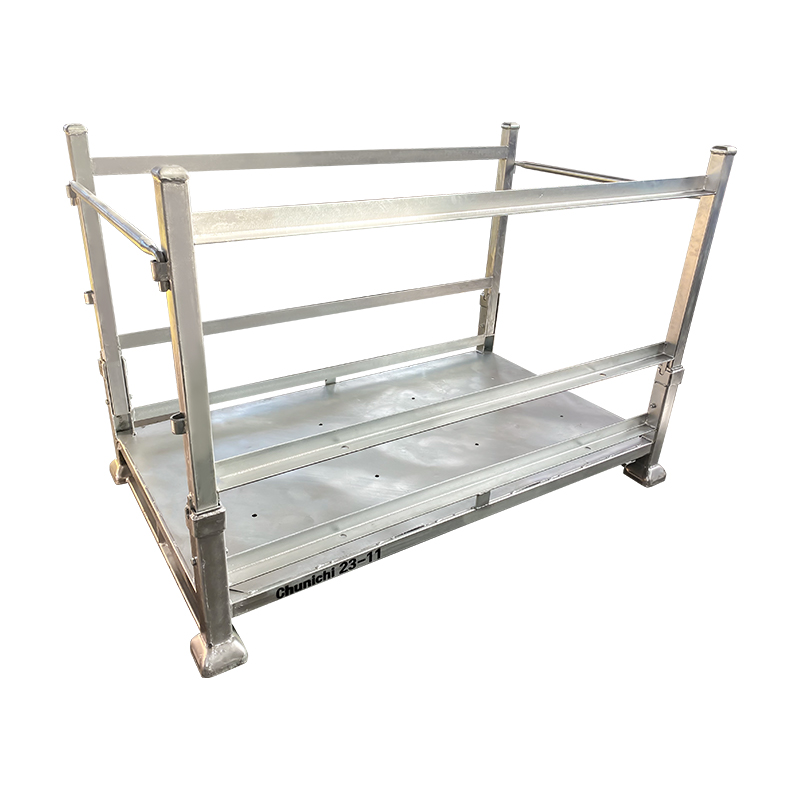
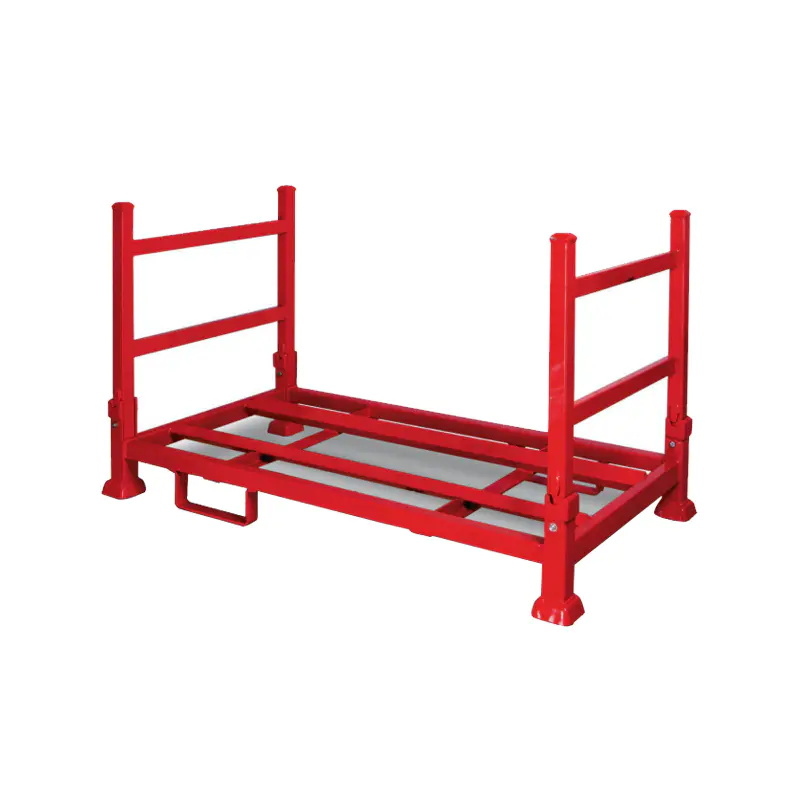
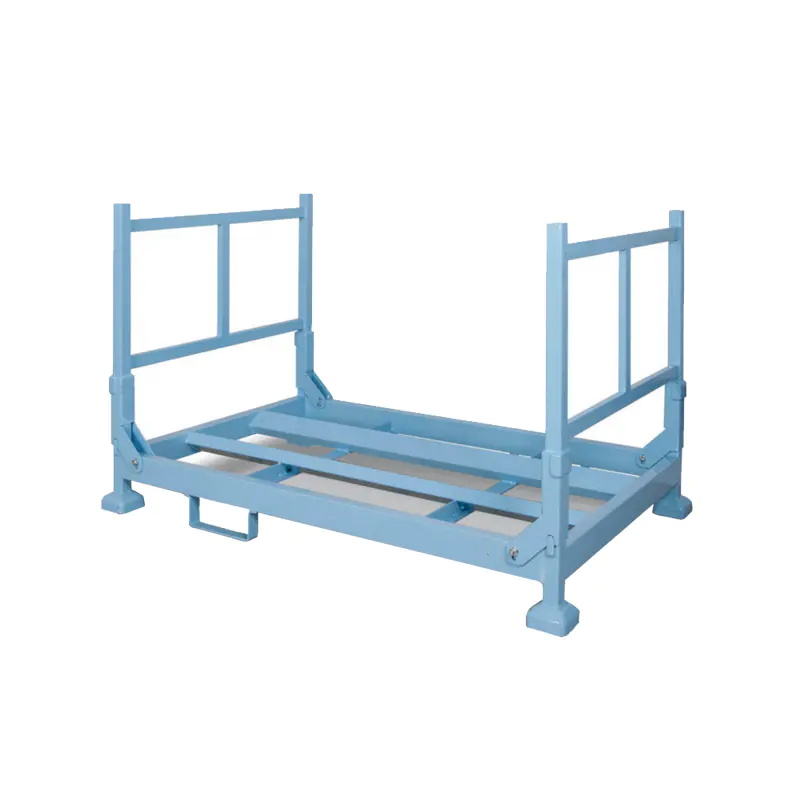
| Stacking Racks | Direct stacking | Moderate–High | Seasonal overflow, flexible floor use | Wide |
Selective pallet racking remains the industry default for good reason: every pallet is reachable at any time, it works with virtually any standard forklift, and the system is the easiest to reconfigure. Drive-in systems sacrifice accessibility for density — ideal when you're storing large quantities of the same product and can tolerate LIFO rotation. Push-back and flow racks are middle-ground options that improve density while preserving some level of product selectivity.
For facilities managing seasonal peaks or needing floor-level flexibility without permanent installations, stackable rack solutions for flexible pallet storage offer a freestanding, modular alternative that can be repositioned or nested when not in use.
Five variables determine which racking system will perform best in your facility. Skipping any one of them leads to under- or over-engineered solutions.
A facility managing 200+ active SKUs needs direct access to every pallet location — selective racking is the right answer. A cold-storage facility holding 10 frozen product codes in large quantities gets far more value from a high-density drive-in or flow system. Inventory rotation requirements (FIFO vs. LIFO vs. random) are equally decisive.
How many pallet moves happen per shift? High-frequency operations require wide aisles and fast forklift cycles. Systems that maximize density at the cost of access speed may create bottlenecks that erode any efficiency gained from the additional capacity.
Rack systems are priced and specified per pallet position. Maximizing vertical storage — using available clear height — directly reduces cost per stored pallet. A facility with 10-meter clear height stores roughly twice the inventory in the same footprint as one with 5 meters, assuming appropriate rack and forklift pairings. Detailed warehouse layout strategies for pallet racking can help extract maximum capacity from almost any building geometry.
Standard counterbalanced forklifts need aisles of roughly 3.5–4 meters. Reach trucks operate in 2.7–3 meter aisles. Very narrow aisle (VNA) trucks can work in 1.6–1.8 meter aisles, but require specific rack configurations and often wire- or rail-guided travel. Rack type and forklift selection must be co-engineered.
Pallet weight, dimensions, and fragility all influence beam span selection, upright capacity requirements, and whether wire decking, solid steel, or pallet supports are needed. Oddly shaped or unstable loads may require dividers, backstops, or custom cradle attachments.
Rack capacity is defined at two levels: the beam pair capacity (how much weight a single shelf level can carry) and the upright frame capacity (the total cumulative load on a column of beam levels). Both numbers must be respected — and both must account for the weight of the pallet itself, not just the product.
A common mistake is specifying rack based on average pallet weight rather than maximum. One overweight pallet placed on an undersized beam is enough to initiate a progressive collapse. Always design to the heaviest load you will ever realistically handle, plus a safety margin.
Beam depth and length directly dictate capacity. Deeper beams carry more weight; longer beams carry less per unit length. For a thorough technical reference, the pallet racking beam sizing and capacity guide covers standard dimensional options, deflection tolerances, and how to match beam specs to your pallet footprint and weight profile.
Upright frame gauge and bracing pattern determine column load limits. Heavier loads or taller configurations require heavier-gauge steel and closer brace spacing. When specifying a new system, always request the rack manufacturer's load capacity documentation — reputable manufacturers provide certified engineering data.
Pallet racking safety is governed by a combination of regulatory requirements and industry standards. In the United States, the primary reference points are OSHA's General Duty Clause and 29 CFR 1910.176, which mandate that storage must not create a hazard and that workplaces must be free from recognized dangers. OSHA explicitly defers to the ANSI MH16.1 standard for the design, testing, and utilization of industrial steel storage racks — meaning compliance with that standard is the practical benchmark for most facilities. The official OSHA warehousing safety resource provides a useful regulatory overview.
In practice, compliance means four things: racks are installed by qualified personnel; rated capacities are posted at every bay; anchoring to the floor meets manufacturer and regional seismic specifications; and damaged sections are taken out of service immediately rather than left in use. For a detailed look at what structural failure looks like — and how to prevent it — the article on pallet racking collapse causes and prevention covers the most common failure modes and the inspection protocols that catch them early.
Beyond initial installation, regular inspection is not optional. Industry best practice calls for routine operator-level visual checks (daily/weekly) and formal documented inspections by a qualified person at least annually. Any upright showing a bend greater than 3mm over a 900mm span should be treated as a failed component.
Standard off-the-shelf rack configurations cover the majority of use cases, but they rarely optimize for a specific facility's mix of ceiling height, column spacing, product range, and throughput pattern. Custom racking — engineered to your exact bay dimensions, load profile, and forklift fleet — consistently outperforms generic configurations on both capacity and operational efficiency.
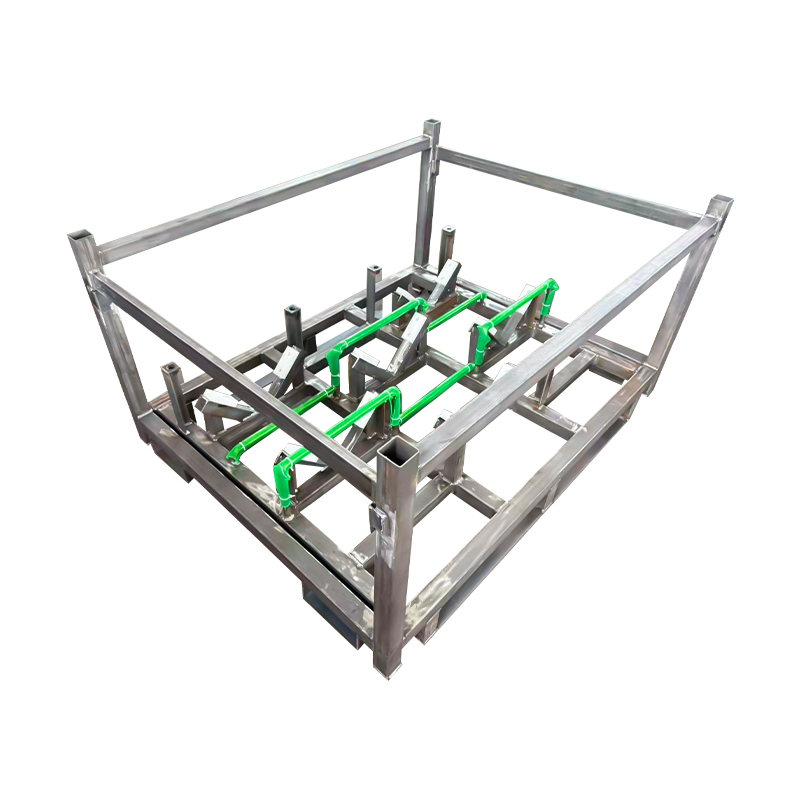
Key customization parameters include upright height and gauge, beam length and depth, bay width, decking type, and accessory specification (column guards, row spacers, backstops, dividers). For facilities handling non-standard products — automotive parts, tire stacks, coil steel, drums — custom cradles and load adaptors can be integrated into standard rack structures to extend system capability without building a proprietary solution from scratch.
Scalability should be built into the initial specification. Systems designed with standardized upright and beam profiles can be extended horizontally (adding bays) or vertically (adding beam levels) without replacing the existing structure. This modularity is particularly valuable for growing operations that need to add capacity in phases rather than all at once.
The purchase price of a rack system is only part of the total cost. Maintenance, inspection, reconfiguration, and eventual end-of-life replacement all factor into lifecycle cost. Systems built with heavier steel, better corrosion protection, and manufacturer-certified repair components cost more upfront but substantially less over a 15-year horizon.
Operationally, the biggest efficiency lever after initial design is ongoing layout optimization. Slotting — placing fast-moving SKUs at ergonomic heights and near staging areas — can reduce pick travel time by 20–30% without any physical changes to the rack. Pairing racking decisions with a sound slotting strategy amplifies the return on the structural investment.
For a consolidated reference on design principles, load ratings, and operational best practices, the practical guide to pallet rack design and load ratings provides a useful framework for evaluating existing systems and planning upgrades. When rack performance no longer matches operational needs — throughput is constrained, damage rates are rising, or new product lines don't fit current configurations — the cost of continuing with an inadequate system typically exceeds the cost of a targeted upgrade within 18–24 months.
Copyright © 2024 Shanghai Betis Logistics Equipment Co., Ltd. All Rights Reserved.
 Custom Metal Storage Cages Manufacturers

 English
 中文简体
中文简体 日本語
日本語