Content
When a warehouse runs out of usable floor space, the instinctive response is to consider a building expansion or an offsite facility. In most cases, however, the real problem is not a shortage of square footage — it is a shortage of accessible, organized storage within the existing footprint. Mobile wide span storage racks solve this problem directly: they combine the heavy-duty carrying capacity of wide span shelving with a compact mobile carriage system that eliminates permanently fixed aisles, unlocking storage density gains of 50 to 85 percent without moving a single wall.
Wide span storage racks — also referred to as longspan or wide span shelving — are four-post steel shelving systems designed to bridge the gap between standard light-duty shelving and full pallet racking. Standard shelving handles small, light items. Pallet racking requires forklift access and is optimized for uniform palletized loads. Wide span racks occupy the space between those two extremes: they are engineered for large, heavy, or irregularly shaped items that are hand-loaded by operators rather than placed by forklifts.
The structural logic of a wide span rack is straightforward. Four upright posts — two at the front face and two at the rear — support horizontal Z-profile or box-section beams across spans typically ranging from 1.2 m to 2.7 m. Each shelf level can carry 300 to 1,500 kg depending on the beam gauge and upright frame specification. This four-corner contact design distributes load evenly, giving wide span racks considerably higher capacity than two-post shelving of comparable dimensions. For a detailed discussion of how wide span systems compare to conventional shelving configurations, see our article on racking vs shelving: key differences, applications, and selection criteria.
Wide span racks can be installed in two configurations: static and mobile. Understanding the structural and operational difference between the two is essential before committing to a system.
In a static installation, upright frames are anchored directly to the floor at fixed positions. Aisles between bays are permanent, which means a significant proportion of the room's floor area is permanently allocated to walking and access paths rather than storage. A typical static layout dedicates 40 to 50 percent of total floor area to aisles. This is acceptable when picking frequency is very high and multiple operators need simultaneous access to different bays, but it represents a significant underutilization of the building envelope for operations with moderate access requirements.
A mobile system mounts the same wide span shelving units onto wheeled carriages that travel along rails embedded in — or surface-mounted on — the floor. Instead of permanent aisles between every pair of bays, the entire bank of shelving is compacted into a single block. Only one working aisle exists at any time, and it is opened on demand by sliding the relevant carriages apart using a mechanical-assist handle or a powered drive system. When the operator closes the aisle after picking, the carriages return to their compact position and the full storage density of the block is restored.
In practical terms, a room that holds 10 static bays with 5 fixed aisles can typically accommodate 16 to 18 mobile bays in the same floor area — a density improvement of 60 to 80 percent. For a broader discussion of how aisle management affects warehouse capacity planning, refer to our guide on wide aisle racking design: benefits and optimization for warehouses.
| Attribute | Static Wide Span | Mobile Wide Span |
|---|---|---|
| Aisle configuration | Permanent, fixed | On-demand, single aisle |
| Floor area used for storage | ~50–60% | ~85–90% |
| Density improvement over static | Baseline | 50–85% increase |
| Simultaneous aisle access | Multiple aisles | One aisle at a time |
| Best for | High-frequency, multi-operator picking | Moderate-frequency, high-density storage |
The choice of shelf decking has a direct impact on load capacity, operator safety, and product compatibility. Wide span systems typically support four standard decking types, each suited to a different storage profile.
Particle board panels provide a flat, smooth surface that works well for boxed goods, bagged products, and items that need a stable base. They are cost-effective and easy to replace when damaged. The limitation is moisture sensitivity: in cold storage, high-humidity environments, or areas with frequent wash-downs, particle board degrades faster than metal alternatives.
Waterfall-edge wire decking is the most versatile option for general warehouse use. The open mesh surface allows air circulation — critical for fire suppression system compliance, since sprinkler water must reach all shelf levels — and provides grip to prevent load shifting. Wire decking is the preferred choice for irregularly shaped items, containers, and bins.
Ribbed or flat steel panels carry the highest point loads and are used in heavy industrial or automotive parts environments where individual components are placed directly on the shelf surface without packaging. Steel decking is also the correct choice for cold storage installations where particle board would swell and wire decking presents a temperature-management challenge.
Regardless of decking type, each shelf level must be rated for the heaviest anticipated unit load, and the cumulative bay load must remain within the upright frame's certified capacity. For a systematic approach to load verification across an installed system, see our guide to warehouse racking capacity: calculate, verify, and improve loads.
The mobile carriage mechanism introduces operating dynamics that static racking does not have, and these require dedicated safety provisions. A well-specified mobile wide span system includes several layers of protection.
Every mobile carriage should incorporate a positive locking device that prevents unintended movement while the aisle is open and an operator is working inside. Mechanical foot locks, auto-engaging spring brakes, and electrically interlocked drive systems each fulfill this function at different price and reliability points. The locking system must be engaged before any picking activity begins — this is a training requirement as much as a mechanical one.
Aisle occupancy systems prevent a carriage from being closed while someone is inside the aisle. Basic implementations use mechanical sweep bars at the aisle entrance that must be physically displaced to signal occupancy. More advanced systems use infrared sensors or floor-level safety beams that automatically inhibit carriage movement when a person is detected. In high-throughput environments, electronic occupancy management integrated with the drive system is the most reliable approach.
Carriage wheels must be guided by rails or channels that prevent lateral displacement under load. Anti-derail clips on the wheel assemblies retain the carriage on its track even under impact or seismic loading conditions. Floor-level anti-tip brackets provide secondary restraint against forward tipping of heavily front-loaded shelving units.
Rail alignment, wheel wear, and carriage drive mechanisms require periodic inspection and lubrication. A degraded rail or worn wheel can cause uneven carriage travel that progressively misaligns the shelving structure. Incorporating mobile carriage checks into a standard racking maintenance schedule — including the inspection intervals outlined in our racking maintenance: practical guide to optimize safety and longevity — extends system life and prevents progressive damage from going undetected.
Mobile wide span racks are deployed across a wide range of industries, but they share a common requirement: the need to store substantial quantities of non-palletized, hand-loaded goods in a space-constrained environment.
In distribution centers handling e-commerce returns, spare parts, or mixed-SKU inventory, mobile wide span racks create organized pick zones for items that do not move on pallets. Operators can access each bay individually without navigating past fixed shelving runs, reducing travel time per pick.
Engine components, body panels, transmission parts, and tooling fixtures vary enormously in shape and weight. Wide span racks with heavy-duty steel decking provide the structural capacity for metal components while the open bay design accommodates non-standard item geometry that would be impractical to store on standard shelving.
Galvanized or epoxy-coated wide span frames with wire decking are rated for refrigerated and frozen environments. Mobile carriages in cold storage reduce the refrigerated volume of fixed aisles that must be cooled at all times, directly cutting energy consumption per unit of stored product.
High-density mobile wide span racking is a standard solution for document archives, museum collections, and law enforcement evidence rooms where access frequency is low but storage density is critical. The ability to create a single aisle on demand across a compact storage block is precisely matched to the low-frequency, high-volume retrieval patterns of these environments.
Mobile wide span racks perform best when integrated into a broader material handling system rather than deployed as a standalone storage island. Two categories of complementary equipment extend their usefulness significantly.
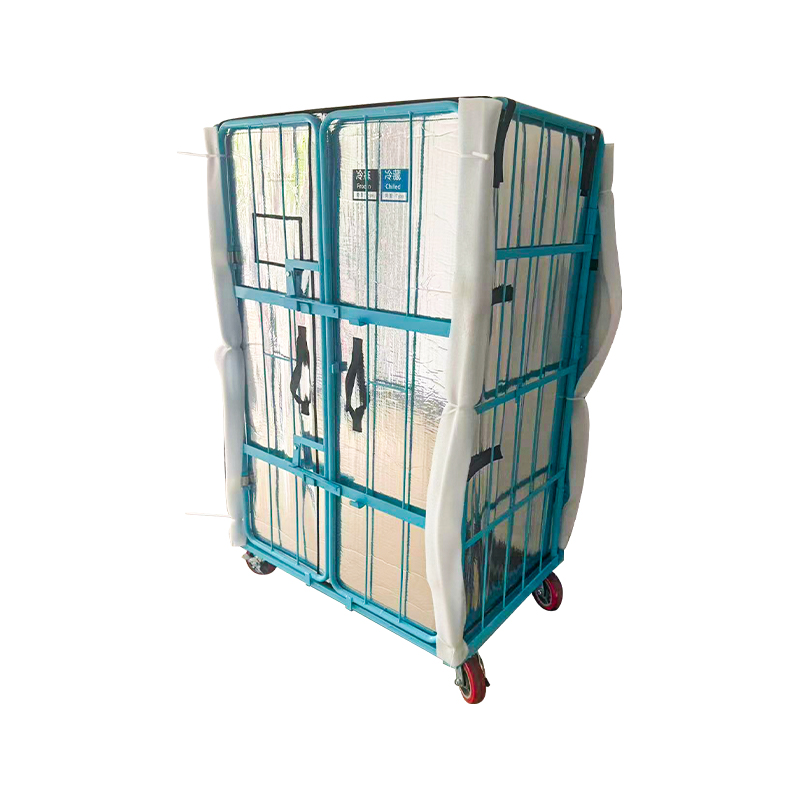
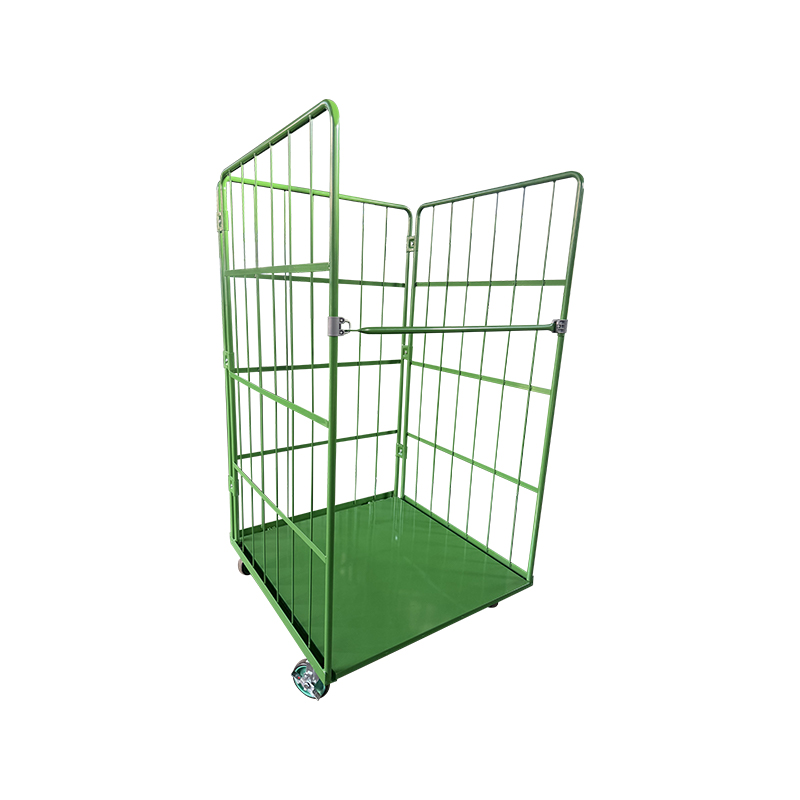
For items that are irregular, loose, or prone to shifting during storage, placing them directly on shelf decking creates both stability and retrieval challenges. Wire mesh containers standardize the unit load: components are loaded into containers at the point of receipt or production, and the container itself becomes the storage unit on the wide span rack. This approach speeds picking — the operator removes the container rather than sorting through loose items — and simplifies inventory counting since each container position represents a defined quantity or SKU.
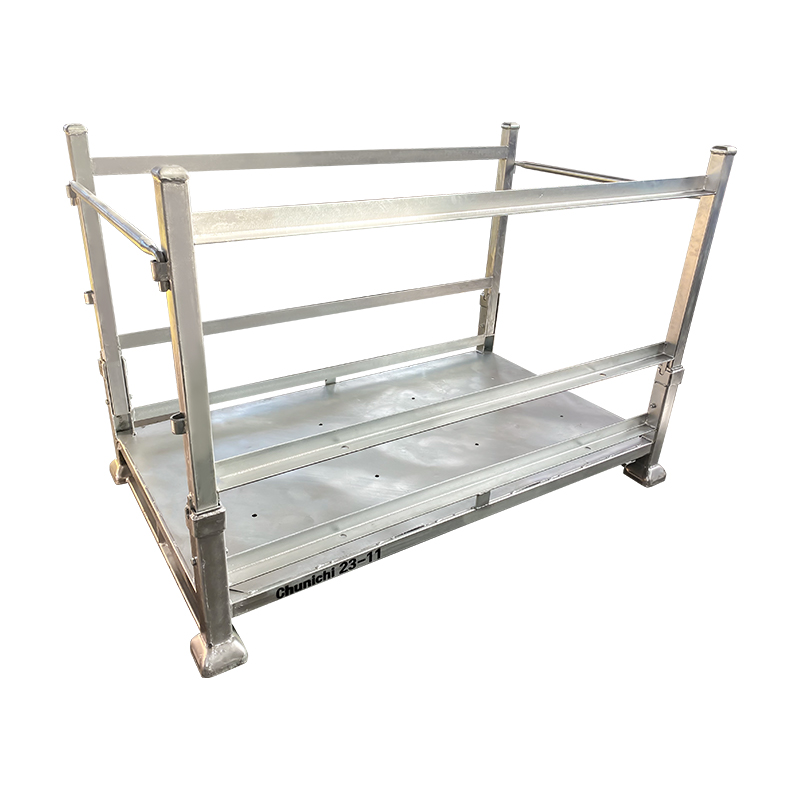
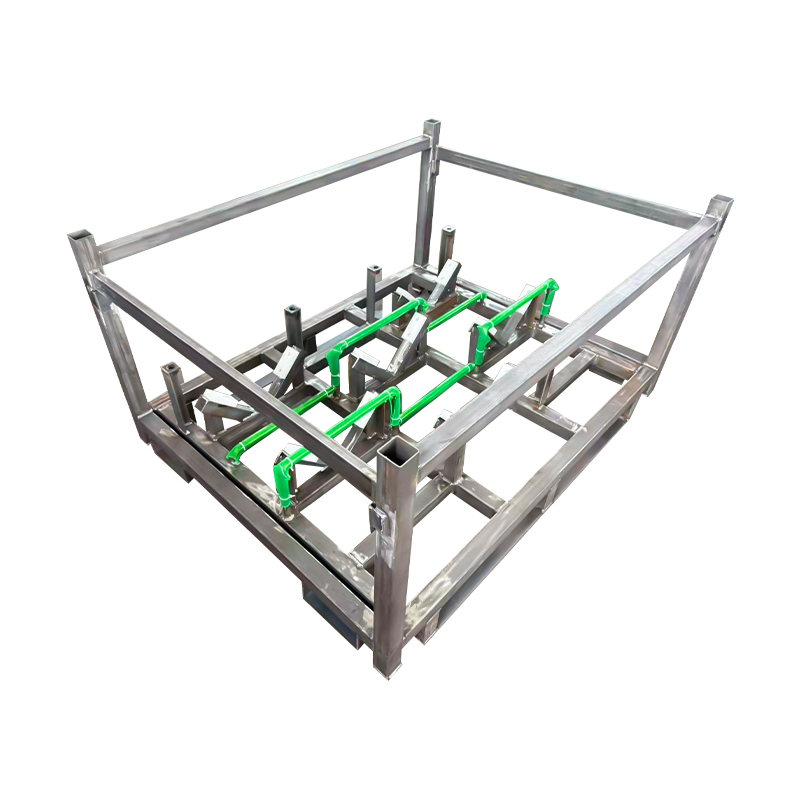
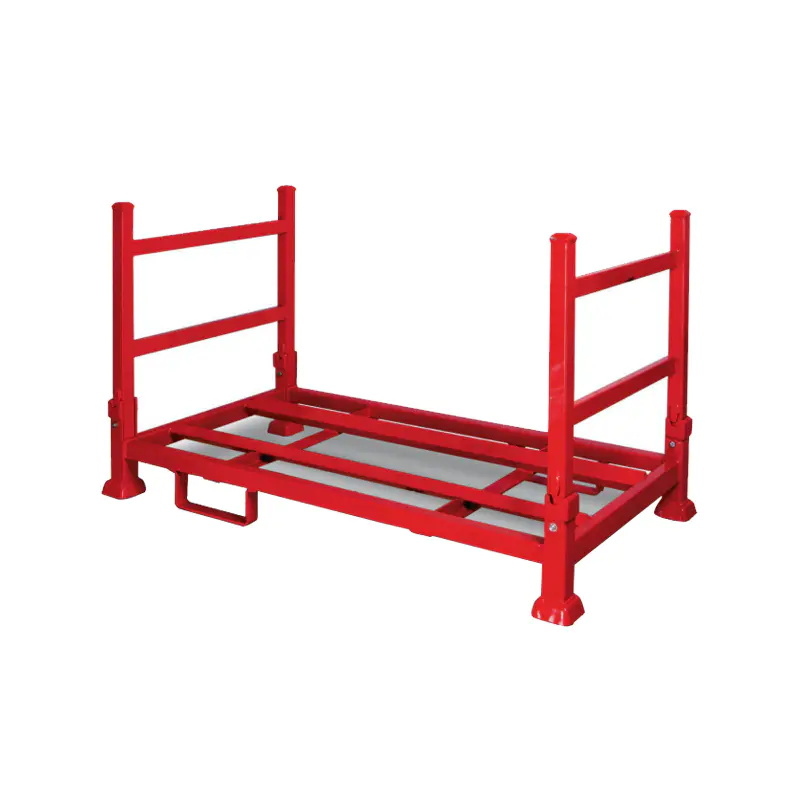
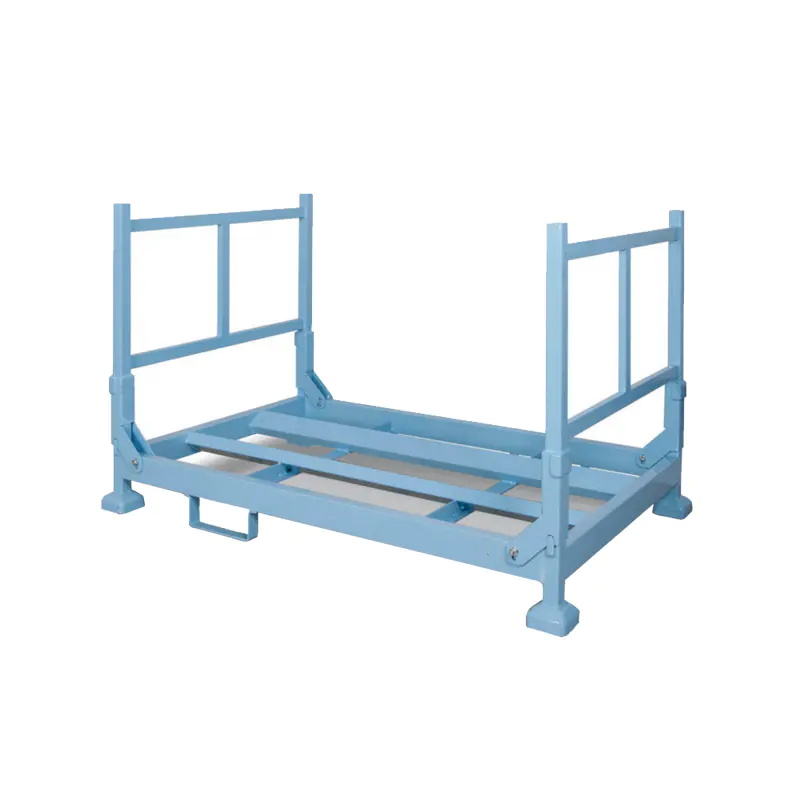
Stacking racks serve as a mobile complement to fixed wide span installations in environments where demand patterns shift seasonally or between production runs. When additional temporary storage is needed adjacent to a mobile wide span system — for inbound goods awaiting putaway, work-in-progress buffers, or outbound staging — stacking racks provide equivalent load capacity in a freely repositionable format. When not in use, they nest vertically to recover floor space without dismantling a fixed structure.
The combination of a high-density mobile wide span core system with flexible stacking racks at the periphery gives warehouse managers a storage environment that scales to operational peaks without permanent infrastructure commitments at the margins.
Copyright © 2024 Shanghai Betis Logistics Equipment Co., Ltd. All Rights Reserved.
 Custom Metal Storage Cages Manufacturers

 English
 中文简体
中文简体 日本語
日本語