Content
Choosing the right racking system is one of the most consequential decisions a warehouse manager can make. The wrong choice leads to wasted vertical space, slower picking cycles, and avoidable safety risks. The right choice, however, transforms floor space into a structured, high-throughput storage environment. This guide walks through the major types of material handling racking systems, how to evaluate them against your operation's needs, and how to keep them performing safely over the long term.
Material handling racking systems are engineered steel structures designed to organize, store, and provide access to palletized or unit goods within a warehouse or distribution center. Unlike flat-floor storage, racking exploits ceiling height to multiply usable capacity without expanding the building footprint. A standard selective rack installation, for example, can convert a single square meter of floor space into four to eight storage levels depending on ceiling clearance.
Beyond storage density, racking systems define the flow of goods through a facility. They determine how quickly pickers can locate and retrieve items, how forklift traffic is routed, and whether inventory follows a first-in-first-out or last-in-first-out rotation. If you are weighing racking against open shelving for lighter SKUs, see our comparison of racking vs shelving: key differences, applications, and selection criteria.
No single racking design suits every operation. Understanding the mechanics and trade-offs of each type is the starting point for a sound selection.
Selective racking is the most widely deployed system globally. Upright frames and horizontal load beams create independent storage bays, each directly accessible by a forklift from the aisle. Every pallet has 100% selectivity, meaning no other pallet must be moved to reach it. This makes selective racking ideal for operations with many SKUs, frequent rotation, or mixed product lines. The trade-off is aisle space: each bay requires dedicated access, which limits storage density compared to high-density alternatives.
In drive-in systems, forklifts enter the rack structure itself to deposit or retrieve loads on continuous rails. Drive-in follows a last-in-first-out (LIFO) rotation because the forklift enters and exits from the same end. Drive-through configurations have separate entry and exit points, enabling first-in-first-out (FIFO) flow. Both designs dramatically reduce the number of aisles required and increase storage density — often by 75–85% compared to selective racking — but they suit operations with large quantities of the same SKU and lower rotation frequency.
Push-back racking uses wheeled carts on inclined rails. When a new pallet is loaded, it pushes the existing pallet back one position. When a pallet is removed from the front, the remaining pallets glide forward under gravity. This LIFO system supports two to five pallets deep per lane and is a strong middle-ground option: denser than selective racking, yet more accessible than drive-in configurations.
Pallet flow systems use slightly inclined roller or wheel tracks to move pallets from the loading end to the picking face automatically. This enforces a strict FIFO rotation, which is essential for perishable goods, pharmaceuticals, or any date-sensitive product. Loading and picking occur at opposite ends of the lane, allowing replenishment and order fulfillment to happen simultaneously without forklift conflict.
Carton flow operates on the same gravity principle as pallet flow, but is scaled for individual cartons or totes rather than full pallets. It integrates naturally into pick-module and order-fulfillment environments where pickers work at ground level while replenishment occurs from the back of the rack.
Cantilever racks replace horizontal beams with load-bearing arms anchored to a vertical column, eliminating front-face obstructions entirely. This open-face design makes cantilever racks the default choice for long, bulky, or irregularly shaped goods — structural steel, timber, pipe, furniture, or automotive body panels — where standard pallet frames would create clearance problems.
| Racking Type | Rotation | Storage Density | Best For |
|---|---|---|---|
| Selective | Any | Moderate | High-SKU, frequent picking |
| Drive-In / Drive-Through | LIFO / FIFO | Very High | Bulk, few SKUs |
| Push-Back | LIFO | High | Medium SKU count, medium rotation |
| Pallet Flow | FIFO | High | Perishables, date-sensitive goods |
| Carton Flow | FIFO | High | Case-level order fulfillment |
| Cantilever | Any | Moderate | Long, bulky, irregular items |
A racking investment typically has a service life of ten to twenty years, so the selection process deserves structured analysis rather than a quick judgment. Five dimensions consistently separate good decisions from costly mistakes.
Start with the unit load: pallet weight, pallet dimensions, and load stability. Beam capacities and upright frame ratings must exceed the maximum anticipated load with an appropriate safety margin. For facilities with variable load profiles, review our guide to warehouse racking capacity: how to calculate, verify, and improve loads before finalizing specifications.
Effective usable height — clear of sprinkler heads, lighting, and HVAC runs — determines how many storage levels are achievable. Every additional meter of usable height can add one full storage level, directly multiplying capacity without increasing the footprint. Buildings with 10 m or more of clear height are strong candidates for very narrow aisle (VNA) systems that push storage density to its practical maximum.
If products carry expiry dates, lot codes, or quality-assurance hold periods, FIFO compliance is non-negotiable — pallet flow or drive-through racking are the natural choices. If the inventory is non-perishable and replenished in large batches, LIFO systems such as drive-in or push-back racking deliver better density at lower cost. For a detailed layout and load-rating walkthrough, see our pallet rack design: practical layout, load rating, and safety guide.
Operations with hundreds or thousands of active SKUs need high selectivity — each product must be reachable without displacing others. Selective pallet racking or carton flow racking fits this profile. Operations with a small number of high-volume SKUs can sacrifice selectivity for density and benefit from drive-in or push-back systems.
The racking system and the forklift fleet must be designed together. Counterbalance trucks require wide aisles (typically 3.5–4.5 m), while reach trucks operate in narrower aisles (2.5–3.0 m), and VNA turret trucks can work in aisles as narrow as 1.6 m. Selecting a racking layout without accounting for the turning radius and lift height of the available equipment leads to either underutilized space or unsafe operating conditions.
Racking systems rarely operate in isolation. Their efficiency multiplies when paired with the right complementary equipment for in-facility transport and unit-load consolidation.
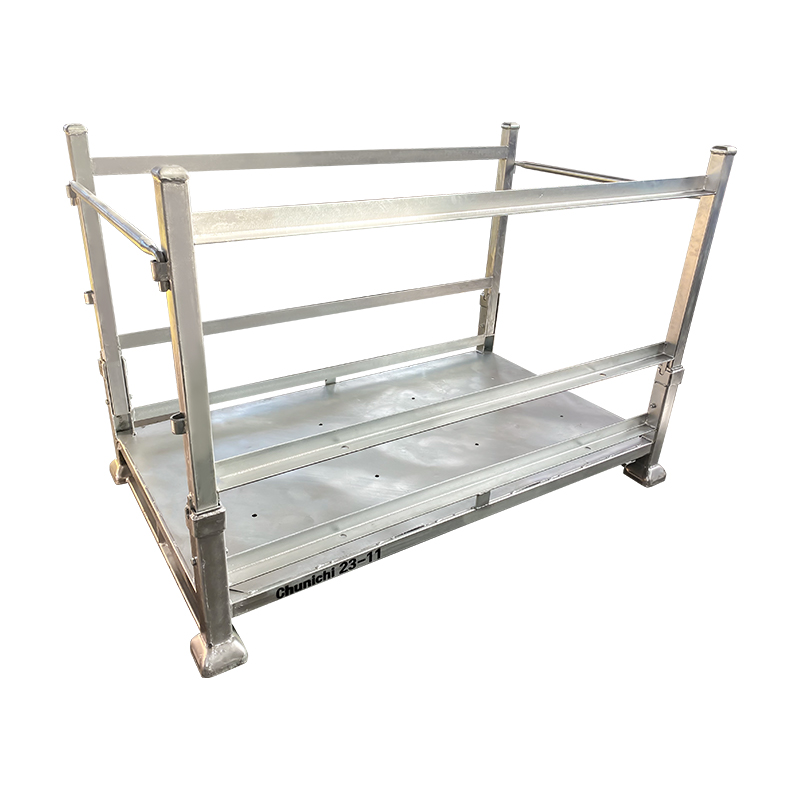
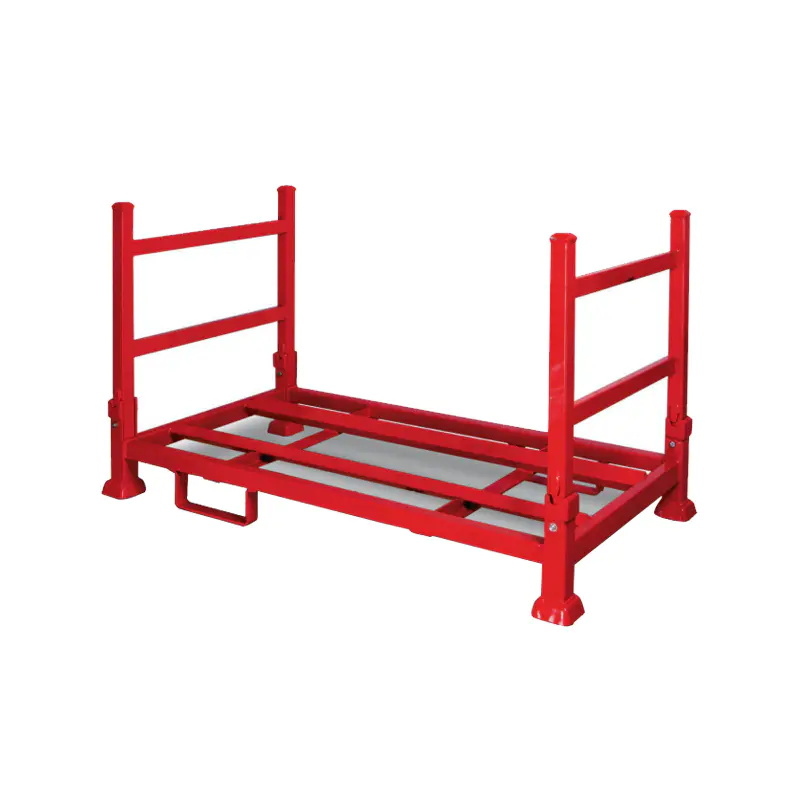
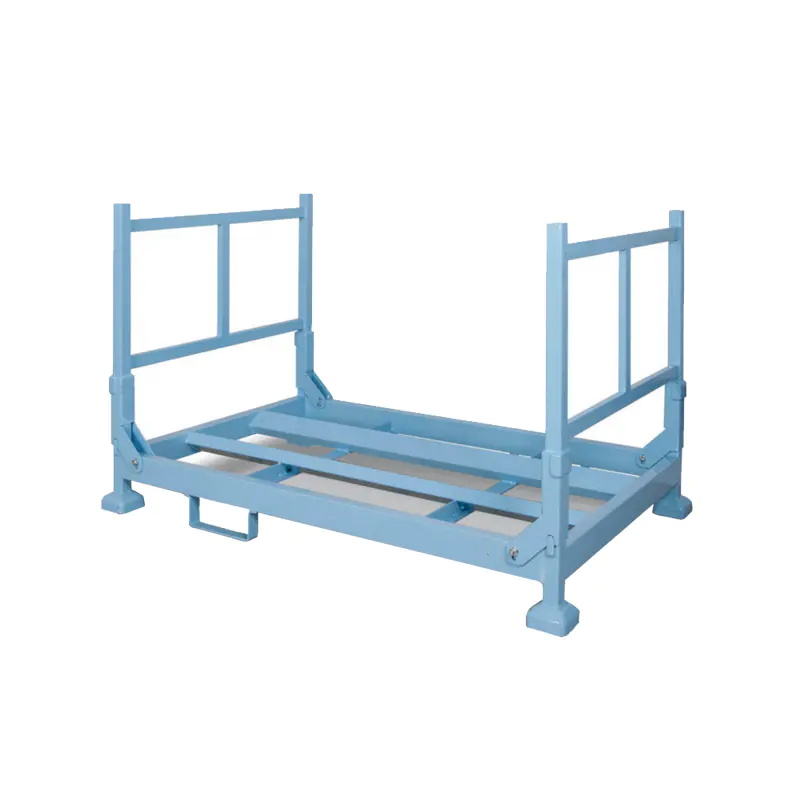
For operations that need flexible, non-fixed storage — seasonal overflow, temporary holding areas, or production line-side buffering — stacking racks serve as a mobile complement to static racking infrastructure. Because stacking racks can be nested and stored flat when empty, they reduce the floor space consumed during off-peak periods while providing the same vertical stacking capability during peak operations.
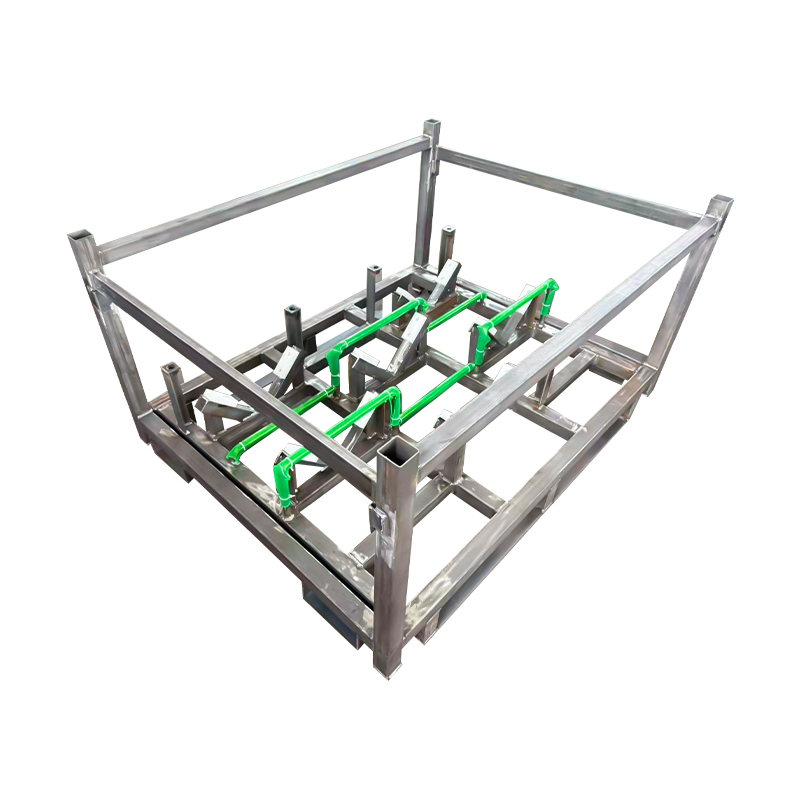
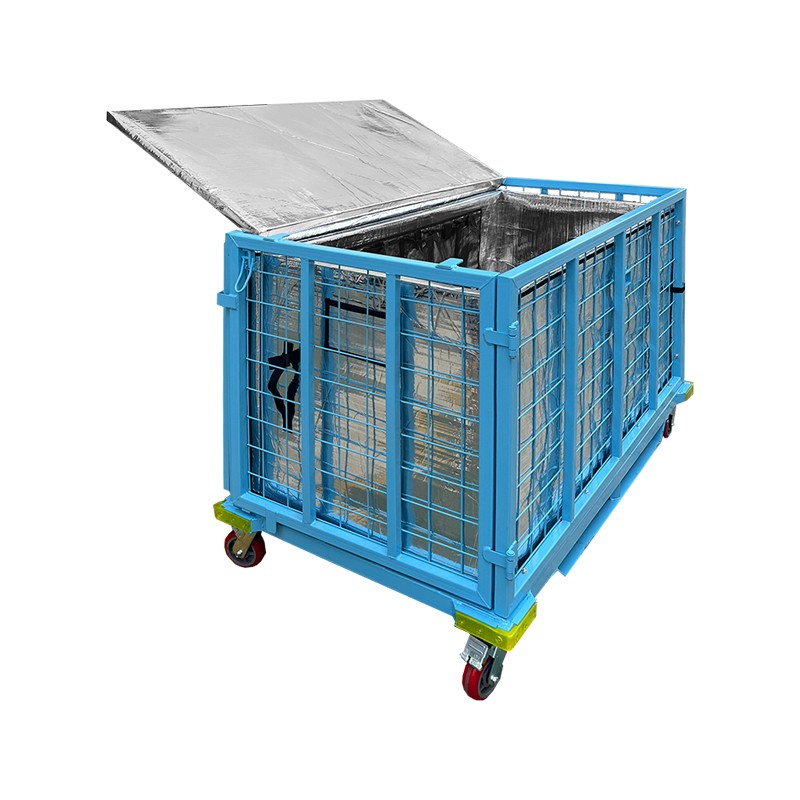
Wire mesh containers integrate naturally into selective or drive-in racking bays as the primary unit load when standard pallets are unsuitable. Their open-mesh construction allows visual inventory checks without unloading, supports airflow in cold-chain environments, and enables forklift handling identical to conventional pallet operations. In automotive and industrial parts facilities, mesh containers running on racking beams are a common solution for irregular components that would shift or overhang a flat pallet surface.
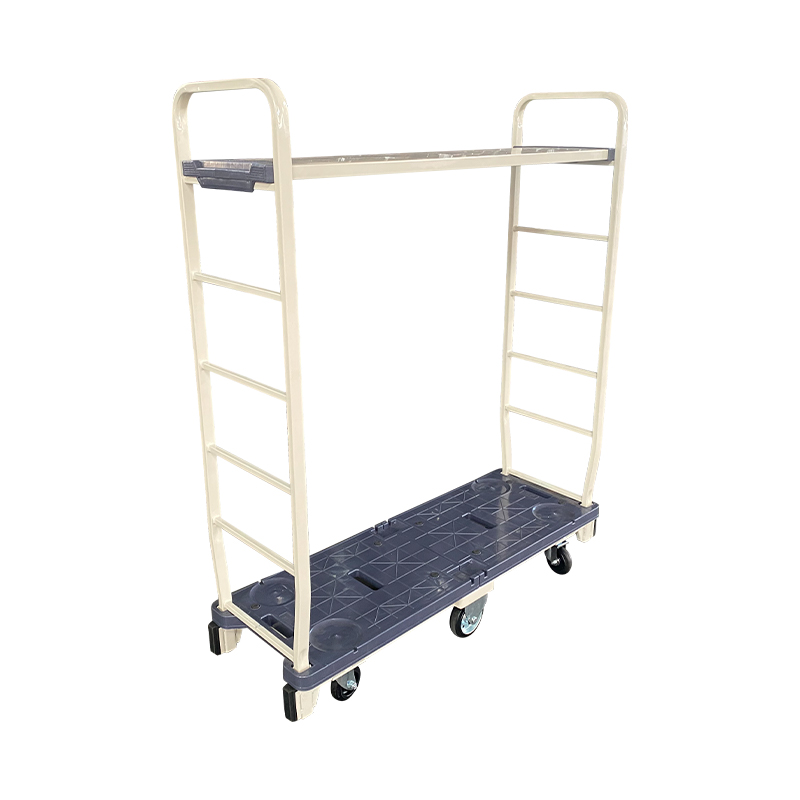
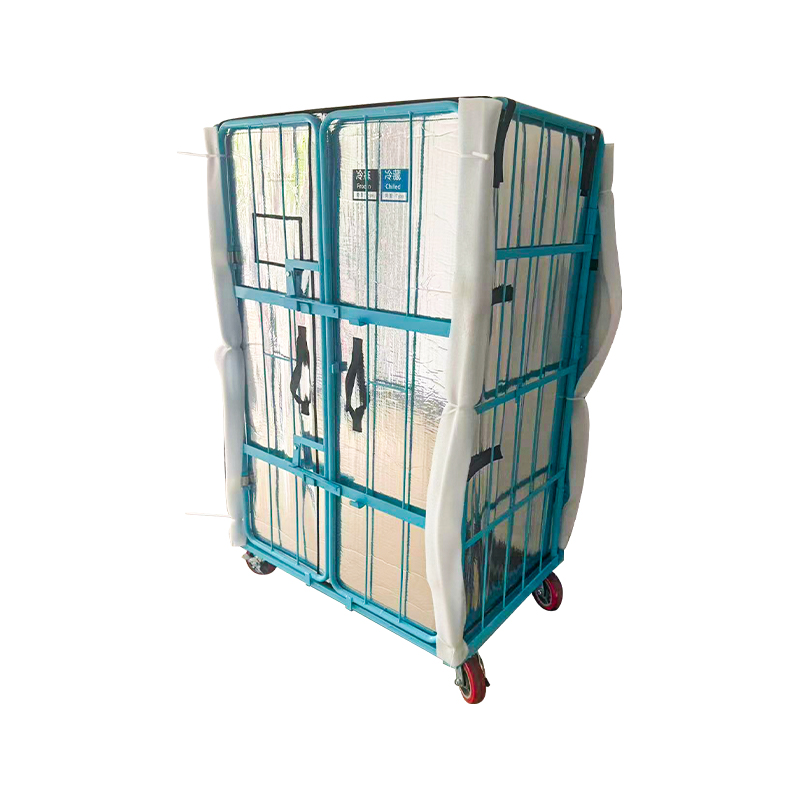
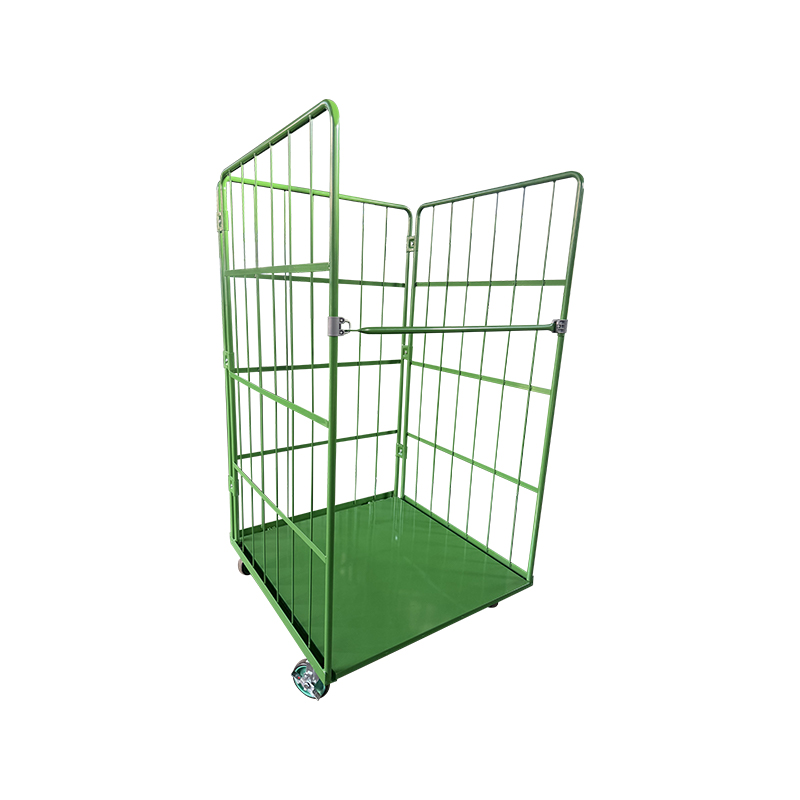
Moving goods between racking bays and dispatch areas, production lines, or cross-docking zones requires mobile transport solutions. Roll cage trolleys and platform trucks handle this last-meter movement efficiently, keeping forklift traffic focused on rack replenishment rather than short-distance transfers.
A racking system that is structurally compromised is not just inefficient — it is a serious hazard. Regulatory frameworks including OSHA standards in North America and EN 15635 in Europe establish minimum requirements for rack design, installation, load marking, and inspection. Compliance with these standards is a baseline, not a ceiling.
Every racking installation should carry a clearly visible load notice stating the maximum unit load per shelf level and the maximum bay load. These figures must reflect the actual certified capacity of the installed configuration, not the manufacturer's maximum rating for a different configuration. When rack components are replaced or reconfigured, load notices must be updated accordingly.
Damage to upright frames is the leading cause of rack collapse. A structured inspection program should include daily visual checks by operators, monthly documented inspections by a trained supervisor, and annual formal audits by a competent racking inspector. Key damage indicators to watch for include bent or cracked upright columns, deformed beam connectors, missing locking pins, displaced base plates, and signs of corrosion at floor level. For a comprehensive inspection checklist, refer to our guide on racking maintenance: a practical guide to optimize safety and longevity.
Operators must be empowered — and trained — to tag and report damaged components immediately. A damaged upright should be unloaded and marked out of service until assessed by a qualified engineer. Field repairs using non-certified materials or improvised reinforcements are never acceptable and may void the rack's structural certification entirely. Replacement components must match the original manufacturer's specifications to maintain the integrity of the certified system.
The majority of racking damage in active warehouses originates from forklift impact. Column guards, end-of-aisle barriers, rack-end protectors, and clearly marked aisle lanes are low-cost interventions that significantly reduce incident frequency. Combining physical protection with operator training and speed management policies addresses both the structural and behavioral dimensions of impact risk.
Copyright © 2024 Shanghai Betis Logistics Equipment Co., Ltd. All Rights Reserved.
 Custom Metal Storage Cages Manufacturers

 English
 中文简体
中文简体 日本語
日本語