Content
Efficient storage is the backbone of any well-run warehouse. Whether you are managing a distribution center, a manufacturing facility, or a logistics hub, the right storage infrastructure directly impacts throughput, safety, and operating costs. Warehouse metal racks are the industry-standard solution — durable, scalable, and adaptable to virtually any load type or floor plan. This guide walks through the main rack types, key industries that depend on them, and how to select the right configuration for your operation.
Warehouse metal racks are structural steel storage systems designed to organize, protect, and provide access to goods in industrial environments. Unlike basic shelving, metal racks are engineered to handle significant weight — often hundreds to thousands of kilograms per level — while remaining compatible with forklifts, pallet jacks, and automated handling equipment.
The defining advantage of metal racks over plastic or wood alternatives is their strength-to-weight ratio. Steel frames can withstand heavy dynamic loads (the impact of forklift placement), resist corrosion with appropriate coatings, and maintain structural integrity over decades of use. When combined with modular design, a single rack system can be reconfigured as inventory needs evolve — without replacing the entire structure.
From a cost perspective, metal racks typically offer a lower total cost of ownership than alternative materials because they require minimal maintenance, can be expanded rather than replaced, and retain residual value if the facility changes use.
Selecting the correct rack type is the single most important decision in warehouse storage planning. Each design solves a specific set of storage challenges.
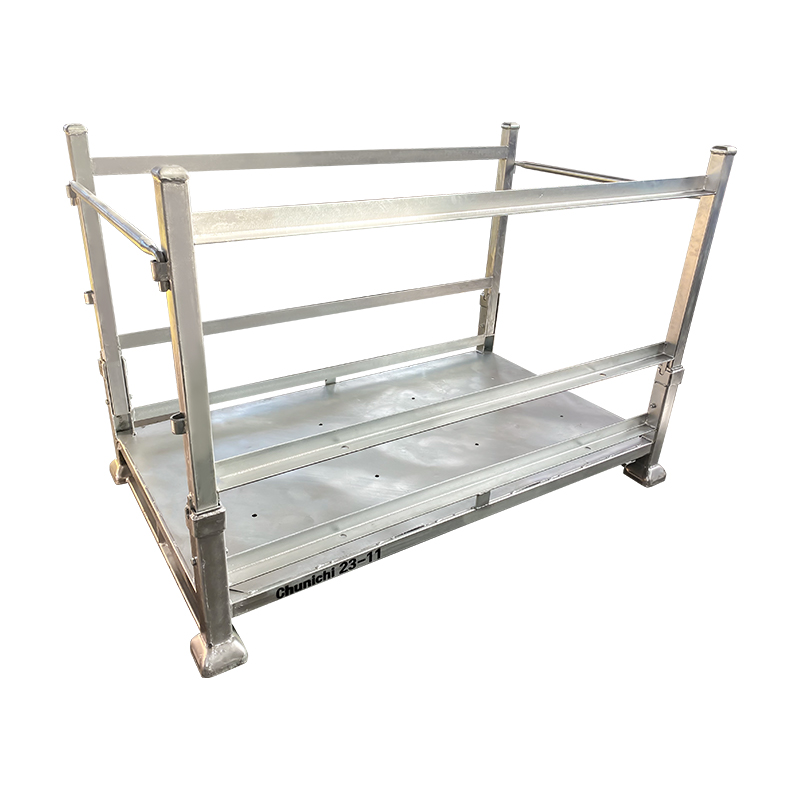
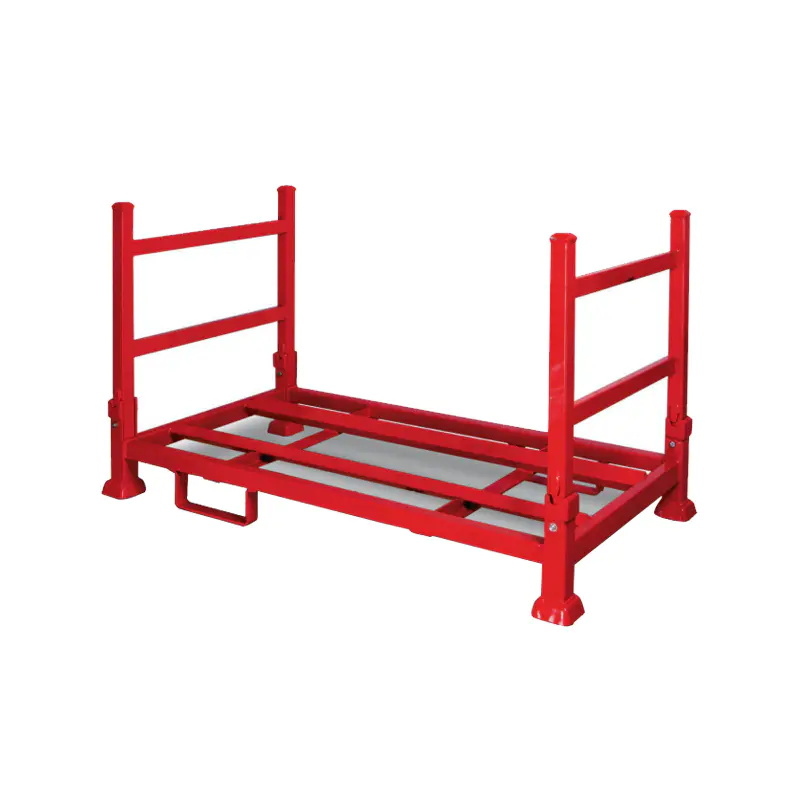
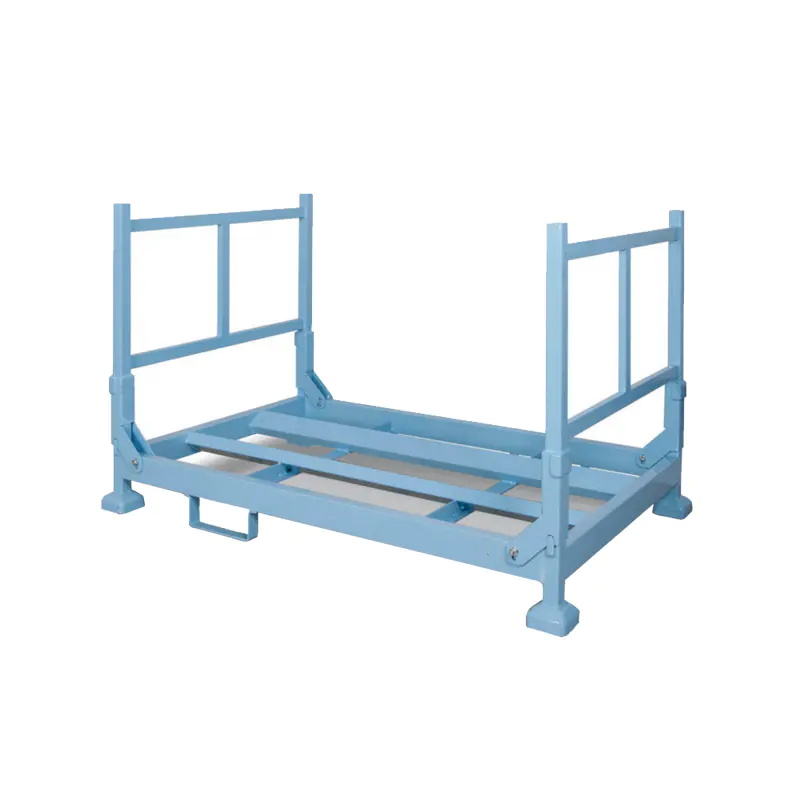
Stacking racks are freestanding metal frames that nest vertically on top of one another, creating a multi-tier storage column without requiring a fixed racking structure. Their key advantage is flexibility: they can be repositioned by forklift, reconfigured into different column heights, and stored flat when not in use. Stacking racks are particularly effective for irregularly shaped goods, heavy components, and facilities where storage layouts change frequently.
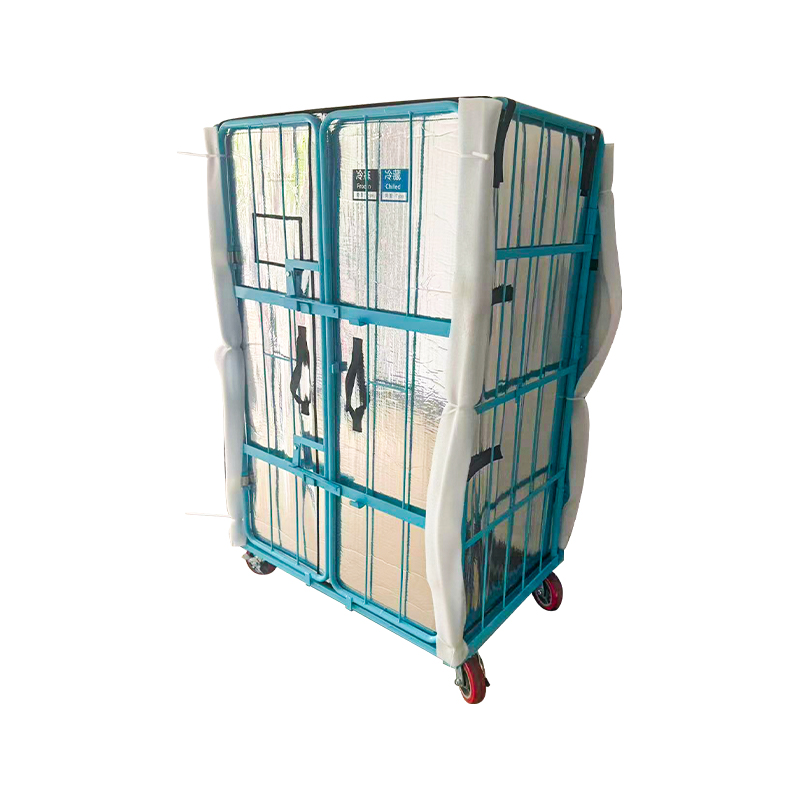
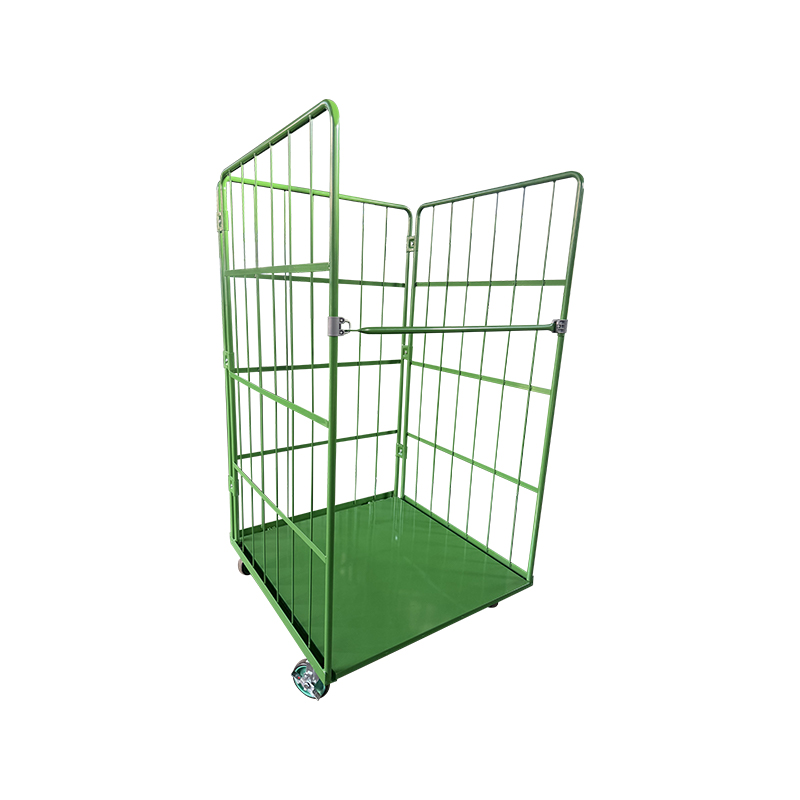
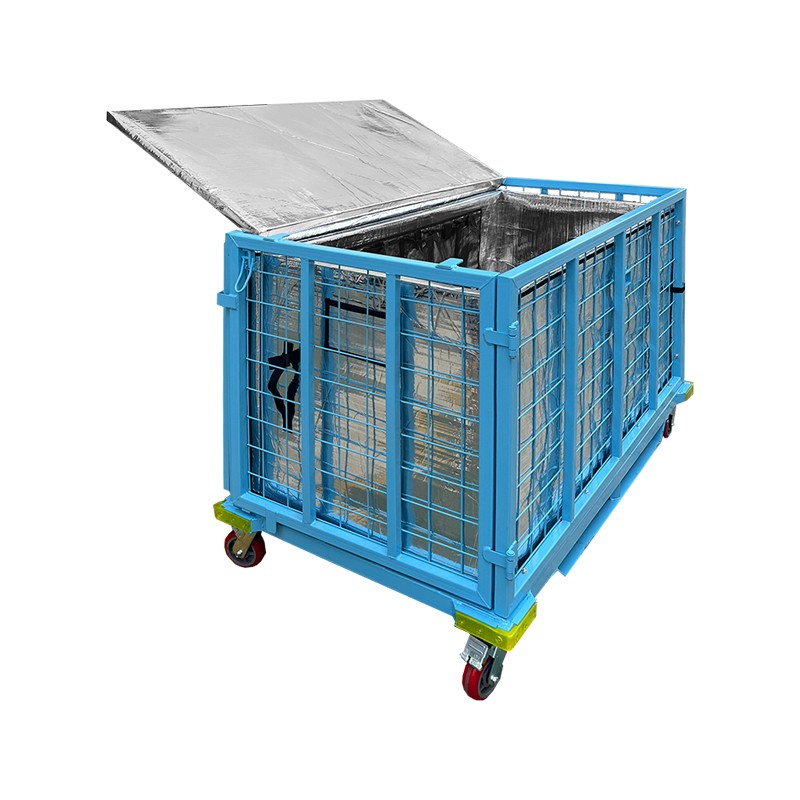
Wire mesh containers combine the containment of a cage with the visibility of an open frame. Goods remain visible and accessible from all sides, which simplifies inventory counts and order picking. The open mesh structure also supports fire suppression systems by allowing water from sprinklers to reach contents. These containers are stackable, foldable when empty (reducing return freight costs), and compatible with standard forklifts and pallet jacks.
Foldable steel stillages are rigid-frame containers with collapsible sides, designed for the transport and storage of components that require containment but also frequent loading and unloading by hand. Their folding mechanism reduces the volume of empty units by approximately 75%, a meaningful saving in reverse logistics and storage of empties.
Traditional pallet racking — also called selective racking — uses upright frames and horizontal beams to create bays for standard pallets. It is the most widely deployed rack type globally because it provides direct forklift access to every pallet position, making it suitable for warehouses with a large number of SKUs and moderate turnover on each. Beam heights are adjustable, so the same upright structure can accommodate pallets of different heights.
Cantilever racks use horizontal arms extending from a central spine to store long, awkward items such as pipes, lumber, steel bar stock, or rolled materials. Because there are no front columns obstructing the face of the rack, loading and unloading long items is straightforward. Arm height and spacing are adjustable to match the dimensions of the stored product.
Metal rack systems are deployed across virtually every sector that manages physical inventory. Several industries place especially demanding requirements on their storage infrastructure.
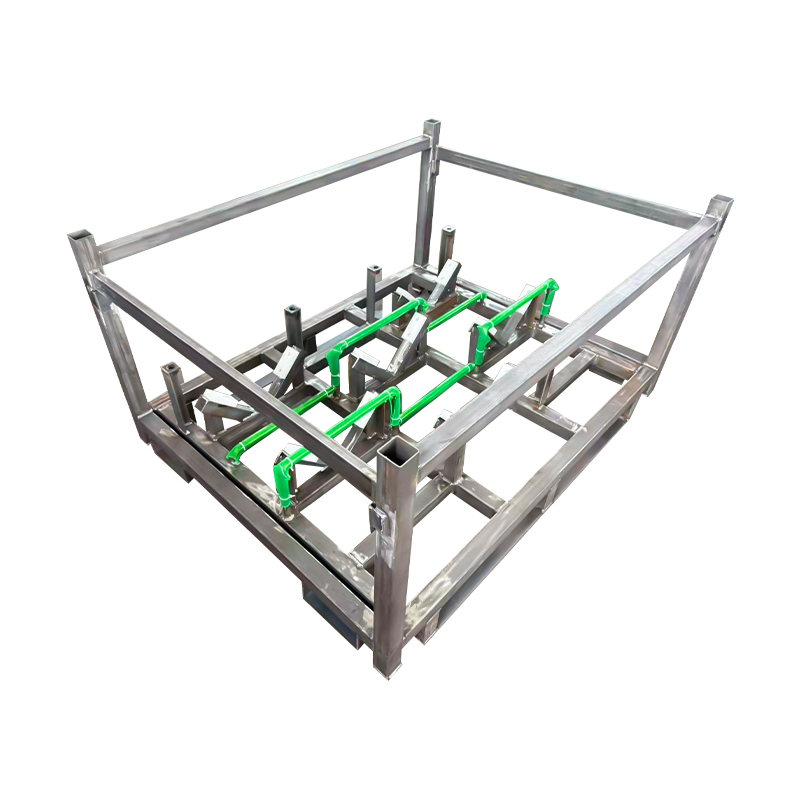
Automotive components range from small fasteners to full engine assemblies, and they must arrive at the production line in a precise sequence without damage. Warehouse storage implements designed for automotive parts — including custom-profile racks, glass turnover frames, and engine cradles — are engineered to match the geometry of specific components, preventing contact damage and enabling first-in, first-out rotation. Line-side racks in automotive plants often need to integrate with AGVs and conveyor systems, which requires precise dimensional tolerances.
Electronics warehouses require storage that protects sensitive components from electrostatic discharge, physical impact, and humidity. Metal racks in this environment are typically fitted with ESD-safe liners, anti-vibration pads, and enclosed panels. The visibility offered by wire mesh designs is particularly valuable here, as it allows security monitoring without opening containers.
Food and pharmaceutical storage is governed by strict hygiene and traceability requirements. Metal racks in these environments are finished with food-grade coatings or constructed from stainless steel to resist corrosion from cleaning chemicals. Open mesh designs support airflow for temperature-controlled environments and allow inspection without moving product.
3PL operators handle goods on behalf of multiple clients, often with rapidly changing inventory profiles. Modular metal racks that can be quickly reconfigured between clients — or expanded to meet peak-season demand — deliver significant operational value. Foldable and stackable designs reduce the cost of cycling empty equipment back through the supply chain.
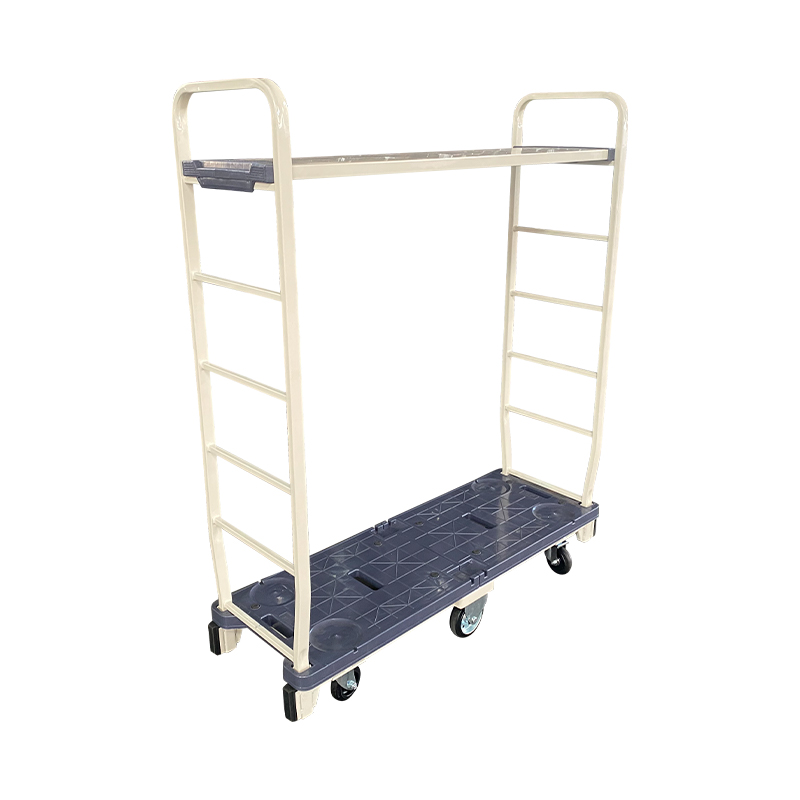
Airport ground handling and retail back-of-house operations share a common requirement: fast throughput in constrained spaces. Roll cage trolleys and compact stacking racks allow staff to move goods directly from receiving to point-of-use in a single handling step, reducing labor and the risk of damage.
Matching a rack system to an operation requires evaluating several variables simultaneously. Working through the following criteria before committing to a specification will prevent costly mismatches.
| Criteria | Questions to Answer | Impact on Rack Choice |
|---|---|---|
| Load weight and dimensions | What is the maximum weight per storage position? What are the dimensions of the largest unit load? | Determines upright gauge, beam capacity, and whether pallet or cantilever design is needed |
| Handling equipment | Will loading be done by forklift, pallet jack, or by hand? | Affects aisle width requirements and rack depth |
| Inventory turnover | Is stock high-turnover (many picks per day) or long-term storage? | High-turnover favors selective racks; bulk storage may suit drive-in or push-back designs |
| Floor space and ceiling height | What is the available footprint? What is the clear height under roof structure? | Determines rack height and whether a mezzanine level is viable |
| Flexibility requirements | Will inventory profiles change significantly over time? | Modular, adjustable designs protect the investment if SKU mix changes |
| Special product requirements | Do goods have unusual shapes, fragility, or regulatory requirements? | May require custom rack profiles, ESD protection, or certified coatings |
One factor that is frequently underestimated is the cost of aisle space. Narrower aisles increase storage density but require specialized handling equipment. Before finalizing a rack layout, confirm that the planned equipment can operate safely within the chosen aisle width — this is especially important when using foldable steel stillages in tight production environments where both storage and in-process handling occur in the same area.
Standard off-the-shelf rack dimensions are designed around the most common pallet sizes and handling scenarios. For many warehouses, this is adequate. But operations that handle non-standard components — irregular shapes, fragile surfaces, precise orientation requirements — frequently find that standard racks create hidden costs: more packaging to protect goods, more labor to secure loads, and higher damage rates.
Custom-engineered metal racks eliminate these compromises. A rack designed around the actual geometry of the stored component reduces packaging requirements, speeds loading and unloading, and prevents contact damage at the source. Over the lifecycle of the equipment — typically ten to twenty years — the labor and damage savings generated by a well-designed custom rack significantly outweigh the incremental cost of the engineering and tooling.
Sourcing custom racks directly from a manufacturer, rather than through a distributor, adds a further advantage: direct communication with the engineering team. When a design change is needed — because a product line changes dimensions, or a new handling process requires a different rack interface — direct factory contact means faster iteration and lower modification costs.
Manufacturers based in China with established export operations combine the cost efficiency of high-volume production with proximity to major shipping ports, shortening lead times for international orders. For buyers in North America, Europe, and Southeast Asia, factory-direct pricing from a Shanghai-based supplier can reduce the total landed cost of a rack system by 30–50% compared to equivalent locally manufactured products.
Warehouse metal racks are a long-term infrastructure investment. Choosing the right type — whether stacking racks, wire mesh containers, pallet racking, or a custom-engineered solution — has a direct impact on storage density, labor efficiency, damage rates, and ultimately, operating cost. The best outcomes come from working with a supplier that can both manufacture to a standard specification and engineer to a custom brief, backed by the production capacity to deliver at scale.
If you are evaluating metal rack solutions for a new facility or an existing operation, contact our team to discuss your specific requirements. We provide design consultation, prototype development, and full-volume production for customers across automotive, electronics, food, pharmaceutical, and logistics industries worldwide.
Copyright © 2024 Shanghai Betis Logistics Equipment Co., Ltd. All Rights Reserved.
 Custom Metal Storage Cages Manufacturers

 English
 中文简体
中文简体 日本語
日本語