Content
Ask anyone who has spent a full shift on a production line what frustrates them most, and the answer rarely comes back as robots or cycle times. It is the missing part. One fastener, gasket, or bracket that should already be sitting at the workstation but is not can stop the whole line and send an operator walking across the plant. The kitting process in manufacturing exists to remove exactly that kind of waste from the working day.
After more than ten years building metal unit-load containers and custom logistics equipment for factories, warehouses, and cold-chain operations, we have watched kitting succeed and fail in roughly equal measure. The difference is rarely the software. It is almost always whether somebody thought carefully about the physical kit, where it is prepared, and how it travels to the point of use.
Kitting is the practice of collecting every component, fastener, subassembly, and piece of documentation required to complete one unit of production, or one work order, and presenting them together in a single identified container that is delivered to the point of use. Instead of an operator walking to shelves and picking individual parts, a kit arrives complete, in the right quantity, at the right station, at the right time.
The definition sounds simple, which is part of the problem. Kitting looks like nothing more than putting parts in a box, so it is often treated as an afterthought and handed to whoever has spare time. In practice it is a controlled, repeatable process with its own bill of materials, its own identifiers, its own picking logic, and its own return loop for empty containers. We have written before about metal kitting and assembly in lean production, and the same theme keeps returning: discipline delivers the result, not the container alone.
The three words get used interchangeably in meetings, and that confusion creates real problems when a team tries to improve one activity while measuring another.
| Activity | Purpose | Output | Typical Owner |
|---|---|---|---|
| Kitting | Feed one production unit or work order | A complete, ready-to-consume set | Warehouse or kit preparation area |
| Bundling | Group items for sale, shipping, or promotion | A multi-item sellable or shippable pack | Packaging or fulfillment |
| Assembly | Join components together permanently | A functional subassembly or finished product | Production line |
Kitting prepares; assembly constructs. When a plant starts kitting fasteners for an assembly cell, it has not moved assembly work upstream. It has moved the act of finding and confirming parts out of the cell so the cell can do what it was designed to do.
Every plant adapts the details, but a workable process usually follows the same sequence.
The right approach depends on how long the product sits at a station, how large the parts are, and how much space exists line-side.
This is where most kitting projects are won or lost. A kit is only as good as the container carrying it, and that container has to satisfy four demands at once: hold the parts without damage, present them so they are recognized in seconds, travel safely between areas, and fold or nest when empty so the return trip is not wasted.
Returnable steel containers do most of this work in manufacturing. A folding steel stillage with internal dividers keeps heavy machined parts separated, stacks for storage, and folds for the trip back to the kit area.
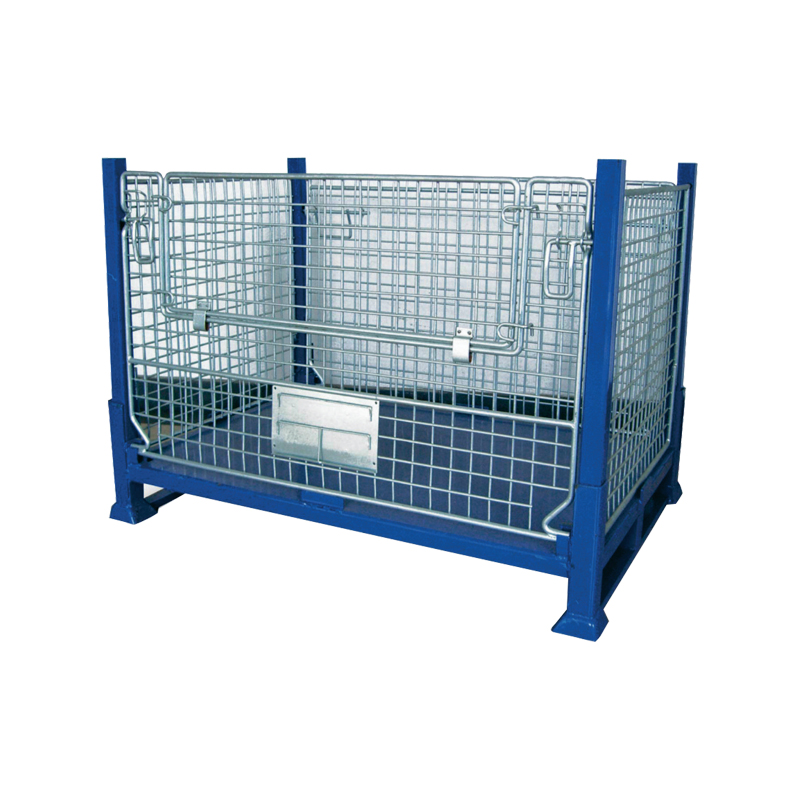 Euro Foldable Steel Stillage for Manufacturing LogisticsCollapsible, stackable steel stillage with 800 kg load, half-opening front door, and dividers for keeping heavy machined parts organized.View Product →
Wire mesh versions trade a little protection for visibility, which helps when a picker needs to confirm a count without opening anything.
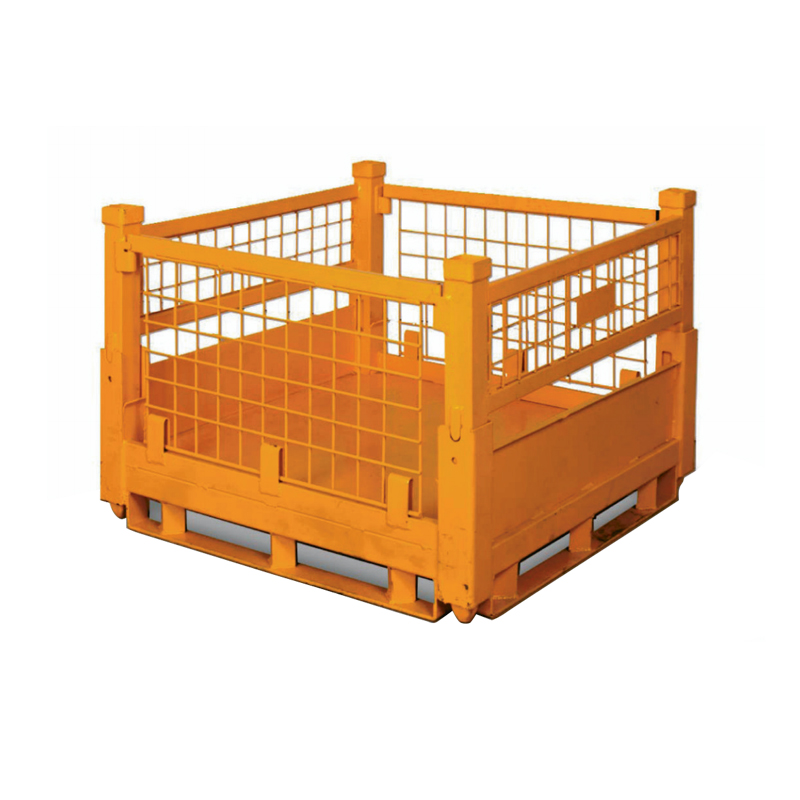 Folding Metal Wire Mesh Container BTS-BM01Collapsible stackable mesh stillage with 1000 kg load; visible contents help confirm counts while supporting warehouse and industrial parts handling.View Product →
Automotive plants show how far this can go. A kit for an engine line is not a tote with a few bolts in it; it is a dedicated rack that protects a finished component, positions it for the operator, and returns for the next cycle. That kind of equipment sits at the centre of what we build for automotive parts manufacturers, and it is a useful reminder that kitting decisions and container decisions are usually the same decision.
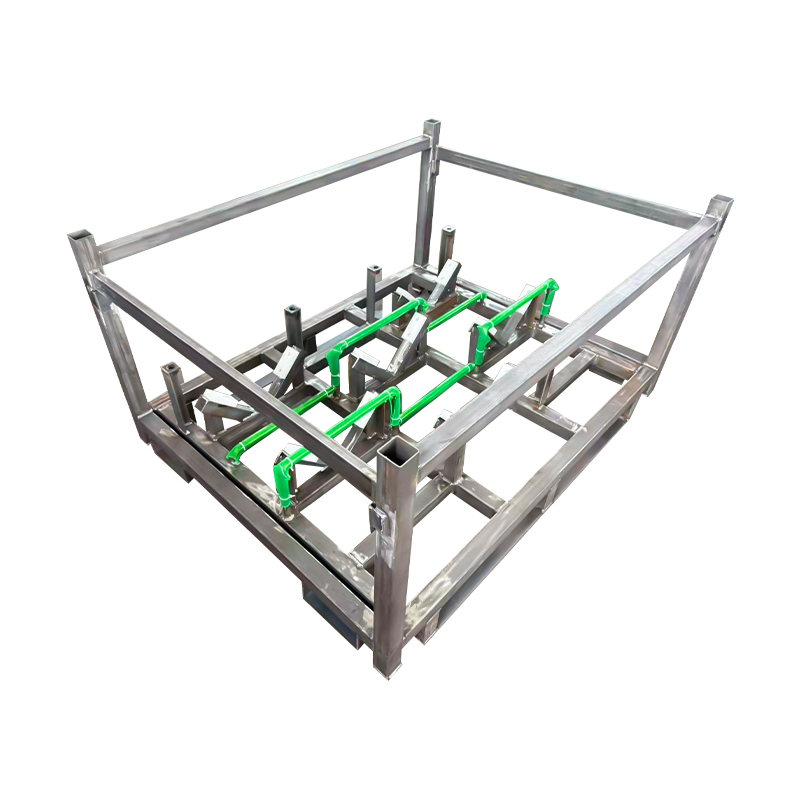 Stackable Automotive Engine Storage Rack for Heavy ComponentsHeavy-duty stackable rack with V- and U-shaped PVC-wrapped brackets to cradle engines, plus forklift-compatible open base for engine handling.View Product →
Three practical rules help at selection time. Keep the loaded kit within a comfortable pushing and lifting weight, and route it around a tug if it cannot be moved safely by hand. Standardize footprint sizes where you can, so racks, trucks, and shelves keep working as products change. Finally, label the container and the kit, not just the shelf, because the container travels and the shelf does not.
Measurement keeps the process honest. A short set of indicators is usually enough: kit accuracy, kit preparation cycle time, line-side inventory value, stockout-induced line stops, container return rate, and operator walking distance per shift. Reviewed monthly, those numbers show whether the process is maturing or drifting.
It is also worth watching the ratio between kit preparation labor and the line time it saves. Kitting moves work upstream, and the point is that upstream work is cheaper, faster, and more accurate than the same work performed by a skilled assembler at a bottleneck station.
The kitting process in manufacturing is not a technology project. It is an operational habit supported by clean data, reliable containers, and a return loop nobody has to be reminded about. Get those three things right and the line stops asking where the parts are, which is exactly what a well-run plant sounds like.
Copyright © 2024 Shanghai Betis Logistics Equipment Co., Ltd. All Rights Reserved.
 Custom Metal Storage Cages Manufacturers

 English
 中文简体
中文简体 日本語
日本語