Content
An automotive parts warehouse can look organized until someone measures what it actually costs. A stamped steel door frame resting on a wooden pallet is easy to move but even easier to damage. An engine block sitting on a skid is heavy enough to become a safety hazard. A storage area that is five extra meters from the line adds walking time to every shift. Automotive parts storage systems exist to close these gaps, and selecting them correctly comes down to part geometry, weight, protective requirements, and how material flows.
Automotive parts do not behave like cartons. They are heavy, irregular in shape, easily scratched, and usually needed in a production sequence rather than in bulk. A standard pallet rack is designed around a uniform footprint; automotive work in process is designed around a part that changes model by model.
Three problems appear quickly when the wrong system is used. The first is damage: a door frame with a dented edge is scrap, not an open box. The second is safety: an unsecured 200 kg engine can shift during handling and injure a worker. The third is efficiency: multiple touch points, searching through mixed bins, and re-stacking parts all add minutes to every hour. A good storage system reduces all three at the same time.
Planning starts by grouping parts that share geometry, weight, and handling needs. The table below gives a practical starting point for an automotive parts warehouse.
| Part Category | Typical Weight | Recommended Equipment | Main Risk to Manage |
|---|---|---|---|
| Engine blocks and transmissions | 50-300 kg | Engine storage racks with locating supports | Shifting and contact damage |
| Door frames, bumpers, stampings | 5-40 kg per unit | Metal stillages with shaped, padded supports | Dents, scratches, and floor clutter |
| Small parts, fasteners, service kits | Up to 25 kg per bin | Shelving, drawer cabinets, bin systems | Picking accuracy and search time |
| Tires and wheels | 8-25 kg per tire | Tire storage racks and stackable tire racks | Sidewall deformation and falling load |
Engine blocks, cylinder heads, transmissions, and exhaust manifolds are dense and valuable. They need a dedicated cradle that keeps the part in a fixed attitude, prevents movement in transit, and keeps machined surfaces away from all other parts. An automotive engine storage and handling rack is normally built from welded steel tube, with locating points matched to the engine's mounting features. When engines are stored for a long period, the rack should allow visual inspection without lifting or re-positioning.
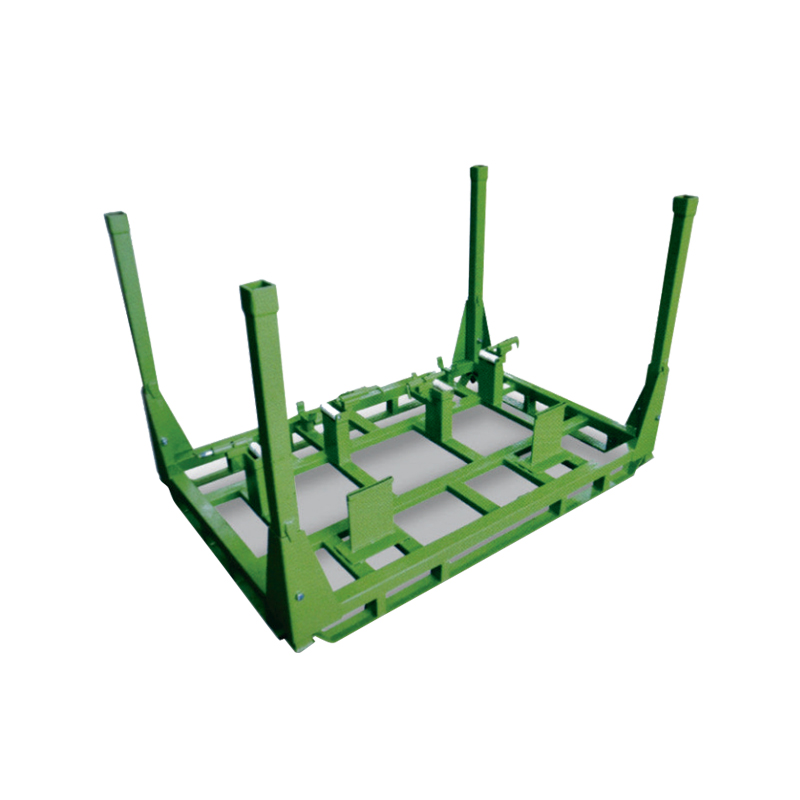 Wholesale Storage Handling Rack for Automotive Engines Suppliers, Manufacturers Shanghai Betis Logistics Equipment Co., Ltd. is China wholesale Storage Handling Rack for Automotive Engines suppliers and OEM/ODM manufa...View Product →
Large stampings are the most common reason an automotive warehouse loses floor space. They take up volume rather than weight, and their sharp edges are a risk to both people and neighboring parts. Metal stillages for automotive door frames, bumpers, and stamping parts hold each panel in a vertical or near-vertical orientation with padded supports. This reduces the floor area per part, protects the visible surface, and makes the contents clear at a glance.
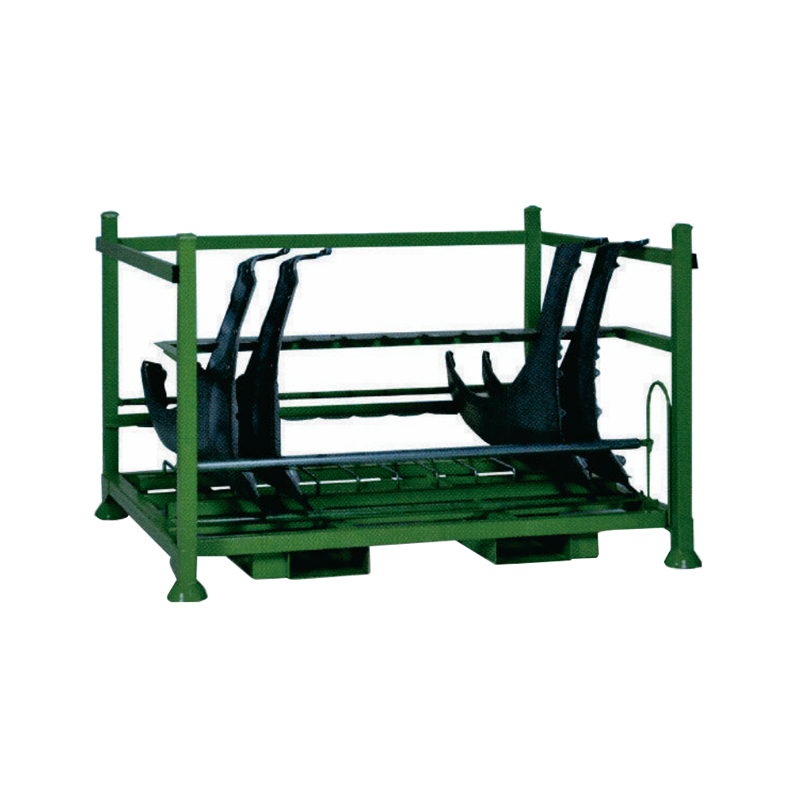 Wholesale Metal Stillages for Automotive door-frame/Bumper/Stamping Parts SuppliShanghai Betis Logistics Equipment Co., Ltd. is China wholesale Metal Stillages for Automotive door-frame/Bumper/Stamping Parts suppliers...View Product →
Not every automotive part is heavy. Nuts, bolts, clips, seals, sensors, and service kits are normally stored in bins or drawers. Before spending money on a system, it is worth doing a cost-per-slot comparison of shelving, drawers, and bins to check which option gives lower picking time. Drawer cabinets with dividers work well for high-value or small-volume items; bolt bins are acceptable for low-cost hardware that is used often.
Wheels and tires have a different failure mode: deformation. A tire stored flat on the floor or under heavy stack pressure becomes out-of-round and can be rejected by end customers. Tire storage racks keep wheels upright and separated. Stackable tire racks use vertical space while avoiding pressure on the sidewall, and foldable versions reduce the empty return cost when racks circulate between plants.
Part type determines the system, but five criteria determine whether the system performs in daily use.
Rated load is not a suggestion. A frame rated for 1,000 kg should not routinely carry 1,200 kg, because welds gradually fatigue and the load can shift during transport. When comparing systems, check the rated load and the method used to determine it. The production process matters too: consistent welding quality is the difference between a frame that lasts ten years and one that fails early.
Automotive parts are sensitive to corrosion and abrasion. Electrostatic powder-coated surfaces are easier to clean and less likely to scratch parts than bare steel. If the storage system will operate in an environment with oil mist, coolant, or humidity, the coating specification should be part of the purchase conversation, not an afterthought.
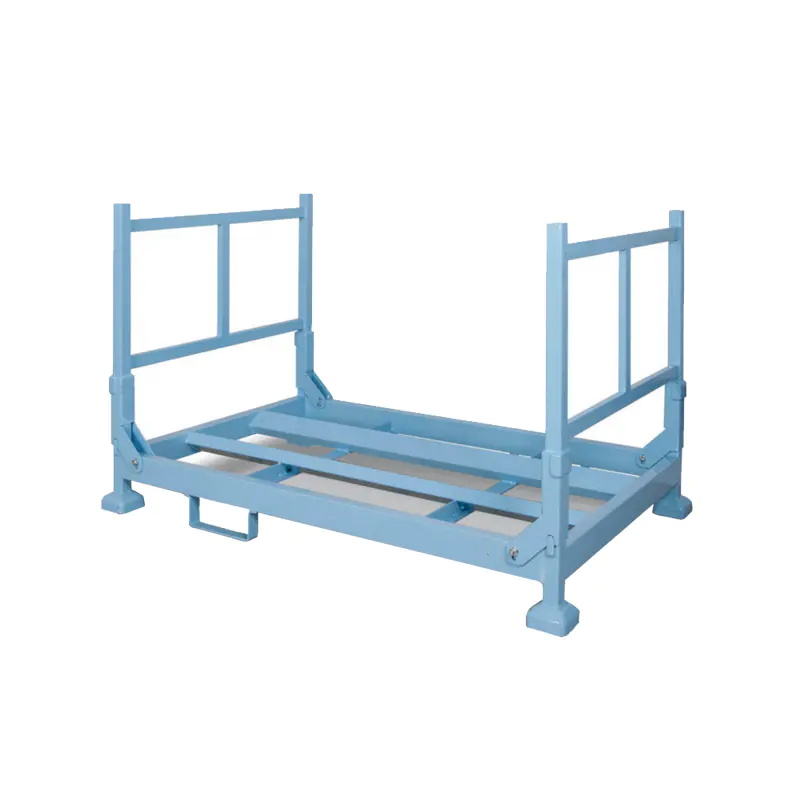
When stillages travel to a production line or to another plant, the empty return trip is a real cost. Foldable steel stillages collapse to a fraction of their loaded height, so a truck can carry several times more units on the way back. A foldable design usually costs more upfront, but it pays back quickly for a fleet that rotates regularly.
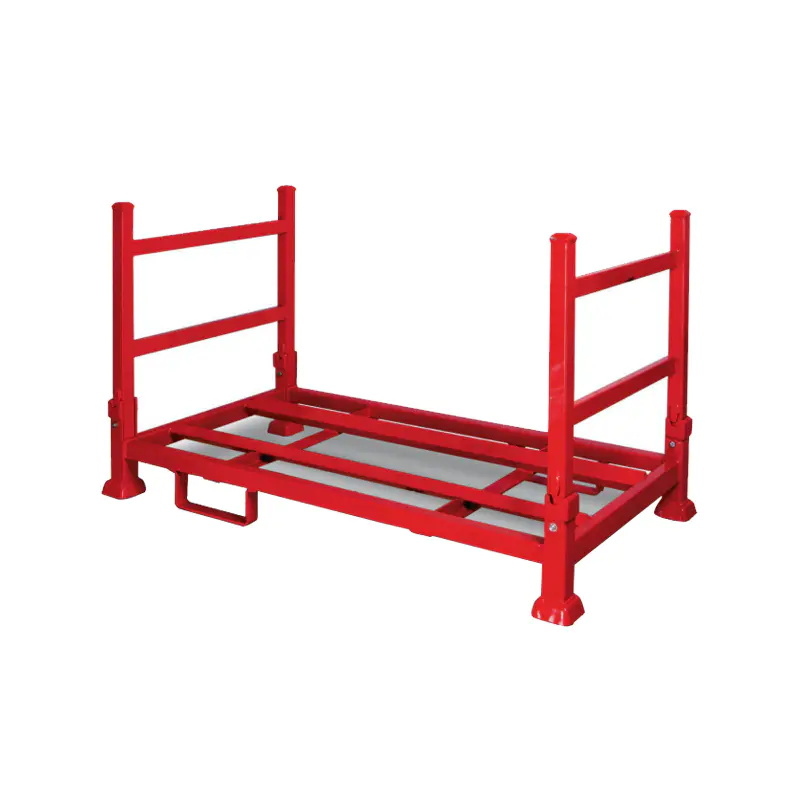
Floor space is expensive; ceiling height is usually underused. Systems that stack let a plant store the same number of parts in a smaller footprint. For example, a stackable automotive engine storage rack allows two or three loaded frames to be combined vertically, provided the floor is flat and the stacking height limit is respected.
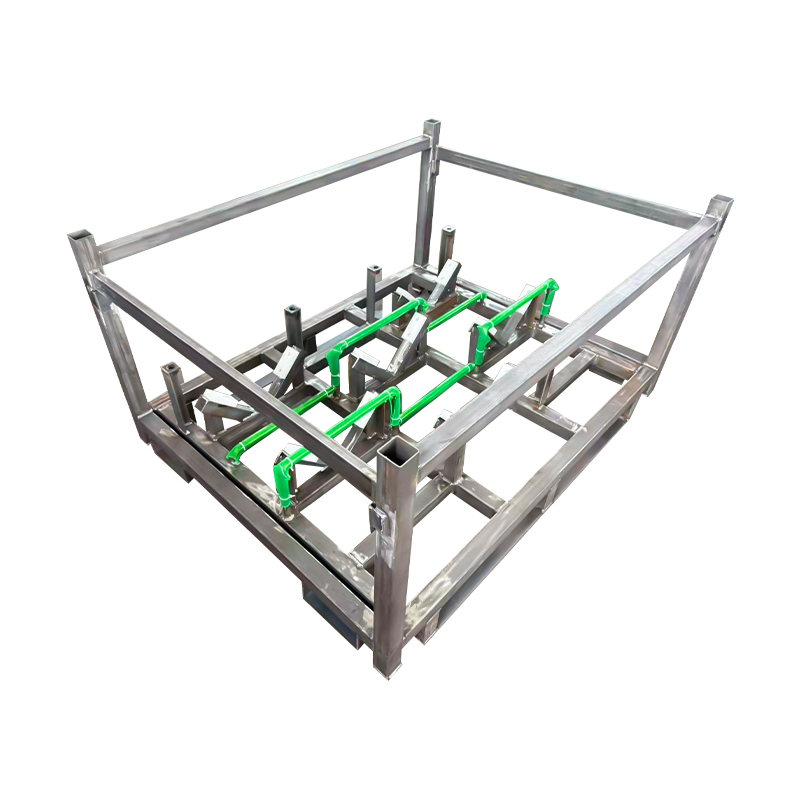 Wholesale Stackable Automotive Engine Storage Rack Suppliers, Manufacturers - ShShanghai Betis Logistics Equipment Co., Ltd. is China wholesale Stackable Automotive Engine Storage Rack suppliers and OEM/ODM manufactur...View Product →
A storage system either supports inventory control or makes it harder. Open mesh or slotted side panels let workers confirm what is inside a stillage without breaking the packaging. Legible identification panels on the frame support first-in, first-out rotation when parts are issued in sequence. For a broader view of how equipment and layout work together, efficient space and inventory solutions for automotive parts explain how to combine multiple storage methods in one facility.
Standard products solve a large share of the problem. The remaining gap is custom engineering. A serious manufacturer will ask about part dimensions, weight, production rate, stack height, fork pocket positions, and surface finish before quoting a price. If the answer to any of those questions is "we have not measured it yet," the first step is not buying equipment; it is measuring the part and the process around it.
Shanghai Betis Logistics Equipment has spent more than a decade building steel stillages, wire mesh containers, and engine racks for automotive and industrial customers. The company's engineering team studies how a part moves through receiving, storage, kitting, and line-side delivery before recommending a frame. Its production capacity exceeds 100,000 units per year, which means a customer does not have to choose between standard pricing and a fit-to-part design.
The right automotive parts storage system protects high-value components, keeps workers safe, and reduces the space between processes. Start with the part itself, group it by geometry and weight, then select the equipment that follows the material flow instead of forcing the flow to follow the rack.

Copyright © 2024 Shanghai Betis Logistics Equipment Co., Ltd. All Rights Reserved.
 Custom Metal Storage Cages Manufacturers

 English
 中文简体
中文简体 日本語
日本語