Content
Most automotive parts sorting problems do not start on the sorting table. They start when a sorted part has no designated place to land. A premium engine component waits on a concrete floor, gets scratched against a steel edge, or sits under a pile of similar parts whose identification marks have already worn off. The sorting result may be correct, but the physical system around it slowly destroys that result. Sorting operators, quality inspectors and warehouse planners all know this scenario. It does not happen because the sorting rule is unclear. It happens because the container behind the sorting station was chosen without a specific part in mind.
The sorting process for automotive parts produces three immediate needs. Parts must remain identifiable, they must remain separated from each other, and they must be moved onward without damage. Those three needs are met or missed by the container, stillage or rack that receives the part after inspection.
Automotive components vary widely. A stamped door frame is long and flexible, an engine block is heavy and rigid, and a sensor or bracket can be fragile. A container that works for one category will fail for another if you do not define the part family, weight band and surface protection level before selecting equipment.
The practical conclusion is that sorting efficiency is not decided by the speed of the sorter alone. It is decided by how quickly the sorted part can be placed into a known, safe and stable position. This is why automotive plants treat the receiving container as part of the process, not as a passive storage item.
When you compare containers for an automotive parts sorting line, four features matter most.
| Feature | Open wire mesh container | Solid steel container or stillage |
|---|---|---|
| Part visibility | High through mesh openings | Low unless the side is open |
| Protection from impact | Moderate, depends on mesh spacing | Higher for thin panels and fragile surfaces |
| Stacking stability | Good when stacking lugs are welded | Very good with reinforced corner posts |
| Folding ratio when empty | Typically over 70% volume reduction | Lower, unless a folding design is used |
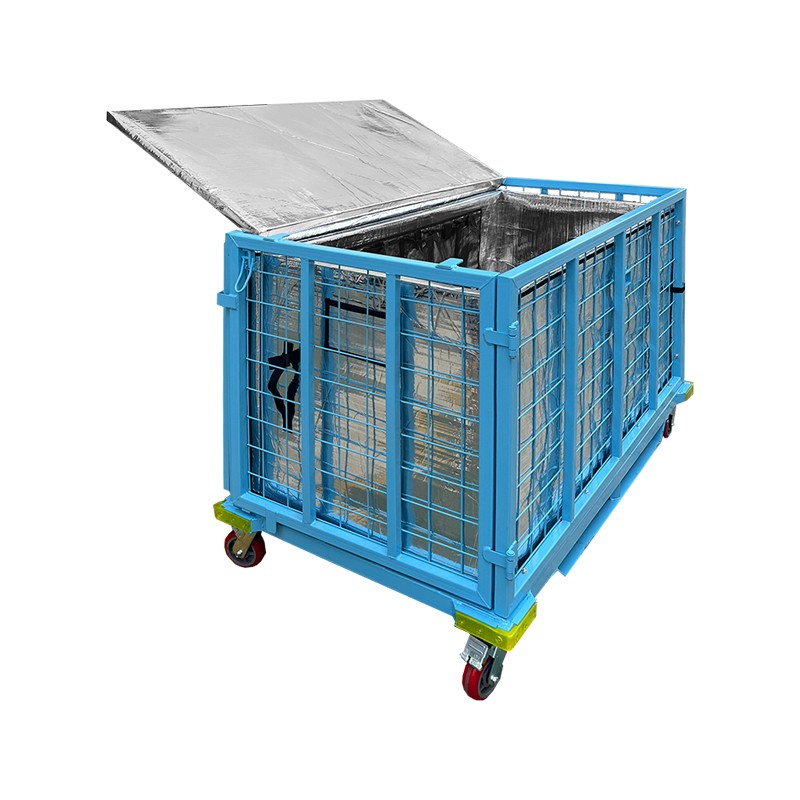
Mesh containers keep parts visible and make it easier to confirm the contents of a load at a glance. Solid-side containers protect delicate or polished surfaces from occasional contact with tools, hooks or adjacent parts. For sorted parts that wait for the next shift or the next truck, the container itself becomes the quality buffer.
If you process panels, bumpers or door frames, the width and length of the loaded container must be matched to the part, not to a standard pallet footprint. A part that overhangs a container edge is no longer protected by the container.
Surface coating is another hidden factor. Powder coating or hot-dip galvanizing changes how easy a container is to inspect and how quickly it develops rust. In a sorting area where parts are scanned and visually checked, a coated surface with a consistent color reduces eye fatigue and improves the accuracy of the visual inspection step.
Heavy components and long stampings do not behave like small parts. They need dedicated geometry. That is why automotive material handling systems separate small parts from large body parts.
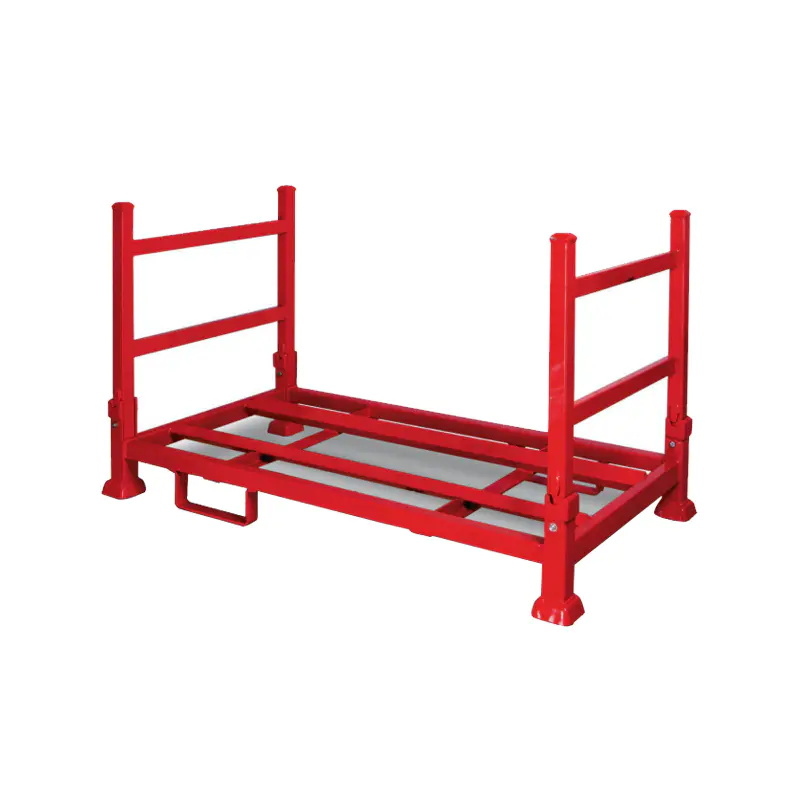
For engines, the requirement is to avoid any movement of the block during handling. A rack that locates the engine in a fixed cradle and keeps the stack height stable makes the sorting area safer and faster.
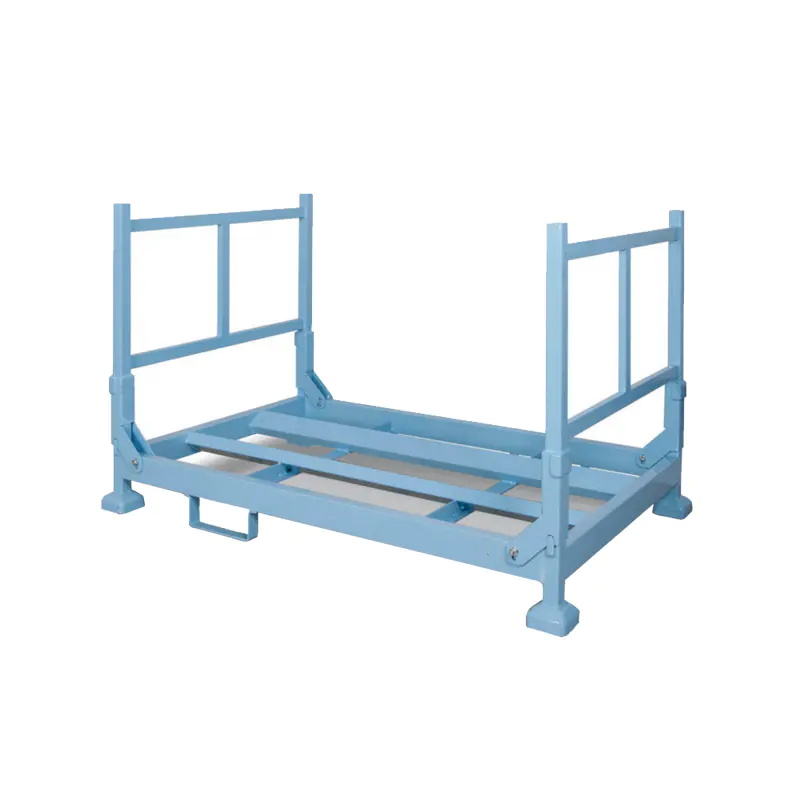
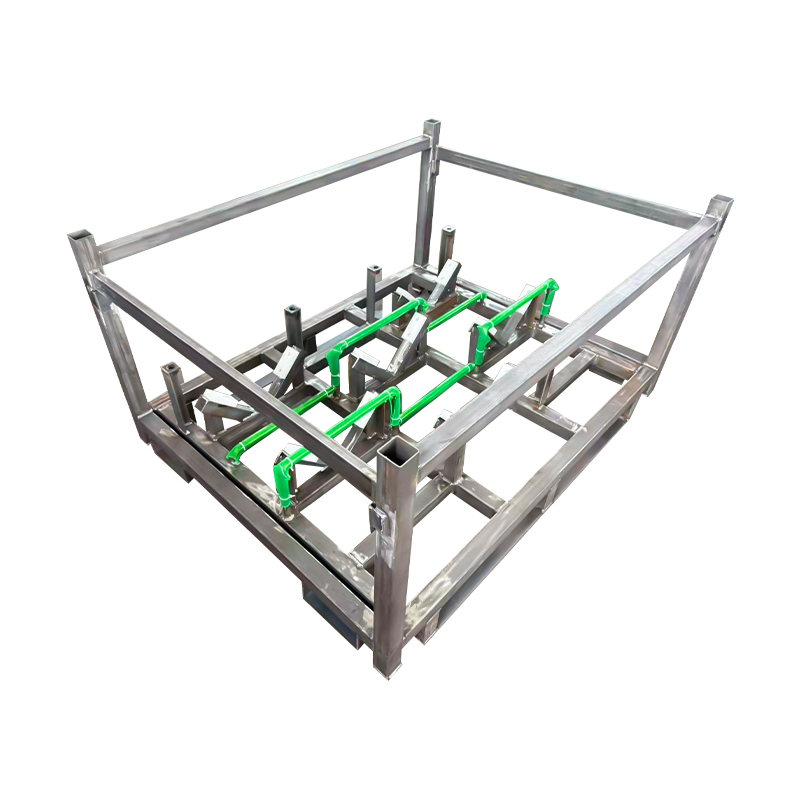 Stackable Engine Storage Rack with Customizable Cradle BracketsThis rack provides a fixed cradle that holds engines securely during handling and stacking, preventing movement and surface damage. Its stackable design improves space efficiency in sorting areas.View Product →
For door frames, bumpers and stamping panels, the main risk is flexing and edge damage. A stillage that supports the part along its natural load path and prevents sideways shifting will protect the surface and allow inspection labels to remain visible.
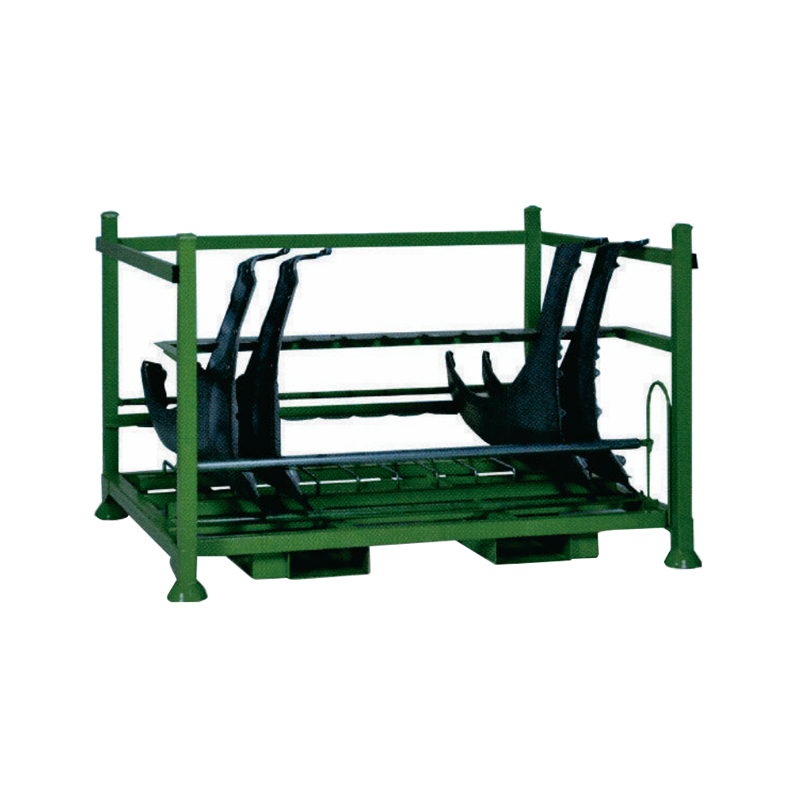 Steel Stillage for Bumpers, Doors, and Stamped PanelsDesigned to support large automotive panels along their natural load path, this stillage prevents flexing and edge damage. It allows inspection labels to remain visible and protects surfaces during storage.View Product →
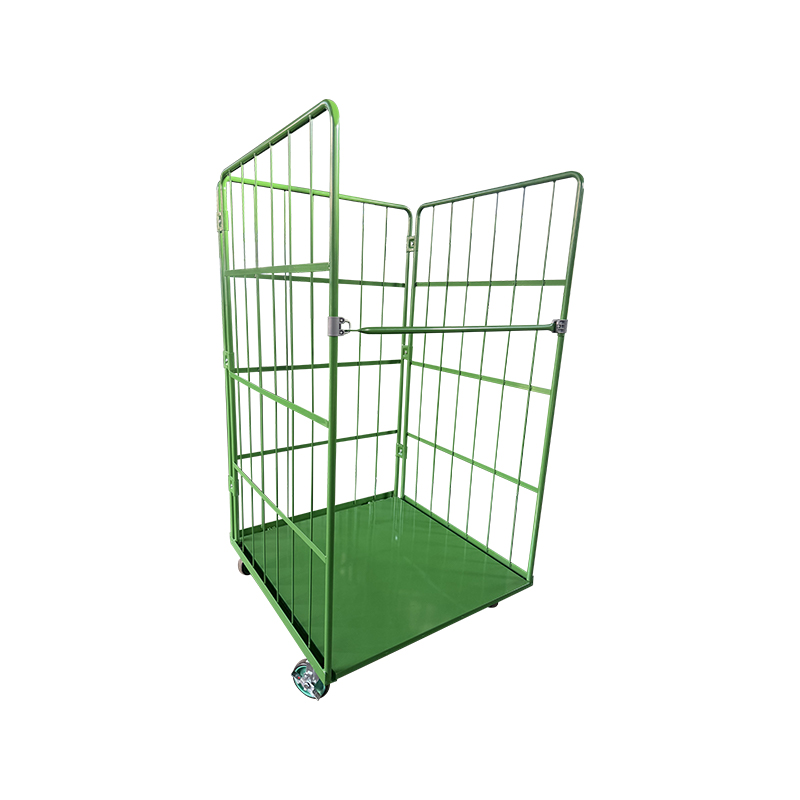
When the sorted part is a smaller component such as a bracket, nut or harness, a mesh container with a solid base or a solid container with mesh sides can be used. The goal here is to see the content while preventing small parts from sliding out.
Custom racks should be sized to the actual part drawing. Even a small gap on each side can mean the difference between a stable stack and a loaded unit that tilts. If the rack is foldable, confirm that the folding mechanism does not interfere with the locating geometry when the rack is closed.
A sorting area plan should start with the part flow. At the inbound side, reserve a zone for undifferentiated parts. At the outbound side, reserve a zone for sorted, ready-to-ship parts. In between, place the containers, stillages and racks so that a sorter can reach the next empty container in one step.
Line height should be set to the working height of the sorter. If containers are stacked, the highest practical hand-operating level is generally around 1.5 meters. Above that, use a mobile platform or move the stack by forklift.
Space efficiency comes from folding containers when they are empty and from stacking the same type of rack on top of itself. For automotive parts, this is especially important because the product mix changes and single-purpose containers can become an obstacle.
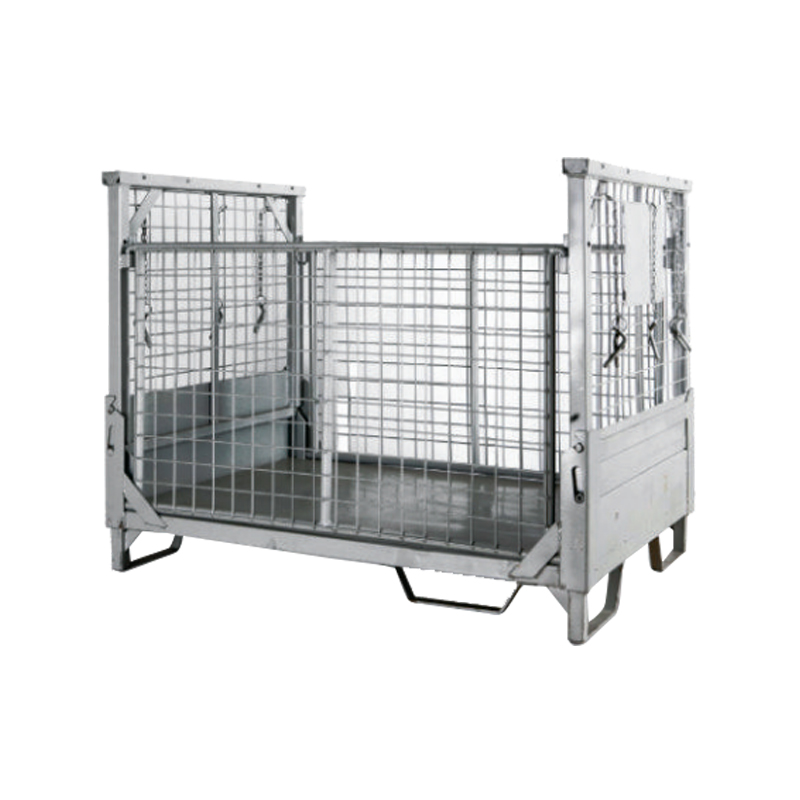 Metal Mesh and Solid Containers for Auto Parts StorageThese containers combine mesh and solid panels for visibility and security. They are stackable and customizable, with adjustable compartments to fit various part sizes, making them ideal for efficient inventory management.View Product →
For a deeper look at how racks, stillages and space-saving strategies apply to automotive parts, see this guide to automotive parts storage systems.
Another planning rule is to keep the same container family together. If one line uses mesh containers and another uses stillages, avoid mixing them in one stack. Mixed stacks create missing support points and increase the risk of a load shifting.
The lesson is simple. Sorting is not only a data and inspection exercise. It is also a physical flow problem. If the container behind the sorter is strong enough, stackable, sized to the part and folded away when empty, the sorting station will produce consistent results day after day. If the container is an afterthought, no amount of process discipline will save the parts from contact damage, misidentification or wasted handling time.
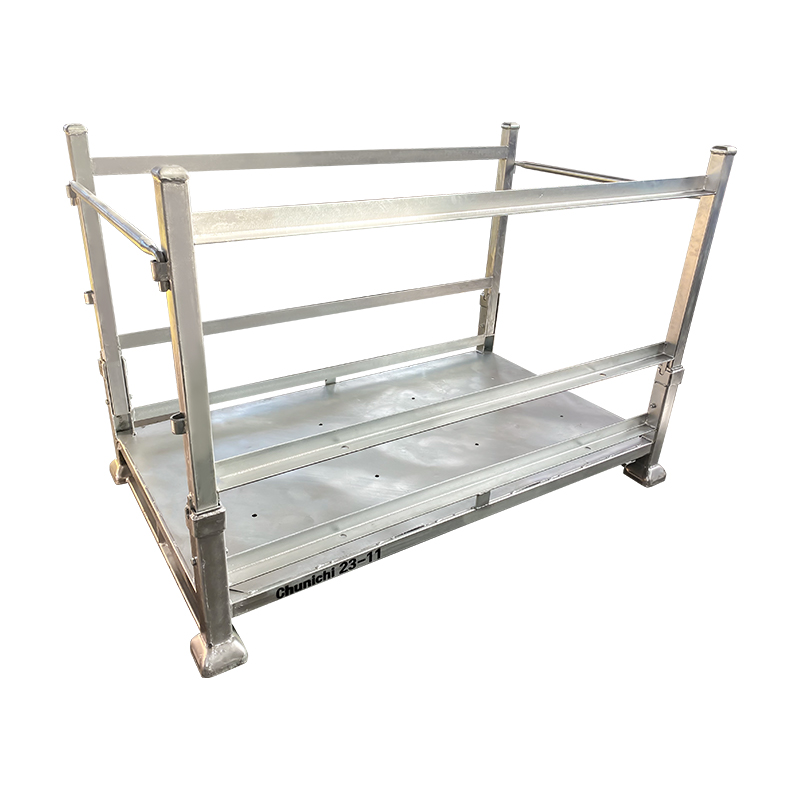

Copyright © 2024 Shanghai Betis Logistics Equipment Co., Ltd. All Rights Reserved.
 Custom Metal Storage Cages Manufacturers

 English
 中文简体
中文简体 日本語
日本語