Content
Ordering custom logistics equipment from China is one of the most cost-effective decisions a warehouse manager, supply chain director, or procurement team can make — but only when you know what the process actually looks like. Unlike ordering off-the-shelf consumer goods, custom metal logistics equipment involves design consultation, sample approval, precision manufacturing, and ocean freight of heavy cargo. The experience is fundamentally different, and first-time buyers who go in without a roadmap often face unnecessary delays, specification mismatches, or unexpected costs. This guide walks you through every key stage so you arrive prepared.
China has built an unmatched manufacturing ecosystem for metal logistics equipment. From roll cage trolleys and wire mesh containers to foldable stillages and stacking racks, Chinese factories combine low-cost steel sourcing, advanced welding automation, and experienced R&D teams — capabilities that would cost significantly more to replicate in Europe or North America.
Beyond price, the customization depth available from Chinese manufacturers is a major draw. Most factories can work directly from your functional brief, producing items to your specific load capacity, dimensional envelope, surface finish, and collapse or fold requirements. Annual output at established facilities routinely exceeds 100,000 sets, meaning they can handle both pilot orders and large-scale rollouts without quality tradeoffs.
Proximity to major seaports is another structural advantage. Shanghai, Ningbo, and Qingdao — three of the world's busiest container ports — give manufacturers fast, reliable access to global shipping lanes. If you need custom logistics equipment solutions tailored to your industry workflow, the combination of manufacturing scale, design capability, and port access makes China the logical starting point.
The single biggest mistake first-time buyers make is contacting a factory with a vague brief. A request like "we need a storage cage, roughly 1 meter wide" will generate an equally vague — and ultimately useless — quotation. Before your first email, lock down the following:
Annotated sketches, CAD drawings, or even clear photographs of an existing product you want to replicate are worth more than paragraphs of text description. The more precisely you communicate your needs upfront, the fewer revision rounds you'll go through — and the more accurately comparable any quotes you receive will be.
Not every supplier quoting on logistics equipment is a manufacturer. A significant portion of Chinese exporters are trading companies that outsource production, add a margin, and act as intermediaries. This is not inherently problematic, but it does affect your pricing, communication speed, and ability to request design modifications mid-process. Identifying direct factories gives you more control and typically better value.
Key verification steps before committing to a supplier:
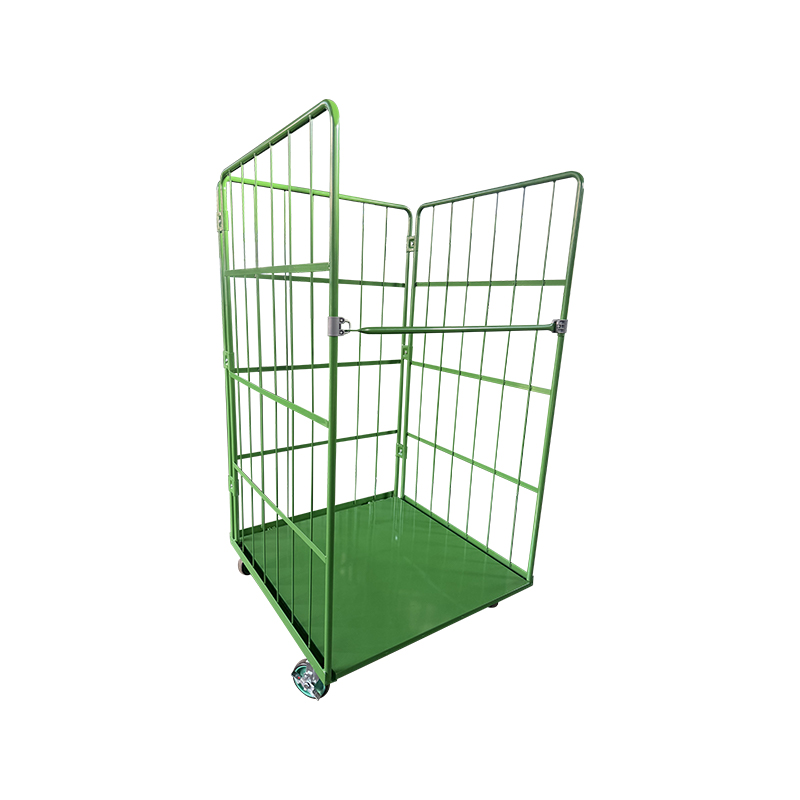
Minimum order quantities (MOQ) for custom logistics equipment are typically lower than many buyers expect. For a straightforward custom roll cage trolley designed for warehousing and distribution operations, most Chinese manufacturers will accept initial orders starting from 20 to 50 units, especially when a sample fee has already been paid. More complex structural items may require higher volumes to justify tooling investment, so clarify this early in negotiations.
Custom logistics equipment almost always requires a physical sample before bulk production begins — and this step deserves more time than most buyers budget for. Unlike ordering a commodity product where you're verifying an existing design, custom sampling is an iterative process: the factory interprets your brief, produces a prototype, you review it, and revisions follow.
A typical sample cycle looks like this:
For example, when ordering foldable wire mesh containers customized to your storage rack dimensions, even a 20mm deviation in external footprint can cause incompatibility with existing pallet systems. Physical sampling eliminates this risk before it reaches your warehouse at scale.
Sample costs are typically charged separately and range from USD 150–500 per unit depending on complexity. Reputable manufacturers will credit this cost against your bulk order.
Once the sample is approved and a purchase order is confirmed, bulk production begins. Understanding what drives lead time helps you plan your inventory and avoid the frustration of vague "4–6 weeks" estimates.
A realistic production timeline for custom metal logistics equipment typically breaks down as follows:
| Phase | Typical Duration | Notes |
|---|---|---|
| Raw material procurement | 3–7 days | Steel tubes, mesh, castors — may be longer if non-standard specs |
| Cutting and forming | 5–10 days | Laser cutting, bending, pressing |
| Welding and assembly | 7–14 days | Varies with order volume and automation level |
| Surface treatment | 3–5 days | Powder coating or galvanizing; cure time required |
| Quality inspection | 2–3 days | Dimensional check, load test, finish inspection |
| Packing and loading | 2–3 days | Bundling, palletizing, container loading |
In total, expect 25–45 working days from production start to cargo ready at port for a standard custom order. Peak factory seasons — particularly around Chinese New Year (January–February) and the Golden Week holidays — can add 1–2 weeks to these estimates. Always confirm the factory's holiday schedule when placing your order.
A good practice is to request photo or video updates at each major milestone: raw materials on-site, production in progress (30–50% complete), and pre-shipment inspection results. This keeps you informed and gives you the opportunity to flag issues before they become bulk problems.
Logistics equipment is fundamentally different from small consumer goods when it comes to freight planning. Metal cages, stillages, and trolleys are heavy, often bulky, and require careful consideration of how they are packed and containerized.
The good news is that many well-designed logistics equipment items are foldable or collapsible, which dramatically improves shipping economics. For instance, foldable steel stillage options that collapse flat can typically achieve a 4:1 or 5:1 packing ratio compared to their deployed size, allowing far more units per container and reducing your cost per piece significantly.
Sea freight is the standard mode for bulk orders of metal logistics equipment. A 20-foot container can hold approximately 8–12 tonnes of cargo; a 40-foot container roughly doubles that. Transit times from Shanghai to major European ports run 25–32 days; to the US West Coast, 14–18 days; to the US East Coast, 28–35 days.
Key shipping terms to understand before negotiating with your supplier:
For smaller or trial orders that do not fill a full container, LCL (Less than Container Load) sea freight consolidation is available. Expect slightly longer transit times and additional handling fees, but it is a practical option for first orders of 1–5 cubic metres.
Clearing your cargo through customs is the final hurdle before the equipment reaches your facility. For metal logistics equipment, the process is well-established — but paperwork errors can cause costly port delays.
Documents you will typically need to arrange or receive from your supplier:
Metal logistics equipment typically falls under HS codes in Chapter 73 (Articles of Iron or Steel) or Chapter 84 (Industrial Machinery), depending on the specific product. Import duty rates vary widely by destination country and product classification — EU importers face different rates than those in the US, UK, or Australia. Confirm the correct HS code with your freight forwarder before the cargo ships, as misclassification can result in fines or reclassification at the border.
Working with a licensed freight forwarder is strongly recommended for first-time importers. According to US Customs and Border Protection guidelines on commercial import requirements, importers are ultimately responsible for the accuracy of their entry documents — a forwarder helps you get this right the first time.
Even experienced buyers run into avoidable problems when ordering custom equipment from China. These are the four most common — and how to sidestep each one.
The most frequent cause of post-delivery disappointment. The remedy is a detailed written specification agreed upon before any deposit changes hands, with the approved sample serving as the binding quality reference for bulk production.
Buying 500 units of a product you have never physically tested is a significant financial risk. The 2–3 weeks a sample review adds to your timeline is inexpensive insurance against receiving cargo that doesn't fit your racking, fails at operational loads, or has a finish that chips prematurely.
Standard payment terms for custom manufacturing are 30% deposit at order confirmation and 70% balance after pre-shipment inspection, before the cargo is released. Never pay the full amount before production is complete and verified. If your supplier cannot accept this structure, treat it as a red flag.
The ex-factory unit price is only one component. Add ocean freight, port handling, customs duties, inland haulage, and inspection fees before comparing supplier quotes — otherwise you may choose the wrong one based on incomplete numbers.
If you have questions about any stage of the process before placing your first order, reviewing frequently asked questions about the ordering and production process is a useful starting point. For more complex requirements, engaging directly with a manufacturer's team to discuss your specific needs — including design consultation, sample logistics, and after-delivery end-to-end service and after-sales support — will give you the clearest picture of what to expect from start to finish.
Copyright © 2024 Shanghai Betis Logistics Equipment Co., Ltd. All Rights Reserved.
 Custom Metal Storage Cages Manufacturers

 English
 中文简体
中文简体 日本語
日本語