Content
Warehouse space is rarely free, and floor area is usually the first constraint teams notice. Yet many operations still treat storage as a horizontal problem, spreading inventory across more square metres while valuable airspace sits unused. In our experience with metal unit-load equipment, the most practical gains often come from a mix of smart layout, stackable containers and racks, and a clear view of when automation is worth the investment. This guide looks at warehouse vertical storage solutions with both eyes open: where high-density systems fit, where simple metal equipment earns its keep, and how to choose without overbuilding.
Vertical storage is not simply about buying taller shelving. It is about using the cubic space above the floor more deliberately, so that the same building holds more stock, shortens travel distances and keeps frequently used items within safe reach. The benefits usually show up in four places: higher storage density, better inventory organisation, less congestion in picking aisles, and improved ergonomics when access is planned around the people doing the work.
That said, not every warehouse needs a high-bay automated system. A small parts operation may benefit from a vertical lift module, while a manufacturer handling engine blocks, tyre assemblies or stamped body parts may get more value from stackable steel racks and heavy-duty containers. The table below compares common approaches at a practical level.
| Approach | Best fit | Key strength | Watch-outs |
|---|---|---|---|
| High-bay pallet racking | Stable palletised stock and repeatable SKUs | Dense use of height with familiar forklift handling | Floor loading, building height and aisle access |
| Mezzanine or multi-tier shelving | Small parts, pick faces and manual order preparation | Adds usable levels without a new building | Fire egress, floor capacity and stair or lift access |
| Vertical lift modules and AS/RS | High-value small parts and high-throughput picking | Automation, security and compact footprint | Capital cost, maintenance and software integration |
| Stackable metal racks and containers | Heavy parts, work-in-progress and shaped loads | Direct vertical stacking without fixed racking | Load matching, stack height and inspection routines |
| Foldable steel stillages and mesh containers | Returnable logistics and bulky parts | Fold flat to save space on return journeys | Hinge care, load restraint and consistent stacking |
The right answer is rarely the most complex one. It is the one that matches the load, the handling method and the pace of the operation.
For many warehouses, the fastest route to more vertical capacity is not a new automation project. It is a disciplined unit-load system. Stackable metal racks and containers let you build height into the storage plan while keeping each load stable, accessible and easy to move. Because the rack or container becomes the storage structure, you can create temporary density in a corner, a staging lane or a production cell without committing to fixed racking.
The details matter. A consistent footprint, a known load rating and a stable stacking pattern make the difference between useful density and a safety problem. This is where purpose-built metal equipment helps: it is designed around repeatable loads rather than improvised stacking.
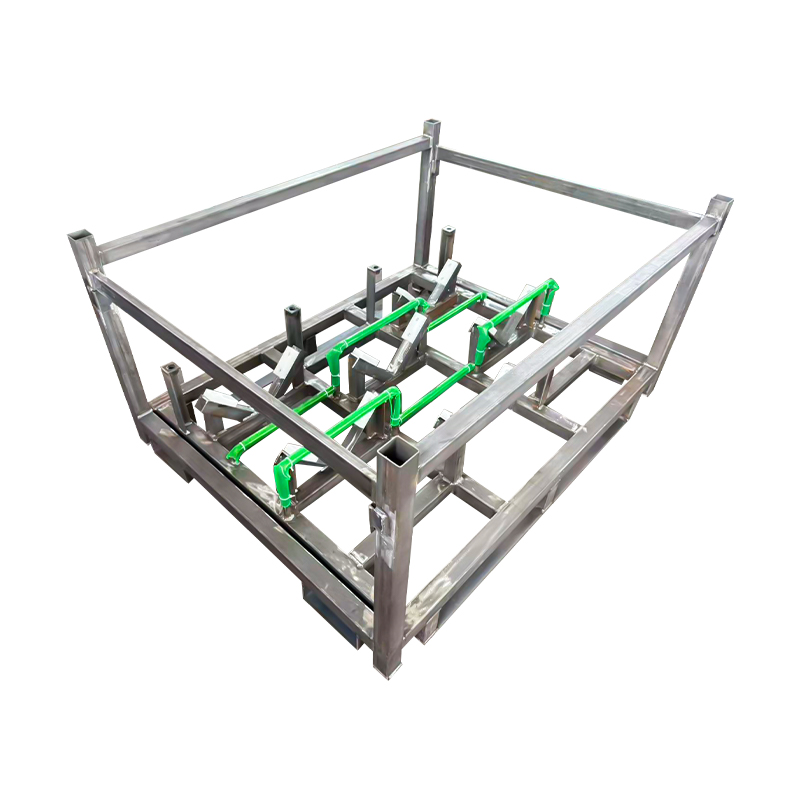
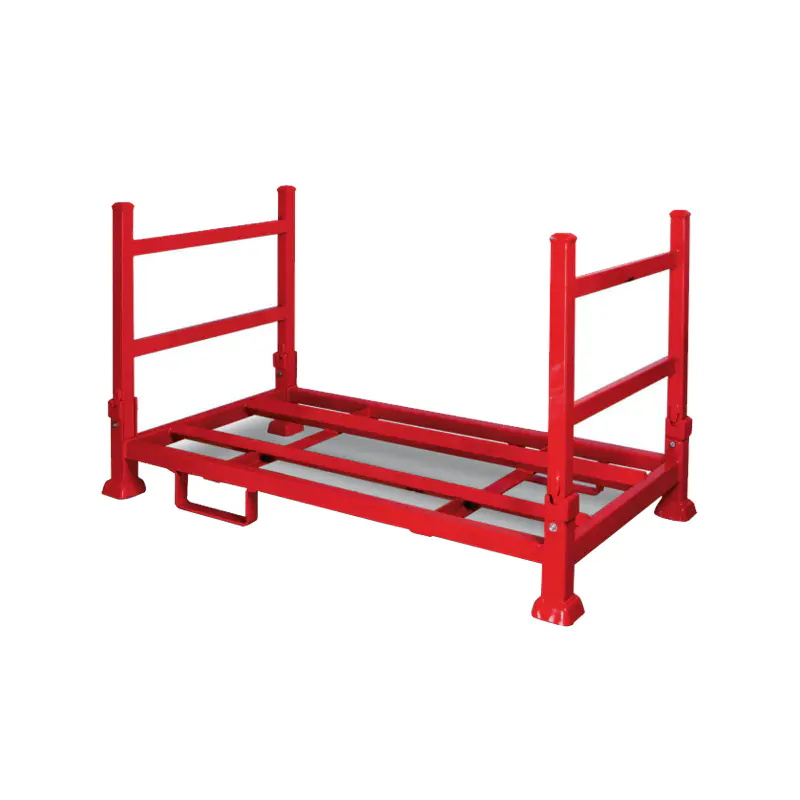
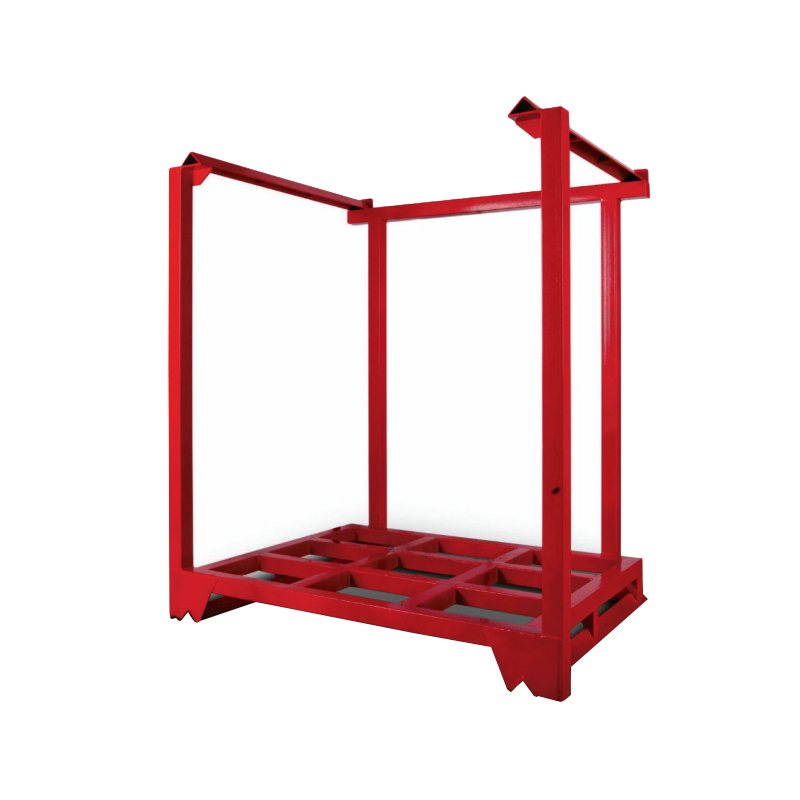 Welded Metal Stacking Racks for Dense, Repeatable Load StoragePurpose-built square-tube racks with fixed footprint, 1000 kg load rating and four-high stacking support uniform inventory storage without improvised stacking.View Product →
This approach works best when loads are uniform enough to stack safely and when operators can see the stack height limit without guessing. It also pairs well with lean manufacturing, because each rack or container can become a controlled buffer between processes.
Vertical storage only works when the container suits the product inside it. A rack that is perfect for tyre assemblies will not protect a painted bumper, and a mesh container that gives excellent visibility may not provide the side support needed for loose small parts. The following groupings are a useful starting point.
Foldable steel stillages are a practical choice for large components that need a stable base, forklift access and the ability to fold flat when empty. The folding feature matters in returnable logistics: it reduces the space needed for empty equipment on trucks and in the yard. For warehouses that receive bulky parts in one direction and need to recover container space in the other, this can be a meaningful saving.
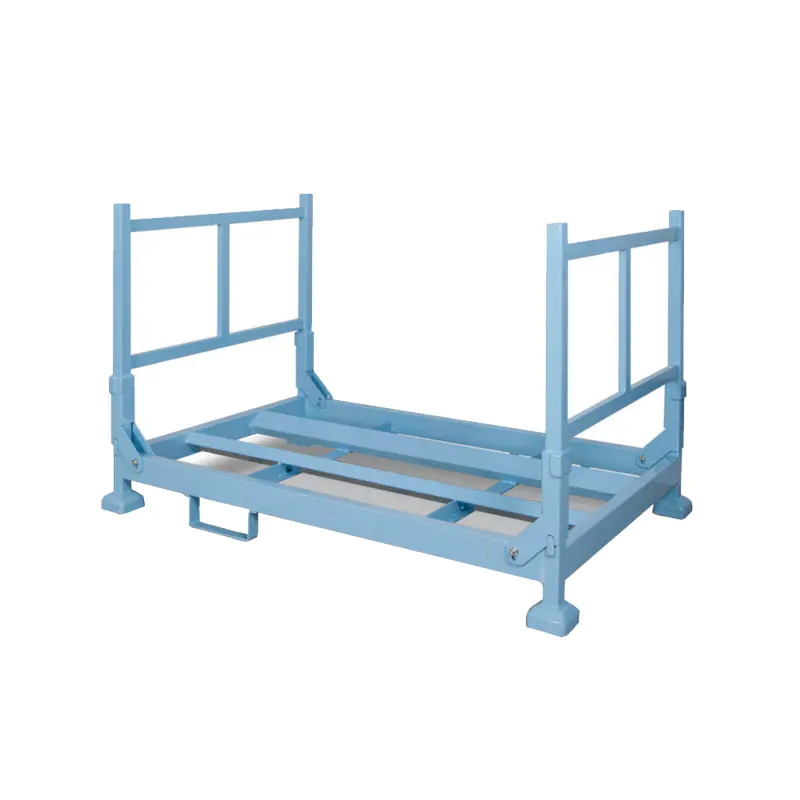
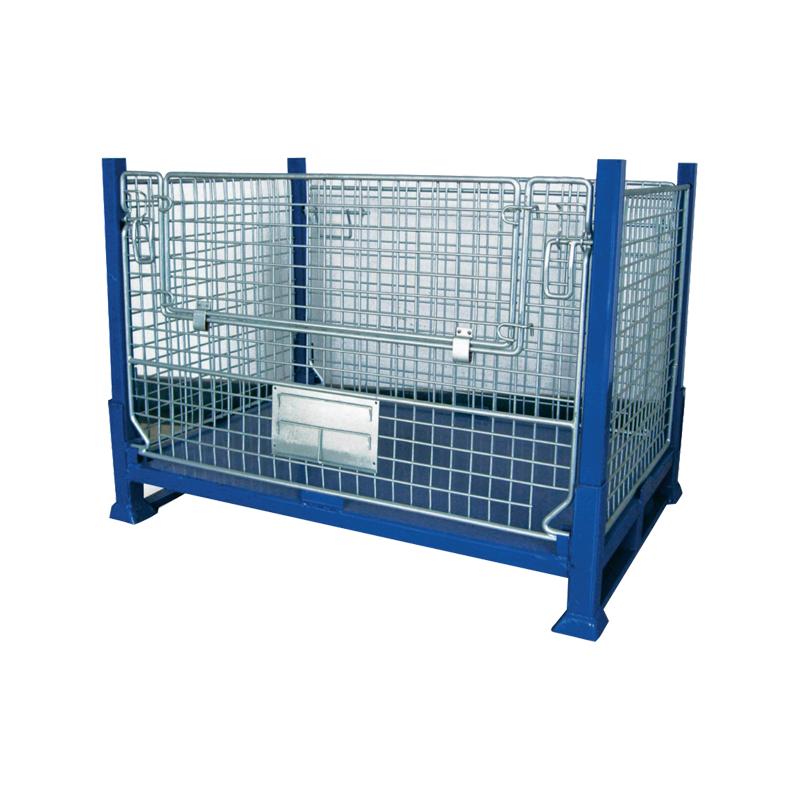 Euro Foldable Steel Stillage for Returnable Logistics and Bulky PartsCollapsible 800 kg stillage stacks four high and folds flat when empty, reducing return transport and yard space for bulky components.View Product →
Check the hinge and latch design, the load rating and the stacking method before committing. A stillage is only as good as its weakest contact point.
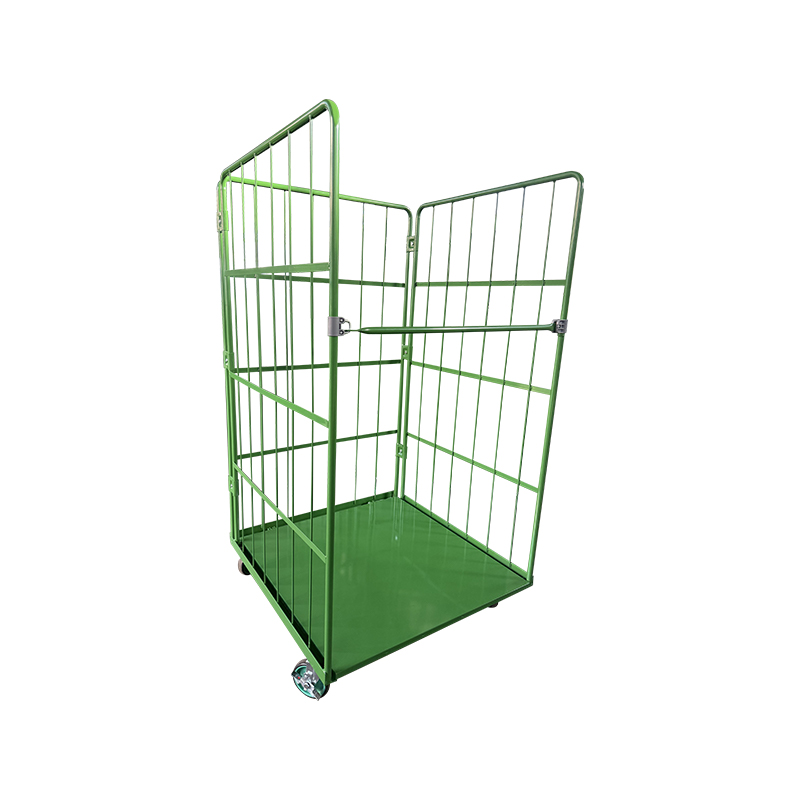
Wire mesh containers are useful when inventory needs to be seen, counted and inspected without opening every unit. They also allow airflow, which is helpful for parts that need to dry or for environments where condensation is a concern. Stackable mesh containers can turn a plain floor area into a compact, tiered storage zone while keeping contents visible from the aisle.
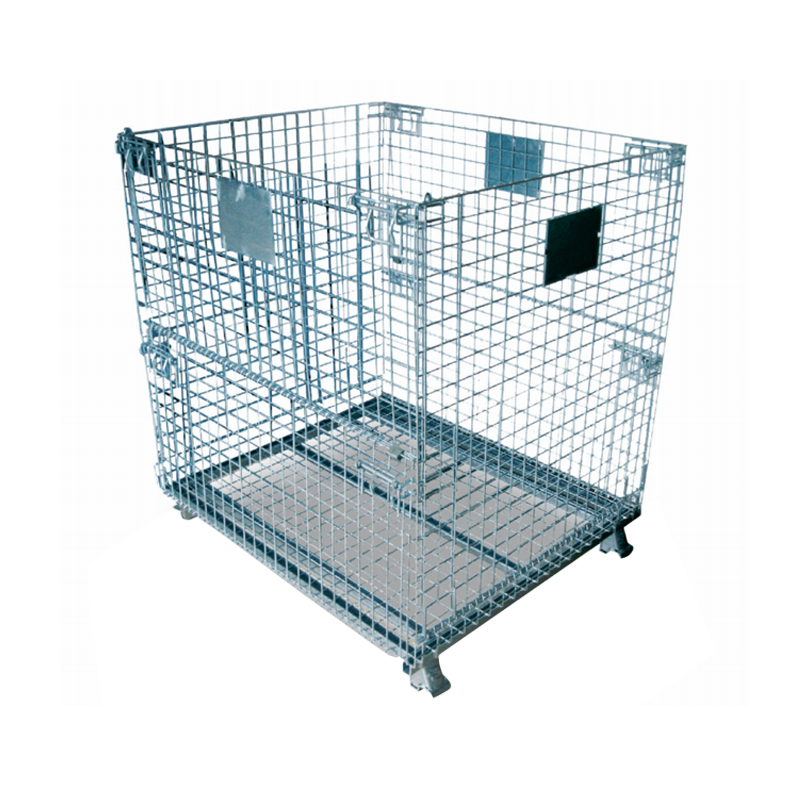 Stackable Foldable Wire Mesh Containers for Visible Parts StorageFoldable mesh containers allow four-layer stacking, visible inventory checks and airflow, folding to about one-fifth of in-use space when empty.View Product →
For automotive parts storage, mesh and solid-sided containers are often used side by side: mesh where visibility helps, solid sides where protection and small-part containment matter more.
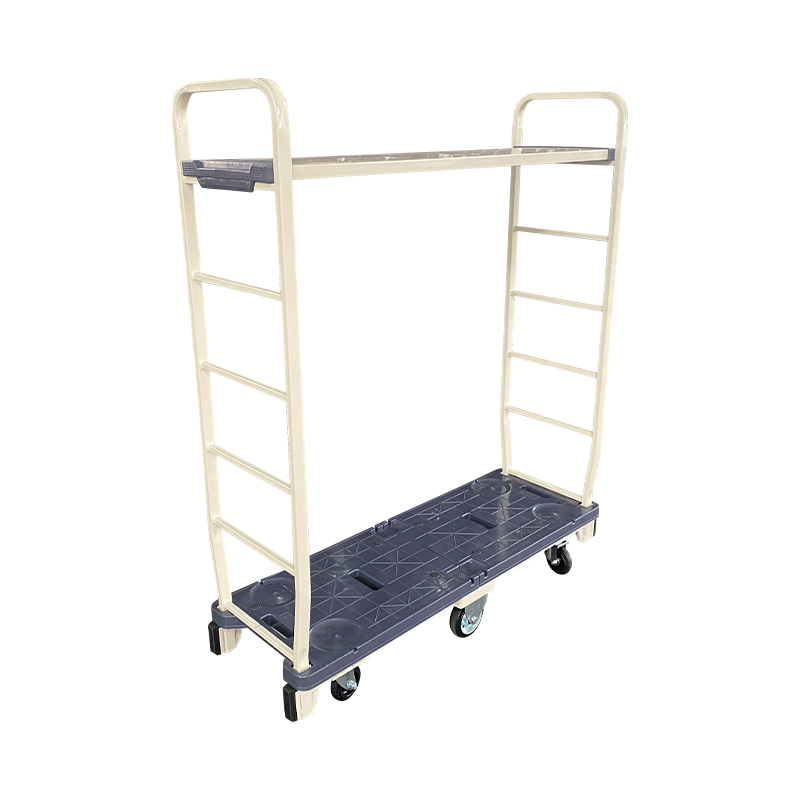
Not every vertical storage decision happens on a rack. Roll cages and trolleys connect storage to movement, so stock can be picked, moved and replenished without repeated handling. They are especially useful in retail, food and parcel flows where the load changes size and shape through the day.
Tyres and other shaped loads need dedicated support. A tyre rack holds round loads securely, allows vertical stacking and can often be folded or nested when empty. Similar logic applies to engine racks, doorframe stillages and other automotive containers that are designed around the geometry of the part.
A good layout starts with the load list, not the catalogue. Before selecting equipment, record the dimensions, weight, centre of gravity and handling method for each load family. Then work through the practical checks:
A pilot zone is especially useful with stackable equipment. It reveals whether operators can maintain the stack pattern, whether labels stay visible and whether the chosen footprint actually reduces travel.
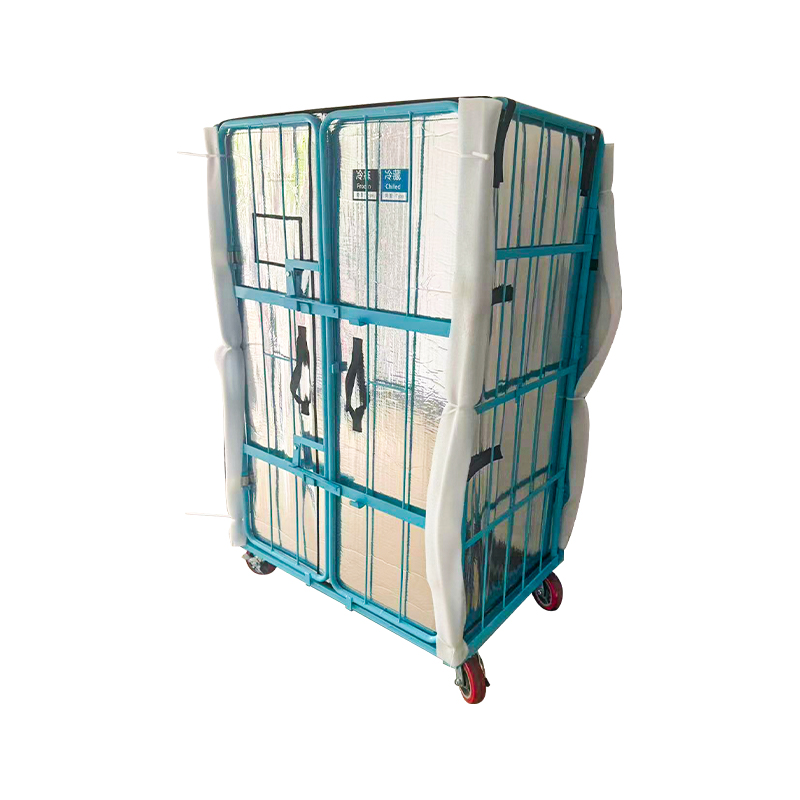
Shanghai Betis Logistics Equipment Co., Ltd. has focused on metal unit-load logistics equipment since 2014. Our product range covers foldable steel stillages, stacking racks, wire mesh containers, roll cage trolleys, tyre racks, automotive parts storage equipment and cold-chain insulation cabinets. With more than 50 employees and an annual output of over 100,000 sets, we support both standard product selection and custom development for specific load shapes and workflows.
We are not the right fit for every automated storage project, and we will say so. Our strength is the practical middle ground: well-made metal containers and racks that use vertical space, survive repeated handling and fold or nest when the job is done. That is the kind of equipment that quietly keeps a warehouse working.
Start with one overloaded zone. Measure the loads, take photos of the current stacking pattern and note how the items are moved. That simple record is usually enough to identify whether you need more racking, better containers, a different footprint or a staged automation study. If you would like a second pair of eyes on the layout, talk through your layout with our team and we will help you narrow the options.
Copyright © 2024 Shanghai Betis Logistics Equipment Co., Ltd. All Rights Reserved.
 Custom Metal Storage Cages Manufacturers

 English
 中文简体
 日本語