Content
Ask anyone who has run a pharmaceutical warehouse and they will tell you the same thing: the hard part is not buying shelves. It is keeping every batch inside its validated envelope from the moment it leaves the production line to the moment a courier hands it over at a clinic door. That is where pharmaceutical storage systems earn their keep, not as furniture, but as the physical layer of your quality system. In this guide we walk through the container decisions that sit behind a reliable temperature chain, drawing on what we have learned building metal handling equipment for pharma, food and cold chain operations.
Strip away the jargon and a pharma storage setup has four jobs. It has to hold product inside a defined temperature and humidity band. It has to keep batches, statuses and owners apart, so that a released lot never mingles with a quarantined one. It has to protect packs from dust, moisture, impact and cross-contamination. And it has to be cleanable, because a container that traps residue in a corner is a deviation waiting to happen.
Good Distribution Practice guidance, together with national wholesale requirements and your own standard operating procedures, tends to push teams towards the same practical answers: dedicated zones, clear status labelling, calibrated monitoring, and equipment that behaves predictably under repeated cleaning and handling. Notice that none of that is purely a racking question. Between the racking and the pallet there is usually a third layer, the unit container or tote that actually touches the product.
Before ordering anything, map your zones. The table below is the rough framework we use when talking to logistics managers about where each type of equipment belongs.
| Zone | Typical range | Common handling equipment | What to watch |
|---|---|---|---|
| Controlled room | 15 to 25 °C | Mesh containers, steel stillages, stacking racks, dollies | Airflow, dust, batch separation |
| Cold | 2 to 8 °C | Insulated roll cages, insulated boxes, liners | Pre-conditioning, door-open time |
| Frozen | −15 to −25 °C | Heavy-duty insulated boxes, cold chain trolleys | Gel pack placement, pack-out discipline |
| Deep freeze | −70 °C and below | Specialist insulated containers, dry ice formats | Ventilation, sublimation, PPE |
The point of the table is not the numbers, which vary by product, but the pattern: each zone pulls a different piece of equipment into the flow, and mixing them up is one of the most common causes of excursion events.
Temperature-sensitive distribution is where most audit findings live, because that is where product leaves the building and the building stops protecting it. Passive systems still dominate for good reason: they are simple, they fail visibly, and with the right container they hold a validated profile for a known number of hours.
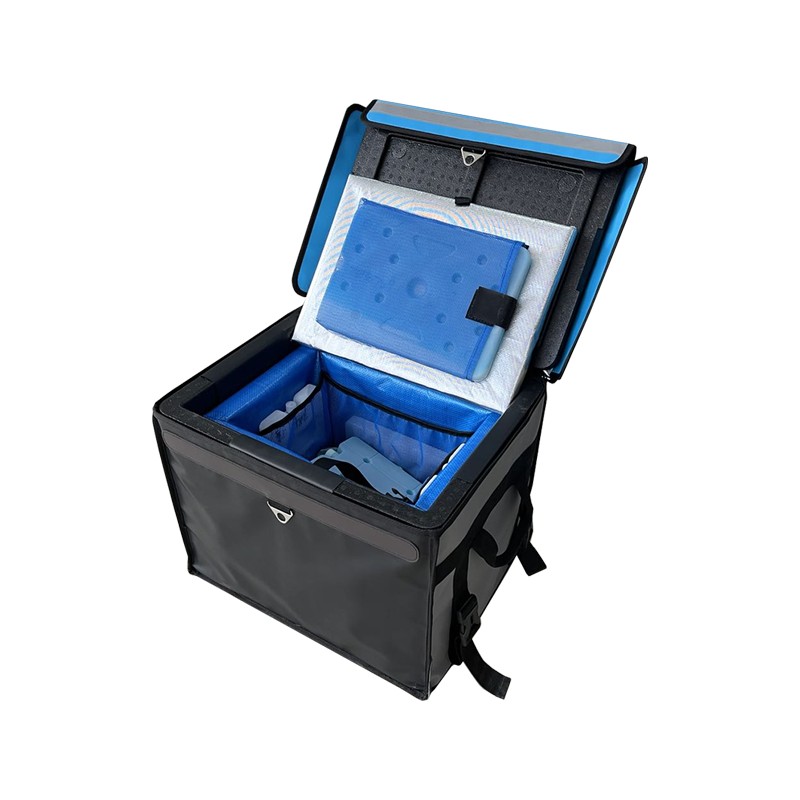
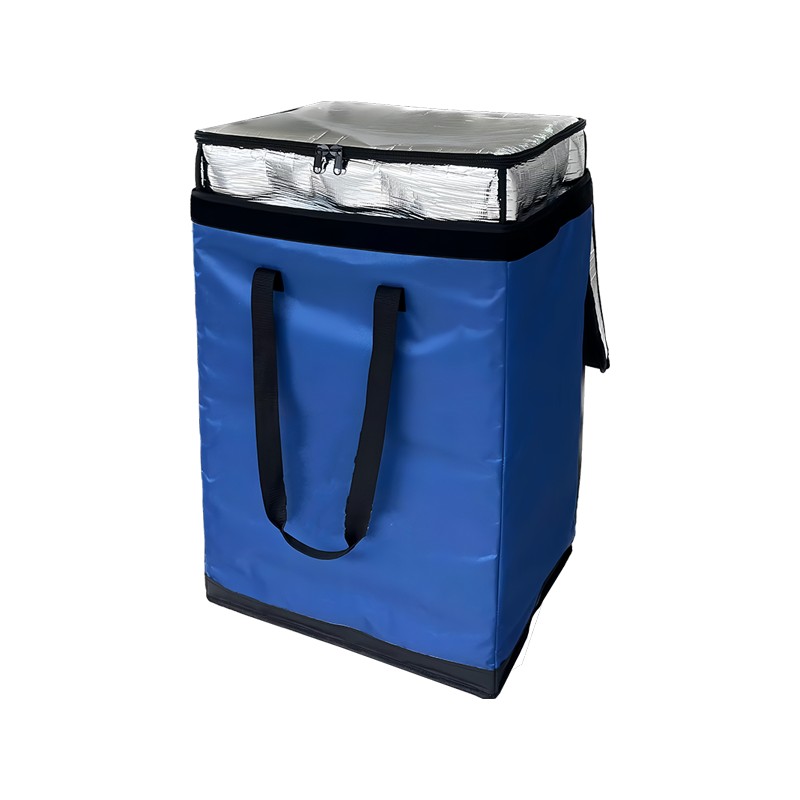
Two shapes cover most of the work. For internal movement and store-to-store transfer, an insulated roll cage keeps a full pallet load together and rolls straight from cold room to vehicle. For long routes and multi-drop deliveries, a heavy-duty insulated box with a well-sealed lid usually performs better than an oversized container that is only half full.
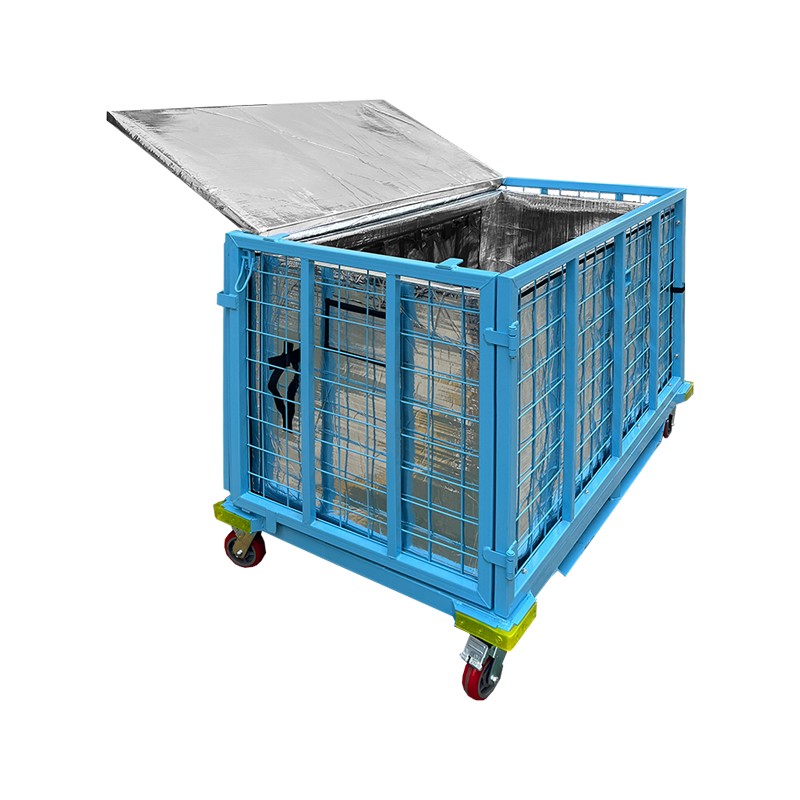
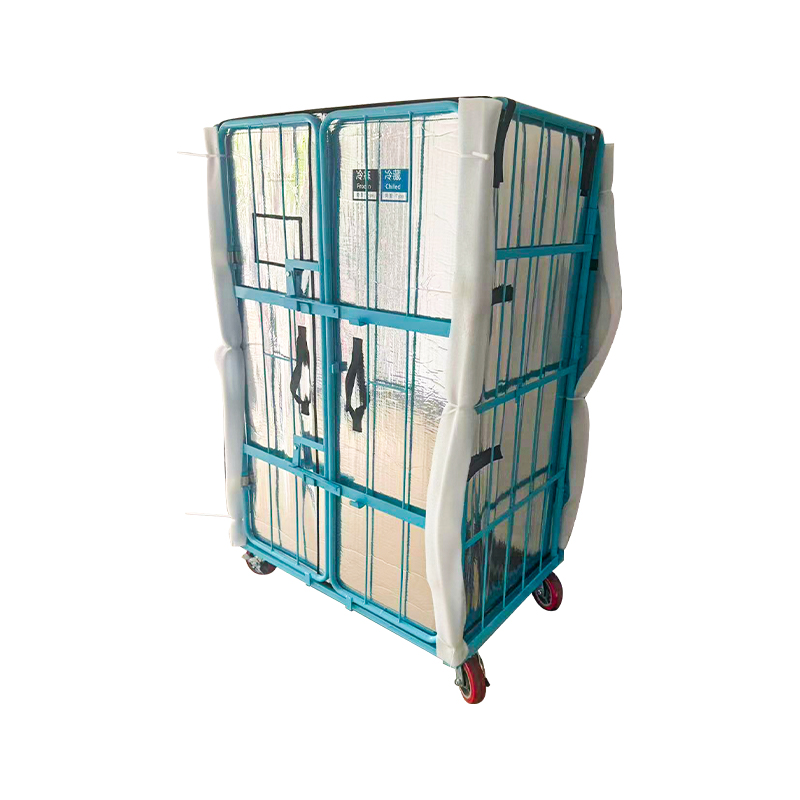 L-Insulated Roll Cage Trolley for Cold-Chain TransfersRolling insulated cage with removable foil cover and double-door access suits internal store transfers and full-pallet chilled or frozen movement.View Product →
The details that decide whether a lane works are unglamorous. Pre-condition the container, not just the gel packs. Budget the pack-out time honestly, because twenty minutes with the lid open on a warm dock can undo hours of preparation. Train people to fill voids, since air gaps behave like holes in the insulation. And write down the exact configuration you validated, including how many packs go where, so the next shift repeats it rather than reinventing it.
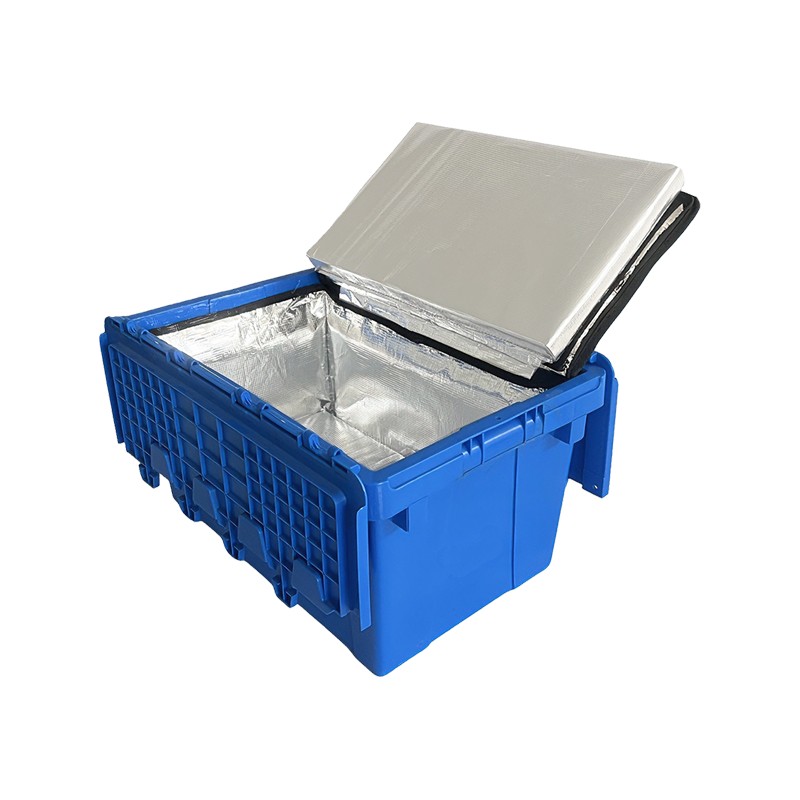
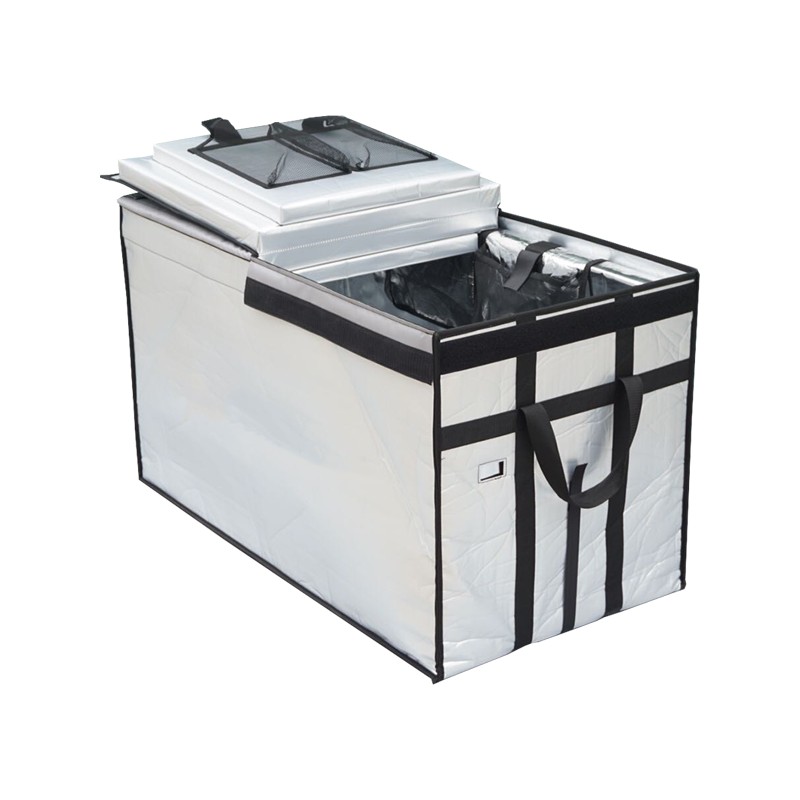 Heavy-Duty Long-Haul Insulation Box for Frozen FreightVIP-insulated, stackable box holds below -10°C for up to 40 hours, supporting intercity LTL frozen deliveries without refrigerated vehicles.View Product →
Where product goes out on a fixed long-haul route with predictable handover points, a larger rigid insulated box reduces the number of individual parcels and makes the temperature log easier to interpret.
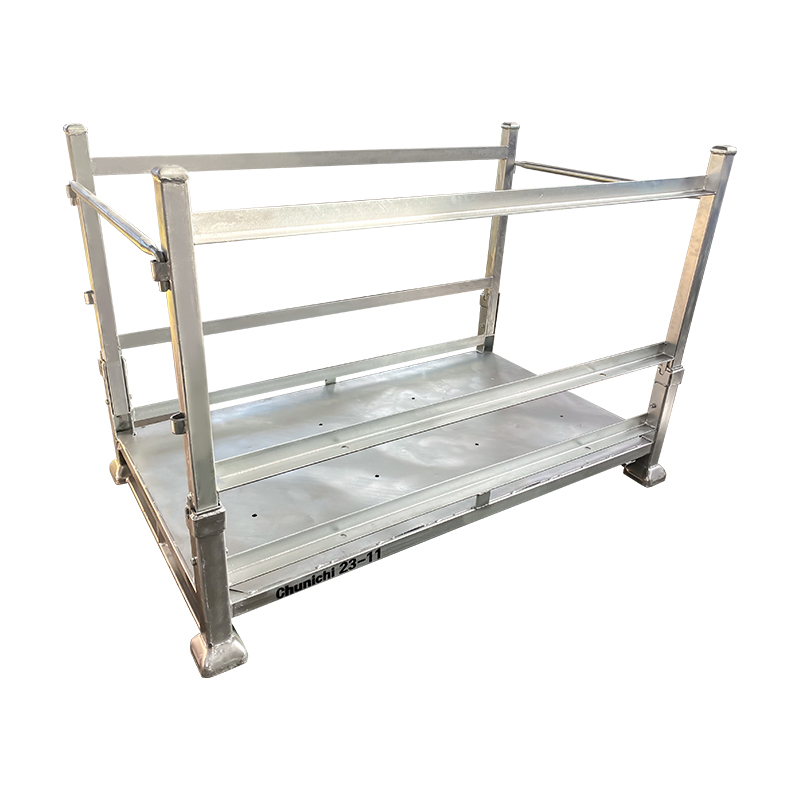
Most of the volume in a pharma facility is not frozen. It is cartons, blisters, bottles and components sitting at controlled room temperature, and that is the zone where rigid steel containers quietly do the most work. Metal does not flake like board, it does not absorb spills, and it can be wiped down with the agents your cleaning validation already lists.
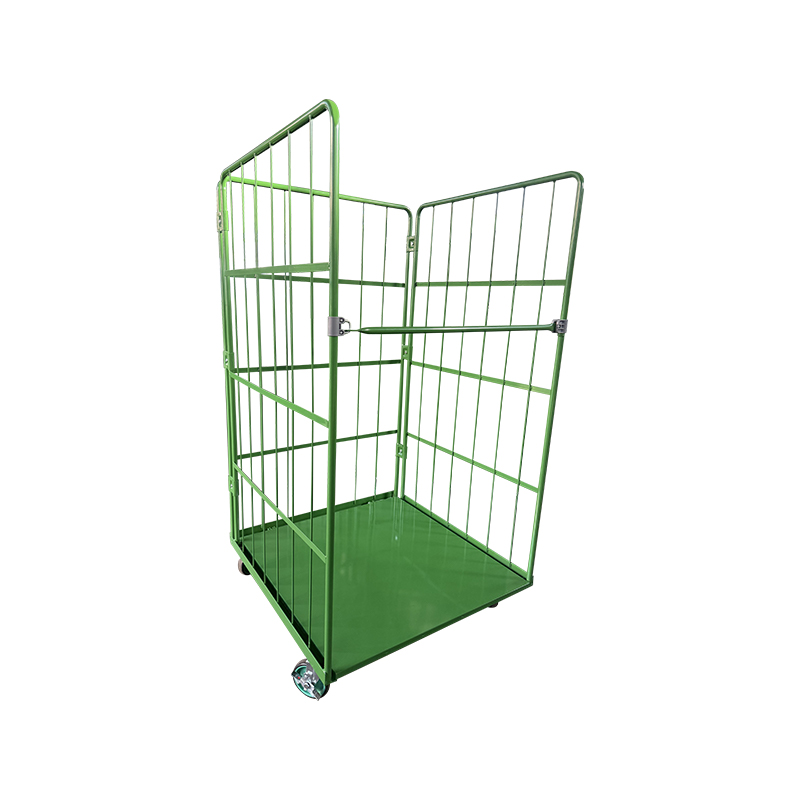
Open mesh is often the better choice than a solid bin, because you can see the load without opening it, air moves through, and stock counts happen at a glance during a cycle count. Foldable stillages and mesh containers also collapse flat when empty, which matters when half your fleet is in transit and the other half is stacked in a corridor.
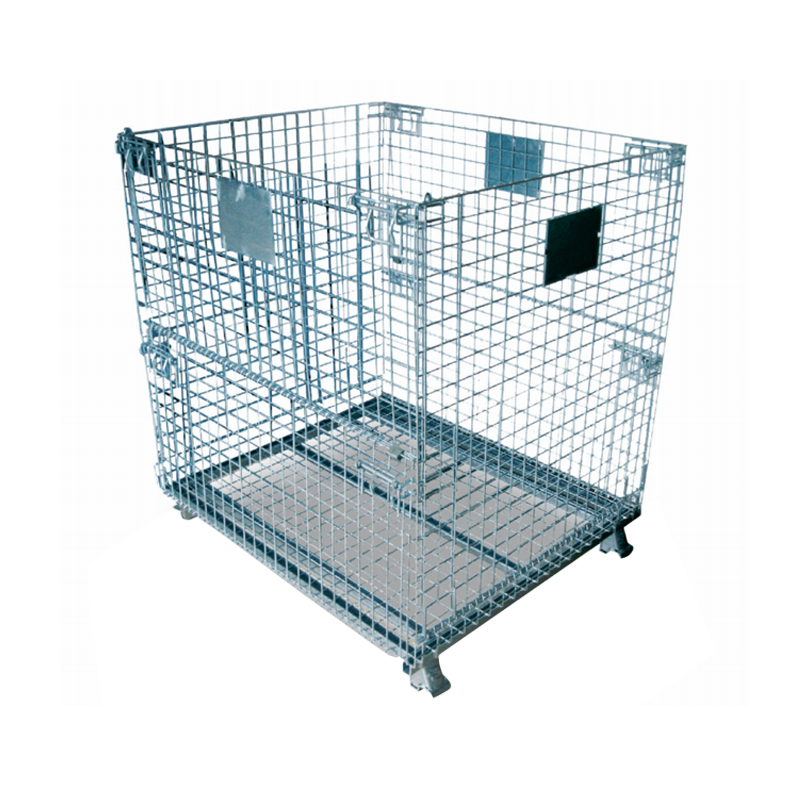 Stackable Foldable Wire Mesh Container for LogisticsSteel mesh container folds to one-fifth of its space, opens front and rear, and stacks four high for storage and handling.View Product →
For facilities that combine ambient warehousing with production line feeding, it helps to treat the container and the rack as one system rather than two purchases. Our overview of pharmaceutical logistics solutions walks through how these pieces connect across receiving, sampling, storage and dispatch.
Quarantine, sampled, released, rejected, recalled. Every one of those states needs to be obvious to someone walking past at speed, and it needs a physical home. Colour-coded containers and rack locations do a lot of the work, but three habits matter more than any label.
Physical security also means damage control. A container with a bent frame still stacks, but it no longer stacks squarely, and that is how loads tip. Set a simple rule: anything that has been hit hard enough to deform goes out of service until inspected.
We are often asked whether powder-coated steel, hot-dip galvanised steel or stainless is the right answer. The honest reply is that it depends on your cleaning regime and your budget.
A well-applied coating gives a smooth, easily wiped surface and good colour coding. It is the sensible default for ambient storage where spills are occasional.
Heavier protection, ideal for high-humidity areas, cold rooms and outdoor loading zones where condensation is constant and touch-up painting will never happen.
Stainless earns its premium in washdown and sampling environments. Open mesh suits anything that needs airflow or visual inspection, while solid sides suit small parts that must not escape.
Whatever the finish, two small choices save years of annoyance: specify castors and hinges that tolerate the same cleaning agents as the body, and avoid cardboard inserts inside reusable containers, since board is a dust and moisture source that undermines the whole point.
Teams that get this right tend to ask the same things before they sign anything, rather than after the first delivery.
If you are weighing custom builds against standard units, our notes on cold chain containers and metal handling equipment go through the trade-offs in more detail.
A pharmaceutical storage system is really a chain of small, unremarkable decisions that hold together on a bad day: the insulated box that was pre-conditioned properly, the mesh container that kept a rejected batch out of the pick face, the coating that survived a spill. Get those right and compliance stops feeling like paperwork and starts feeling like the way the warehouse already runs. If you are planning a change, we are always happy to talk through the containers first and sell second.
Copyright © 2024 Shanghai Betis Logistics Equipment Co., Ltd. All Rights Reserved.
 Custom Metal Storage Cages Manufacturers

 English
 中文简体
 日本語