Content
A rack with rollers is a storage or transport system fitted with integrated roller bars or roller tracks, allowing items to slide in and out with minimal effort. These systems dramatically reduce manual handling strain and improve workflow speed in warehouses, distribution centers, retail backrooms, and industrial facilities. If you're deciding whether a roller rack fits your operation, this guide covers everything you need to know — from types and load ratings to layout considerations.
Unlike flat-shelf storage racks, a roller rack uses a series of cylindrical rollers mounted on a frame to create a low-friction surface. Items placed on the rollers can be pushed, pulled, or gravity-fed along the track without requiring a forklift or excessive manual force.
The practical result: one worker can move a 500 lb pallet that would otherwise need two people and equipment. In a fulfillment center processing hundreds of orders per shift, that efficiency compounds quickly.
Roller racks are also used as static storage — the rollers allow easy repositioning of bins, totes, or cartons without lifting them off the shelf entirely.
The term "rack with rollers" covers several distinct systems. Choosing the wrong type wastes money and space.
These racks are tilted at a slight angle — typically 3° to 5° — so that products automatically slide forward under gravity as front stock is removed. They are the backbone of FIFO (First In, First Out) inventory management. Carton flow racks use small rollers or wheel beds and are common in order-picking operations.
A heavy-duty version of gravity flow, pallet flow racks use larger steel rollers or roller tracks rated for pallet loads — often 2,000 to 5,000 lbs per lane. They are loaded from the rear and picked from the front, making them ideal for high-density cold storage or bulk goods.
These integrate roller conveyor sections into a racking structure, connecting storage positions to a conveyor line. Common in manufacturing and automotive parts distribution, they allow seamless transfer from storage directly into production lines.
Unlike gravity flow, push-back racks operate on a LIFO (Last In, First Out) basis. Pallets or cartons are loaded and retrieved from the same front face. Each new load pushes previous loads back along inclined rollers. Depths typically range from 2 to 6 pallets deep.
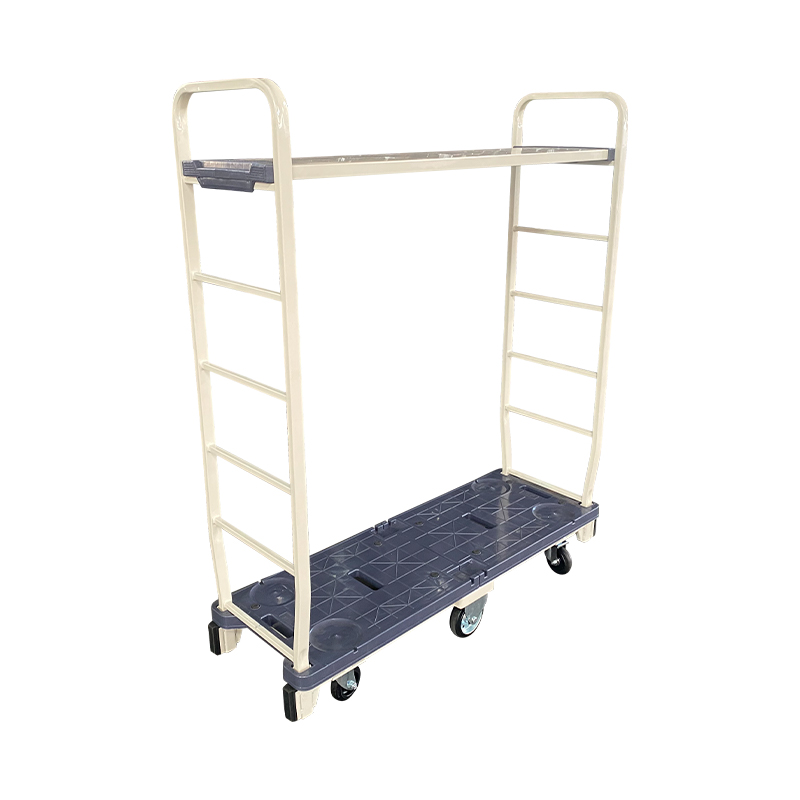
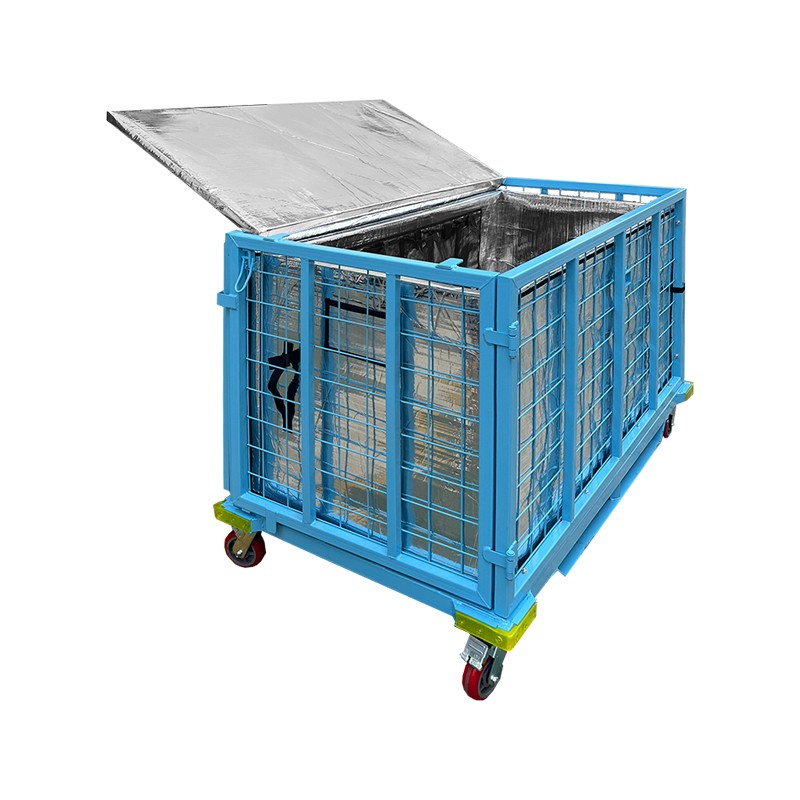
These are freestanding rack units mounted on wheeled bases that can be repositioned across a floor. Some versions combine the base mobility with integrated roller shelves, useful in staging areas, loading docks, and flexible manufacturing cells.
| Type | Load Direction | Inventory Method | Typical Use |
|---|---|---|---|
| Gravity Flow | Rear load, front pick | FIFO | Order picking, perishables |
| Pallet Flow | Rear load, front pick | FIFO | Cold storage, bulk goods |
| Push-Back | Front load and pick | LIFO | High-density SKU storage |
| Roller Conveyor Rack | Integrated conveyor | Flow-through | Manufacturing, assembly |
| Mobile Roller Rack | Variable | Flexible | Staging, docks, cells |
Before purchasing or specifying a roller rack, review these critical parameters:
Roller diameter affects load capacity and rolling resistance. Smaller-diameter rollers (1.5" to 1.9") suit light cartons and totes, while diameters of 2.5" to 3.5" handle heavier pallet loads. Roller spacing matters too — as a rule of thumb, the item being carried should always be in contact with at least three rollers simultaneously to prevent tip-in or jamming.
Steel frames with powder coating are standard for most warehouse environments. For cold storage or food-grade applications, galvanized or stainless steel rollers prevent corrosion. Aluminum frames are used where weight is a concern, such as in mobile rack configurations.
Roller racks for carton flow typically support 200 to 800 lbs per shelf level. Pallet flow systems are rated much higher, with industrial versions supporting up to 4,400 lbs per lane. Always apply a safety factor — industry practice typically uses 80% of rated capacity as the working load limit.
Lane width should match the product footprint plus a clearance of at least 1" on each side. Depth determines how many units or pallets can be stored per lane. Deeper lanes increase density but can complicate stock rotation if FIFO discipline isn't enforced mechanically.
Roller racks are not universally the best choice. They perform best in specific operational contexts:
Conversely, if you have hundreds of low-velocity SKUs with infrequent picks, a simpler static shelf system is usually more cost-effective than a roller rack investment.
Proper installation is essential to rack performance and safety. A few critical points:
Gravity-fed roller racks require a level base so that the designed slope angle is accurate. A floor that is already sloped — even by half a degree — can cause loads to roll too fast or not at all. Floor tolerance of ±1/8" per 10 feet is the recommended threshold before shimming or leveling is required.
All freestanding roller racks should be anchored to the floor per local building codes and manufacturer specs. In seismic zones, additional cross-bracing or tie-offs to the building structure may be required. Unanchored racks — even heavy ones — can shift under dynamic loading.
For rack systems accessed by forklifts, maintain a minimum of 12 feet of aisle clearance for counterbalance forklifts. Reach trucks can work in narrower aisles, typically 8 to 10 feet, but verify your specific equipment turning radius.
Individual rollers can seize up if debris accumulates in the bearings. Design the layout so that rollers can be inspected and replaced without dismantling the entire rack. Most roller racks use spring-loaded axles for tool-free roller removal — confirm this feature before specifying.
A roller rack in poor condition is a safety hazard. Establish the following routine practices:
Use this decision framework to narrow your options:
A rack with rollers is one of the most practical investments for any operation that handles significant volumes of goods. The right system can cut picking time by 20–35%, reduce ergonomic injury risk, and increase storage density simultaneously. The key is matching the roller rack type — gravity flow, pallet flow, push-back, conveyor-integrated, or mobile — to your actual inventory profile, throughput demands, and facility conditions. Start with load data and rotation requirements, then work outward to frame specs and layout. Done correctly, a roller rack installation pays for itself through labor savings within 12 to 24 months in most warehouse environments.
Copyright © 2024 Shanghai Betis Logistics Equipment Co., Ltd. All Rights Reserved.
 Custom Metal Storage Cages Manufacturers

 English
 中文简体
中文简体 日本語
日本語