Content
A single missed temperature window during last-mile delivery can spoil a full load of perishables—and lose a customer permanently. For food delivery businesses scaling their operations, the insulated bag isn't just a carrier; it's a frontline tool for protecting product integrity and brand reputation. The double-layer insulated delivery bag represents a meaningful engineering step up from conventional single-layer alternatives, and understanding what that step actually delivers is the starting point for smarter procurement decisions.
A single-layer insulated bag relies on one thermal barrier to do all the work. That barrier—typically aluminum foil backed by a thin foam layer—degrades quickly in real-world use: repeated loading, ambient heat from vehicle interiors, and the natural flexing of the bag material all compromise its effectiveness over time.
A double-layer bag splits that thermal responsibility across two distinct insulating zones. The outer layer handles the first line of defense against ambient temperature swings, while the inner layer creates a stable micro-environment directly around the food. This separation means each layer is under less thermal stress individually, and the dead-air space between them acts as an additional buffer.
In practical terms, this translates to 30–40% longer effective temperature retention compared to single-layer alternatives of similar volume. For a delivery route covering 45–60 minutes, that margin determines whether food arrives within the safe temperature range—or outside it. Explore our full range of cold-chain delivery insulation solutions for operations that require broader temperature control across vehicle-based routes.
The performance of a double-layer bag is entirely determined by its material stack. Knowing what each layer contributes helps procurement teams evaluate product claims with precision rather than relying on marketing language.
Outer layer — waterproof Oxford cloth or 600D polyester: This layer provides structural durability and resistance to rain, spills, and surface abrasion. High-denier Oxford cloth is the industry standard because it combines tensile strength with a relatively low pack weight. Some higher-specification bags incorporate reflective strips on this layer, which serve a dual purpose: reducing radiant heat absorption and improving rider visibility during nighttime delivery runs.
Middle layer — thickened EPE foam or insulation cotton: This is where the core thermal work happens. Expanded polyethylene (EPE) foam is widely used because it resists compression, maintains its shape over repeated use, and offers a favorable thermal resistance coefficient at low weight. Insulation cotton alternatives are softer and more flexible but may compress over time, reducing their effectiveness.
Inner layer — food-grade aluminum foil: The innermost surface reflects radiant heat back toward the food and provides a moisture-resistant, easy-clean surface. Food-grade aluminum foil is non-toxic and approved for direct food contact. It also contributes to odor containment—particularly important when a bag is used across different food types throughout a shift.
Together, these three layers form a system. A bag that cuts corners on any single layer—using thin foil, low-density foam, or a cheaply woven outer shell—compromises the entire thermal chain.
Temperature control in food delivery isn't just a quality issue—it's a regulatory one. According to USDA Food Safety and Inspection Service guidelines for handling take-out foods, hot foods must be maintained at 140°F (60°C) or above, and cold foods at 40°F (4°C) or below. The range between these two thresholds is the bacterial danger zone, where pathogens can double in population in as little as 20 minutes under optimal conditions.
A well-constructed double-layer bag is capable of holding hot food above 140°F for 60–90 minutes from sealing, depending on ambient conditions and how fully loaded the bag is. Cold performance is somewhat more dependent on whether pre-cooling or ice packs are used alongside the bag. Without supplemental cooling, the bag slows temperature rise but won't refrigerate; with gel ice packs, cold holding can extend to 2–3 hours.
| Scenario | Starting Temperature | Retention Duration (Safe Zone) |
|---|---|---|
| Hot food, bag fully loaded | 75°C / 167°F | 75–90 minutes above 60°C |
| Hot food, bag partially loaded | 75°C / 167°F | 45–60 minutes above 60°C |
| Cold food, with gel ice pack | 4°C / 39°F | 120–180 minutes below 8°C |
| Cold food, no supplemental cooling | 4°C / 39°F | 40–60 minutes below 8°C |
For operations handling frozen goods such as ice cream, a standard insulated bag—even double-layer—is insufficient without supplemental cooling. Purpose-built specialized deep-freeze boxes for ice cream delivery are the appropriate solution in that context. Similarly, raw meat transport has specific handling requirements that may be better served by a horizontal insulation cabinet designed for fresh meat transport.
Selecting the right bag size involves balancing order volume, vehicle constraints, and ergonomics. A bag that is too large encourages under-loading, which reduces thermal efficiency; one that is too small leads to stacking or overpacking that compromises food presentation.
Common commercial capacities for double-layer delivery bags run from 18L to 58L. Here's how those sizes map to typical delivery contexts:
Operations running electric tricycle routes should also evaluate whether a dedicated insulation cabinet designed for electric tricycle routes offers a more efficient solution at scale—particularly where daily delivery volumes exceed what portable bags can handle. For logistics networks requiring extended transit windows, heavy-duty insulation boxes built for long-haul transport provide the structural rigidity and sustained thermal performance that soft-shell bags cannot match.
Beyond the core insulation stack, several design details separate a well-engineered delivery bag from a generic one. These features have direct operational consequences that become apparent after the first week of daily use.
Closure mechanism: Magnetic closures offer single-handed operation—an important consideration for riders removing items without dismounting. Velcro closures are more secure but accumulate lint and debris over time, eventually reducing their grip. The best bags offer both in combination: a Velcro seal with a magnetic flap overlay.
Internal structure: A hollow-bottom support plate keeps bag contents stable and prevents soft-bottomed bags from collapsing under a load of liquid containers. Removable internal dividers allow riders to configure compartments per order, preventing odor transfer between food items.
Handle configuration: Two long carry handles and two shorter side handles give the user flexibility when loading at a restaurant versus carrying to a customer's door. A detachable single shoulder strap supports hands-free transport on stairways.
PVC order card pockets: Transparent side or top pockets for order slips or delivery labels eliminate the need to open the bag to confirm contents—a small detail that adds up across dozens of deliveries per shift.
Reflective strip detailing: Reflective elements on the outer shell are a safety feature worth prioritizing for operations running evening or overnight delivery windows.
A double-layer insulated delivery bag represents a recurring operational cost. With proper care, a commercial-grade bag should last 12–18 months of daily use; without it, degradation can begin within 3–4 months.
Cleaning protocol: Wipe the inner aluminum foil surface with a damp cloth and mild detergent after each shift. Avoid abrasive scrubbers that scratch the foil and reduce its reflective efficiency. The outer Oxford cloth can be spot-cleaned with a sponge; full submersion or machine washing is not recommended, as it can cause the insulation layers to shift or clump.
Drying and storage: Always allow the bag to dry fully before closing it for storage. Trapped moisture encourages mold growth on the inner foam layer—a problem that is difficult to reverse once established. Store bags fully open or propped open, not compressed flat.
Inspection schedule: Check the closure mechanism weekly and the internal foam layer monthly for compression or delamination. A foam layer that has lost significant thickness no longer provides effective insulation even if the exterior appears intact.
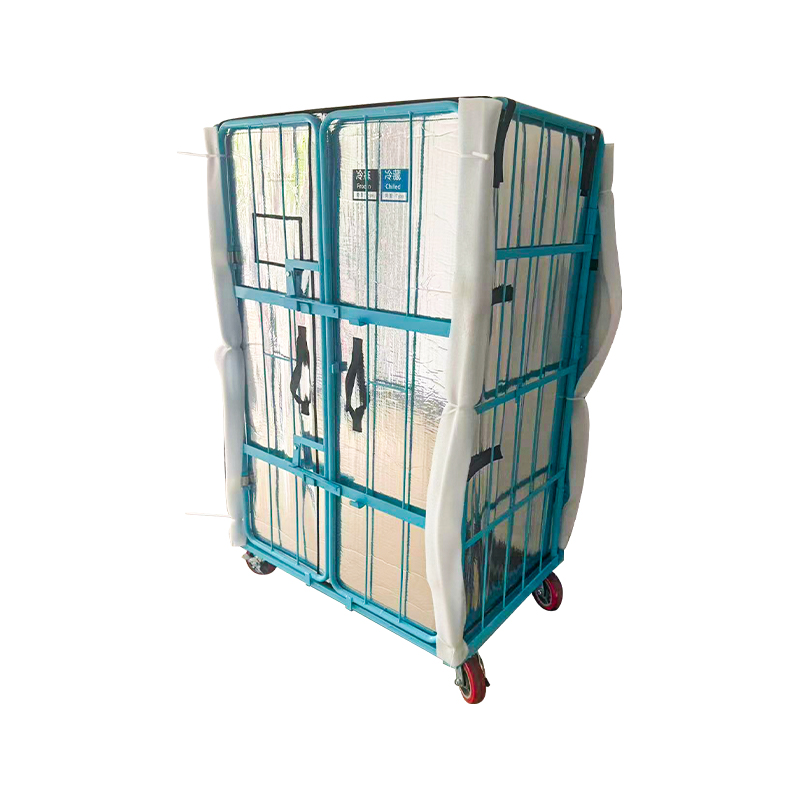
For operations that use folding crate systems alongside soft-shell delivery bags, folding crate insulation liners offer an effective way to maintain temperature control within rigid crate structures—extending the useful range of your existing logistics equipment.
Copyright © 2024 Shanghai Betis Logistics Equipment Co., Ltd. All Rights Reserved.
 Custom Metal Storage Cages Manufacturers

 English
 中文简体
中文简体 日本語
日本語