Content
Every year, billions of dollars worth of food and medicine are lost in transit — not because of vehicle breakdowns or warehouse failures, but because of temperature excursions that happen in the final stretch of delivery. A warm loading bay, a cab door held open too long, an undersized insulation cabinet matched to the wrong route: these are the moments where cold chains actually break. A cold chain delivery insulation cabinet is the last line of thermal defense between your product and the customer — and choosing the right one is an operational decision, not just a procurement checkbox.
Cold chain standards set by regulators and industry bodies are unambiguous about what's required. According to internationally referenced cold chain management guidelines, standard refrigerated conditions sit at 2°C to 8°C, while frozen products require 0°C or below, and cryogenic applications go as low as −150°C. Meeting those ranges consistently — across a last-mile delivery truck, an electric cargo tricycle, or a supermarket replenishment cart — requires purpose-built insulation equipment, not improvised workarounds. See internationally recognized pharmaceutical and food cold chain temperature categories for a detailed breakdown of storage and transport requirements.
The thermal performance of any insulation cabinet is ultimately determined by the material sandwiched between its inner and outer walls. Four materials dominate the market, each with a different profile of performance, cost, and reusability.
EPP (Expanded Polypropylene) is the workhorse of professional last-mile delivery. It absorbs impact well, tolerates repeated loading cycles without degrading, and can be cleaned and reused hundreds of times. For distribution operations that run daily routes, EPP offers the best total cost of ownership. EPS (Expanded Polystyrene) is lighter and cheaper per unit, making it practical for single-use or short-duration shipments — but it fractures under mechanical stress and performs poorly when reuse cycles are required.
VIP (Vacuum Insulation Panels) deliver exceptional thermal resistance at minimal thickness, which matters when dimensional weight or tight vehicle compartments are a constraint. The tradeoff is fragility: a puncture collapses performance immediately. VIP cabinets work best in controlled, lower-risk environments. Aluminum foil composite materials — typically foil-bubble or foil-foam laminates — are flexible, lightweight, and cost-effective for liner and bag applications. They excel at radiant heat reflection and are a common choice for bag-style and cover-style cold chain products where rigid structure is not required.
| Material | Thermal Performance | Durability / Reusability | Best For |
|---|---|---|---|
| EPP | High | Excellent – 200+ cycles | Daily route delivery, professional logistics |
| EPS | Good | Low – single or few uses | One-way shipments, short-haul |
| VIP | Very High (thin wall) | Moderate – fragile | Space-constrained, controlled handling |
| Aluminum Foil Composite | Moderate | Good for flexible formats | Bags, covers, liners |
The category "cold chain insulation cabinet" covers a much wider range of products than most buyers initially expect. The right format depends entirely on your delivery vehicle, loading method, route duration, and the temperature zone you need to maintain.
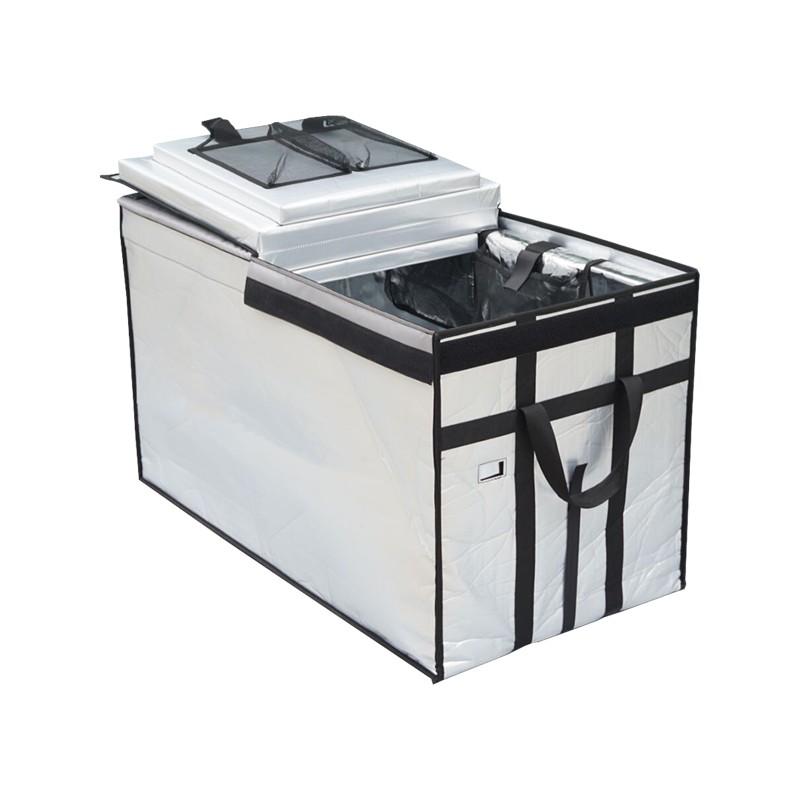
Urban last-mile delivery — particularly in dense city environments — runs heavily on electric cargo tricycles. Standard rigid boxes don't fit. Insulation cabinets designed for electric tricycle delivery routes are engineered to mount directly onto the cargo bed, with internal dimensions and door configurations optimized for fast, repeated access during multi-drop routes. They maintain temperature integrity even when the door is opened frequently — a specification detail that generic boxes routinely fail.
Ice cream, frozen meals, and other products that must stay at or below −18°C demand a different insulation specification than refrigerated goods. Deep-freeze insulation boxes for ice cream and frozen goods use thicker insulation walls, tighter-sealing lids, and are typically designed to work with dry ice or phase-change materials to extend holding time without active refrigeration.
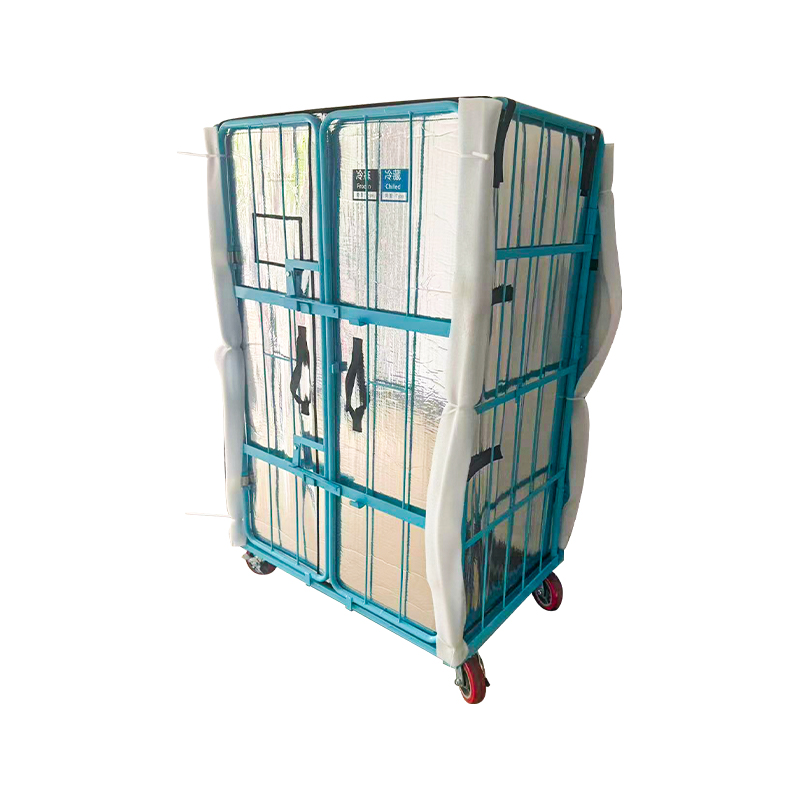
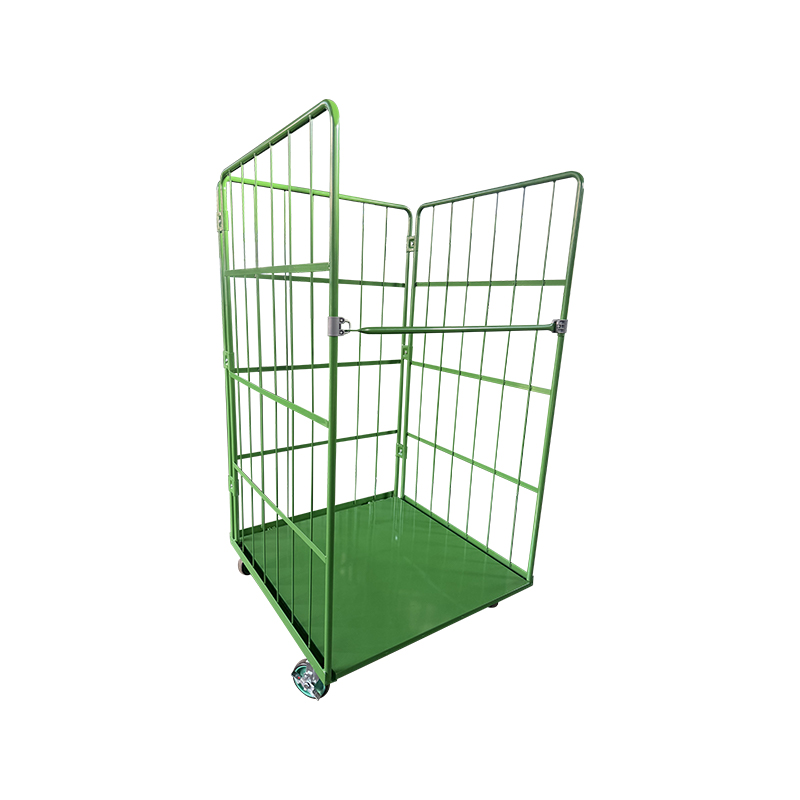
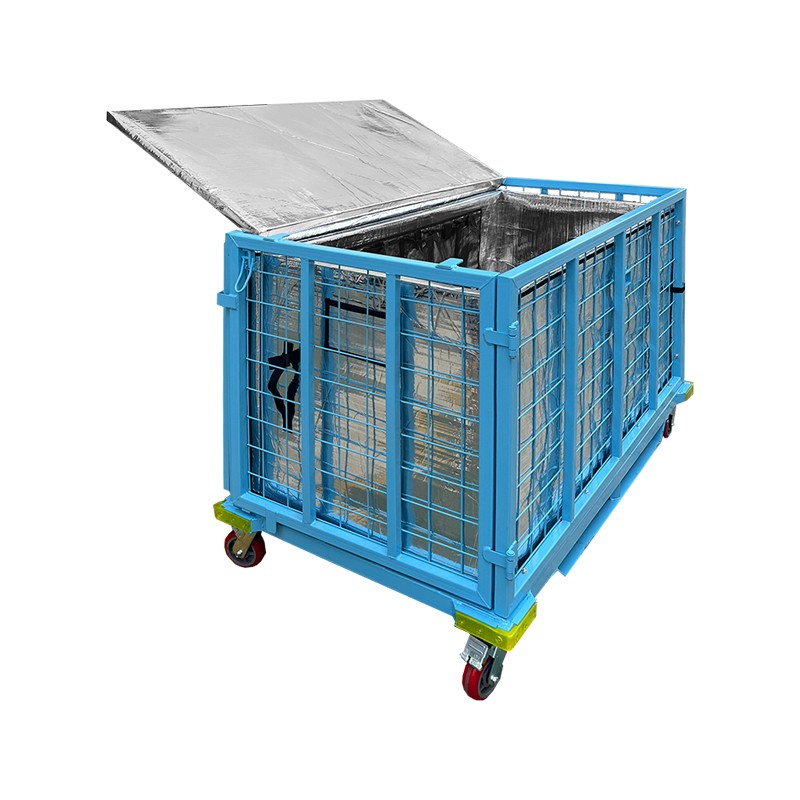
Retail replenishment operations move chilled products from distribution hubs into store environments through roll cage trolleys and dollies — vehicles that have no built-in thermal protection whatsoever. Supermarket cage cart insulation covers for in-store replenishment solve this by wrapping the entire cage in a thermal shell, keeping refrigerated product within temperature range during dock-to-floor transit. Convenience store formats follow the same logic with covers sized for smaller trolleys used in direct store delivery.
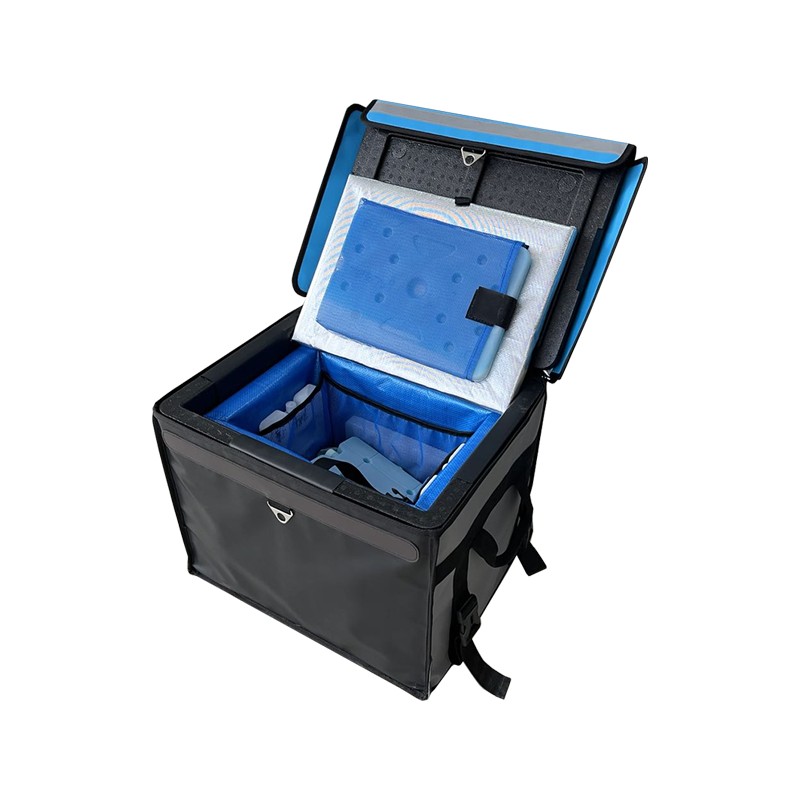
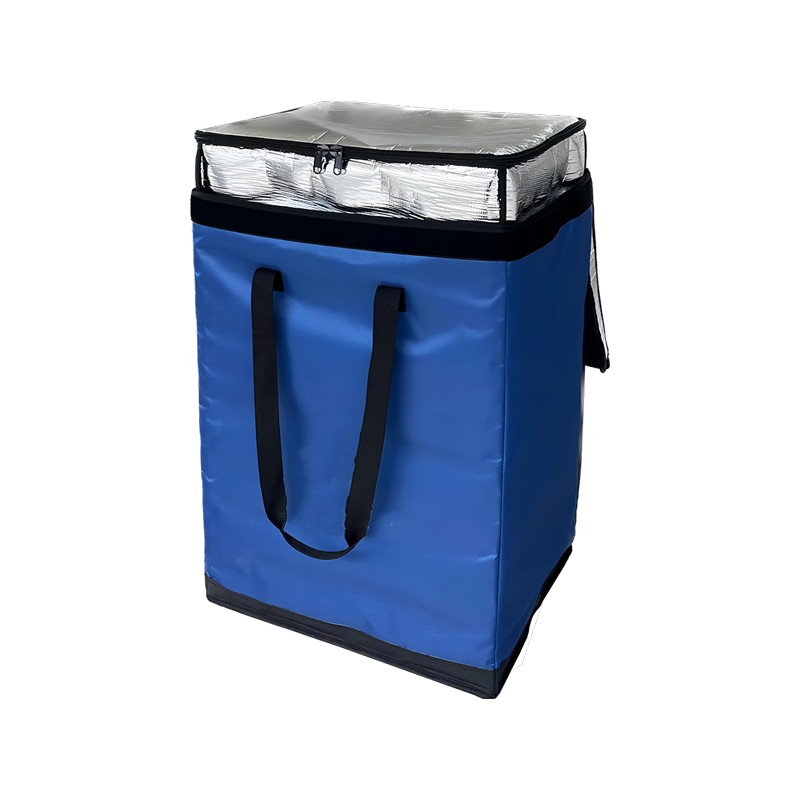
Not every cold chain requirement calls for a rigid cabinet. For courier-style delivery of prepared food, meal kits, or chilled beverages, double-layer insulated delivery bags for last-mile routes offer flexibility and ease of handling without sacrificing temperature retention. The dual-wall construction provides meaningfully better performance than single-layer alternatives across typical 1–3 hour delivery windows.
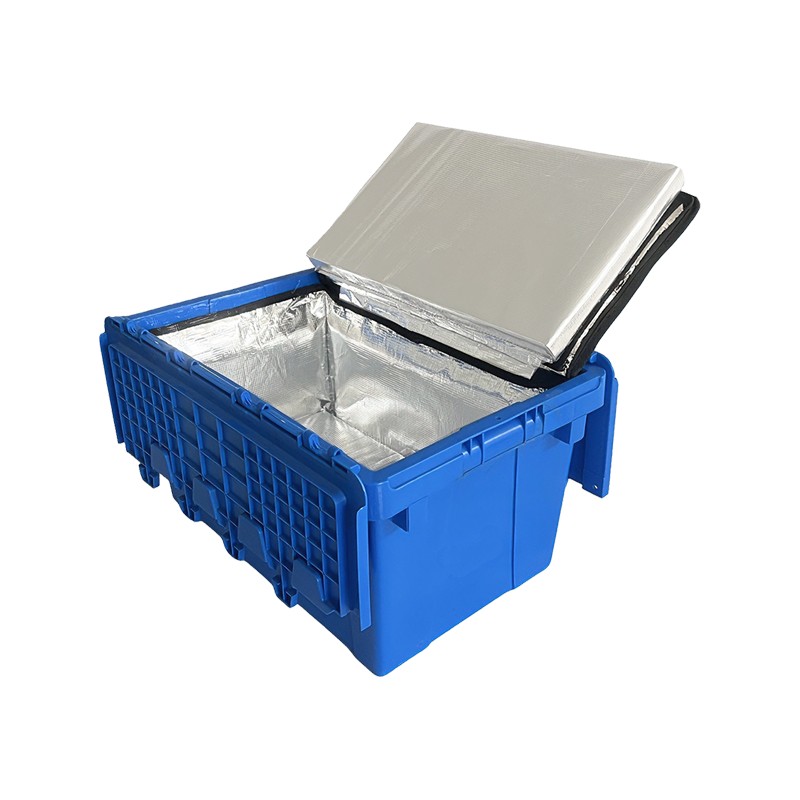
For operations that already use collapsible plastic crates as their standard transport container, switching to dedicated cold chain crates is expensive and disruptive. Folding crate insulation liners for flexible loading retrofit thermal capability onto existing crate assets — a practical upgrade path that avoids a full equipment changeover.
Fresh meat and whole-cut products require horizontal storage to maintain product shape and prevent liquid migration. A vertical-access cabinet introduces both handling risks and thermal inefficiency for these categories. Horizontal insulation cabinet built for fresh meat transport addresses both concerns with a flat-opening design and interior dimensions matched to standard retail cut packaging.
Short urban routes and intercity distribution hauls are fundamentally different thermal engineering problems. Heavy-duty long-haul insulation boxes for extended transit are built to sustain temperature over 12–48 hour journeys, with reinforced construction to handle the mechanical stress of freight loading and elevated insulation thickness to compensate for extended ambient exposure.
With this many product formats available, the selection process can feel open-ended. In practice, four operational parameters narrow the field quickly.
Route duration and ambient conditions set the baseline thermal requirement. A 45-minute urban delivery route in mild weather demands far less from an insulation cabinet than a 6-hour rural route in summer heat. Know your worst-case scenario, not your average one. Temperature zone determines insulation wall thickness and coolant compatibility. Refrigerated (2–8°C), chilled (0 to −5°C), and deep-freeze (−18°C and below) cabinets are not interchangeable, even when their physical dimensions look similar.
Access frequency is underestimated by most buyers. A cabinet opened once at delivery loses minimal cold energy. A cabinet opened 15 times across a multi-drop route loses temperature progressively with each cycle. For high-frequency access routes, look for cabinets with magnetic seal closures, internal partitioning, and insulated door panels rather than just insulated body walls. Finally, vehicle and loading compatibility — mounting points, external dimensions, door swing direction — should be confirmed against the actual delivery vehicle before ordering, not assumed from catalog dimensions.
Cold chain insulation cabinets appear across a wide range of industries, but their operational impact is highest in categories where temperature excursions have direct safety or quality consequences.
In fresh food retail and supermarket distribution, insulation covers fitted to roll cage trolleys compatible with insulation cover systems allow chilled product to move from refrigerated trucks through ambient store backrooms without breaking the cold chain — a transit step that was historically unprotected. In pharmaceutical and medical supply delivery, the same cabinets must meet tighter performance tolerances, with documented temperature hold times and compatibility with validated coolant systems. For fresh meat and seafood processors, the horizontal insulation cabinet built for fresh meat transport specifically addresses the product handling and hygiene requirements of this category. In e-commerce food delivery, where the customer's doorstep is the final delivery point with no controlled receiving environment, cabinet performance during the last 30–90 minutes of transit is the only thing standing between acceptable and unacceptable product condition.
Standard catalog dimensions rarely match the exact specifications of a real logistics operation. Vehicle cargo compartments, trolley frame sizes, and route temperature profiles vary enough across businesses that a purpose-configured cabinet consistently outperforms an off-the-shelf compromise. Shanghai Betis engineers cold chain insulation cabinets to customer specifications — matching internal payload dimensions, external vehicle fitment, door configuration, insulation thickness, and surface treatment to operational requirements rather than to a default spec sheet.
Whether your operation runs electric tricycle delivery in dense urban environments, direct store delivery to supermarket chains, or long-haul chilled freight, the right starting point is a clear picture of your route conditions and loading workflow. From there, selecting or specifying the right insulation cabinet becomes a straightforward decision. Contact us to discuss your cold chain delivery requirements and request a product recommendation or custom quotation.
Copyright © 2024 Shanghai Betis Logistics Equipment Co., Ltd. All Rights Reserved.
 Custom Metal Storage Cages Manufacturers

 English
 中文简体
中文简体 日本語
日本語