Content
Drop gates are one of those container details that seem minor until a picker is stretching over a top rail to reach a part. On stacked wire mesh containers, the gate opening has to work in the real aisle, at the real tier height, with gloves, tools and the actual load. This guide explains how to size drop gates and check opening clearance so picking stays efficient and comfortable.
Begin by defining how the gate will be used. A drop gate may be bottom-hinged and fold down toward the picker, or it may be a half-drop panel, removable section or sliding access panel. The picking task matters just as much: a small carton picked with one hand has different needs from a heavy casting lifted with two hands or a tote passed through the opening.
Record which side of the container faces the aisle, which tier will be picked, and whether the operator stands on the floor or on a platform. If the container is one of our wire mesh containers, use its published dimensions as a starting point, not as a substitute for measuring the installed setup.
Do not size the gate from the container's outside width alone. The usable opening is framed by posts, mesh returns, hinge barrels, latches and reinforcement. A generous-looking gate can become a narrow slot once those features are counted.
Put the container in its working condition and measure with a tape and a simple clearance gauge. The most important dimensions are not always on the drawing. Measure the clear opening at the frame, the load height and the space taken by hardware. Then repeat the check with the container loaded and in its stacked position.
| Check | What to record | Why it matters |
|---|---|---|
| Gate panel | Actual width and height of the moving panel | Confirms nominal size versus usable size |
| Clear opening width | Distance between hinge, latch and frame edges | Shows whether a part and gloved hand can pass through |
| Clear opening height | Threshold to top rail, excluding hardware | Determines vertical access and load exposure |
| Load height | Top of contents inside the container | Checks whether the pick face is reachable through the gate |
| Open-gate envelope | Projection and lowest point when fully open | Prevents interference with aisles, carts and feet |
| Stack pitch | Tier-to-tier distance as installed | Reveals beams, feet or upper containers that block access |
If a container is already loaded and stacked, measure again. An empty container on the floor can show a perfect opening while the same unit at the second tier sits behind a rack beam or an upper container's base.
For one-handed picks, the clear opening should expose the part without forcing the wrist against an edge. For two-handed picks, allow enough width for both hands and the part, and enough height for the item to clear the lower threshold. Work with the largest face, diagonal and any protruding fixture on the real part.
A practical test is to try the opening with a representative part and a gloved hand. If the part must be tilted or dragged across the threshold, the opening is too tight or the load is sitting too low. Gate height should follow the load line. Goods stacked high may need a taller gate to expose the pick face, while goods sitting low may not justify an oversized panel that projects far into the aisle when open.
Measure the gate open, not just closed. A bottom-hinged drop gate sweeps forward and down. Its open position consumes floor or aisle space and can interfere with a picking cart, pallet truck, stacker legs or the operator's feet. Open the gate fully with the container empty, then repeat with a representative load and in the final stacked tier.
Record the projection from the container face to the lowest point of the open gate, plus latch or handle intrusion. Add working space for the picker. If the gate does not stay open by itself, include a retaining device in the specification; a gate that falls while both hands are busy is both a nuisance and a pinching risk. In narrow aisles, consider a half-gate, removable gate or a container with access on a different side.
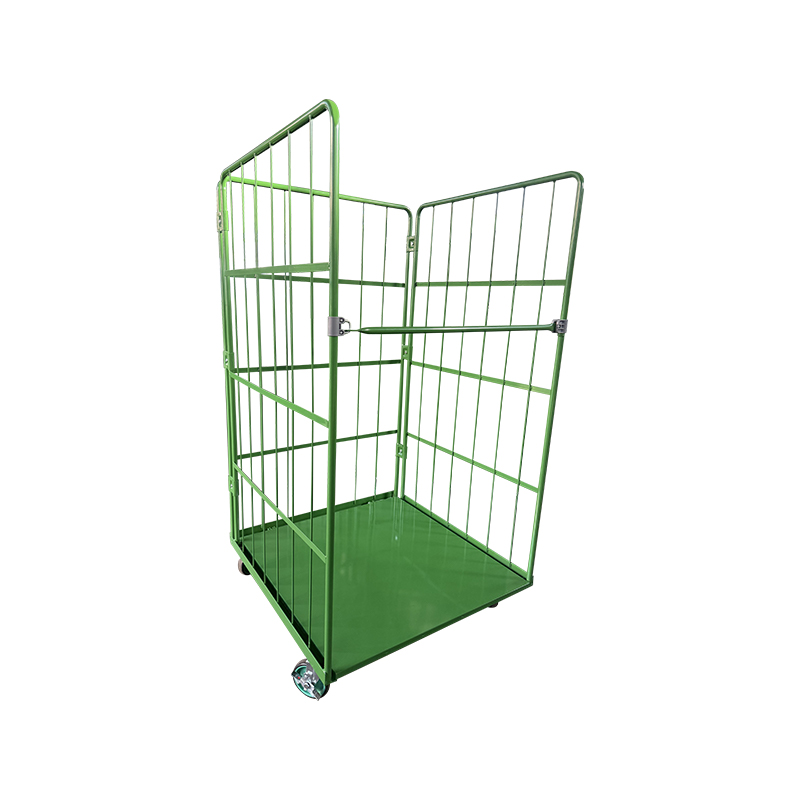
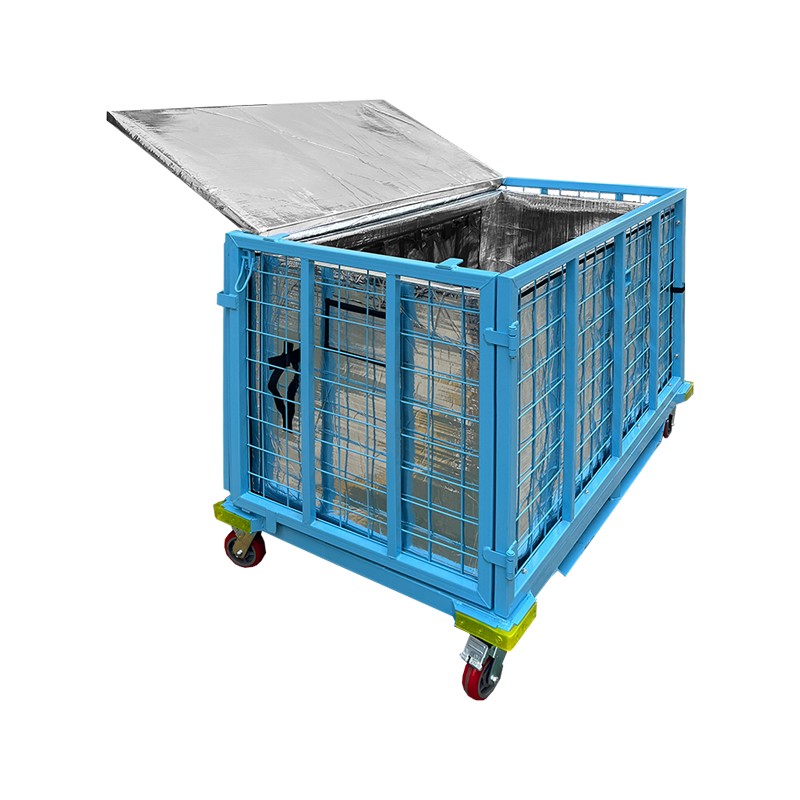
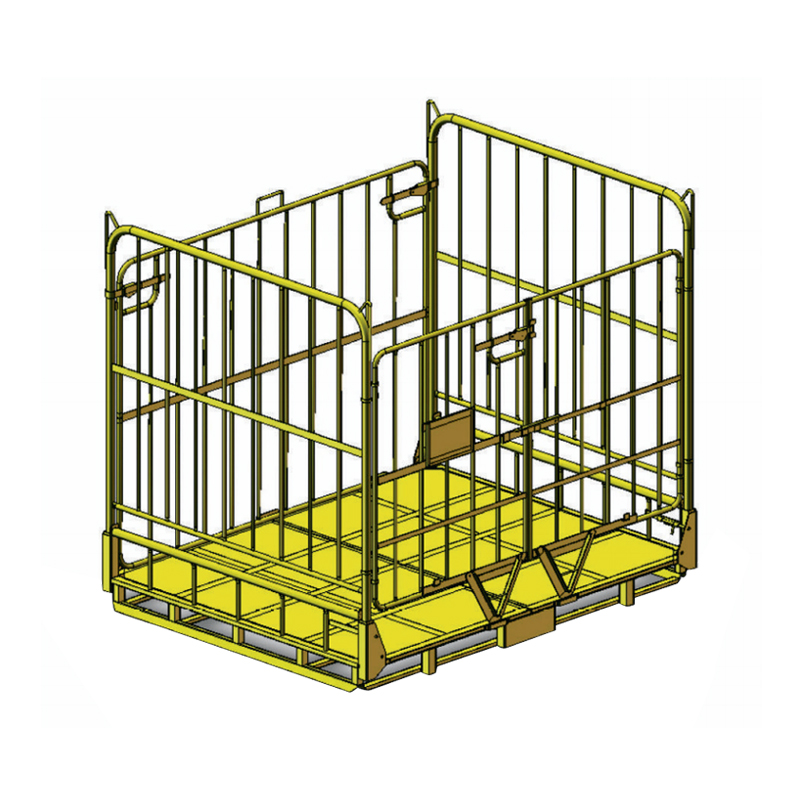 Large Steel Wire Mesh Container with Front DoorLarge folding steel mesh container with front door, stopper and self-locking latch; inspect gate clearance and secure closure for stacked access.View Product →
Stacking changes clearance. A container that opens freely on the floor may have a different gate feel once it is loaded and placed in a stack. Measure the installed stack pitch and check every tier. Mesh containers can deflect under load, which may reduce the clear opening or prevent a latch from engaging cleanly.
For directly stacked containers, confirm that the upper unit does not press on the lower gate or hinge. For containers held in stacking racks, check that a beam does not cross the gate opening. Load the lower container first, because its deflection affects the tier above. Verify gate operation after the full stack is built and again after a few handling cycles.
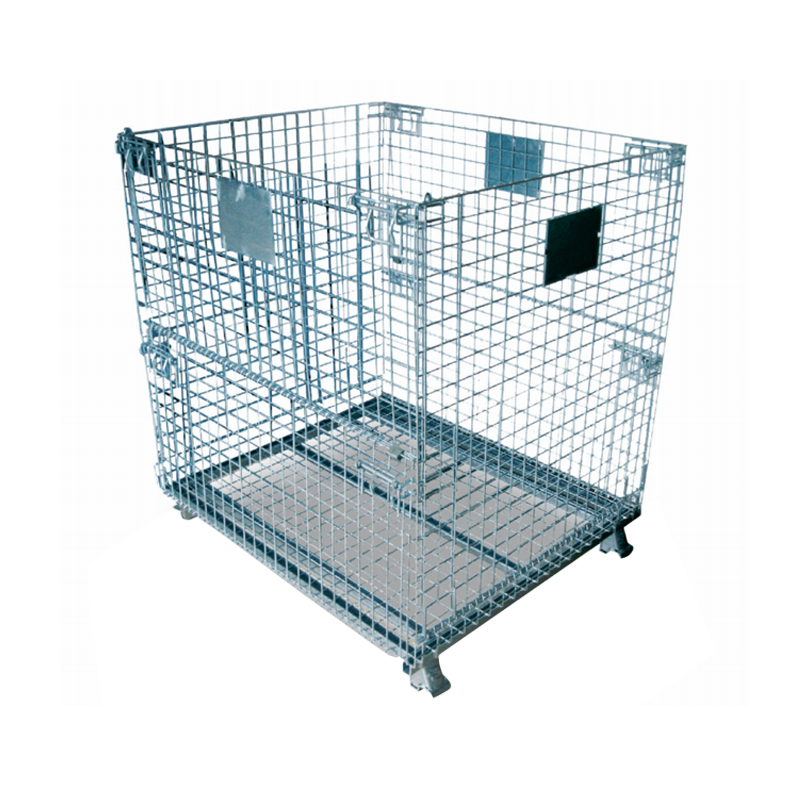 Stackable Wire Mesh Container with Front and Rear DoorsStackable wire mesh container with front and rear doors, folding design and four-layer stacking; check gate operation after stacking and handling cycles.View Product →
Opening clearance is not only a millimetre question. The picker needs a stable stance, a line of sight to the part and room to bring it out without twisting. Ideally, the gate exposes the part at a comfortable working height. If the best tier is too high or too low, change the slotting or stack configuration rather than asking the operator to reach through a tight gap.
Check with gloves, tools and the order container that will actually be used. A picker holding a scanner in one hand and a part in the other needs more room than a bare-hand test suggests. Keep latches and sharp mesh ends out of the forearm path. For repeated picks, watch the motion: if the shoulder rises, the back bends or the part rubs the gate edge, adjust the opening or the load position.
Use a repeatable sequence for every container type and stack layout:
A simple sign-off sheet with photos of the gate open at each tier will save time later. It also gives maintenance a baseline for spotting bent hinges, loose latches or deformed mesh.
Most problems come from a few avoidable assumptions:
If the part is heavy or the reach is deep, a gate alone may not solve the problem. Consider a different load orientation, a lower tier or a container with a wider access panel.
Sometimes the right answer is not a new gate but a different container. If the clear opening cannot be achieved without weakening the frame, choose a folding metal wire mesh container with a larger access panel, or move the item to a stackable container designed for the load. A wire mesh container specification guide can help you compare mesh, load and gate details before requesting a sample.
For mixed operations, standardize the gate side and opening height across the fleet where possible. That makes picking, inspection and training simpler. Where loads vary, use clear labels and a tier plan so pickers know which gate is intended for access and which panels are fixed.
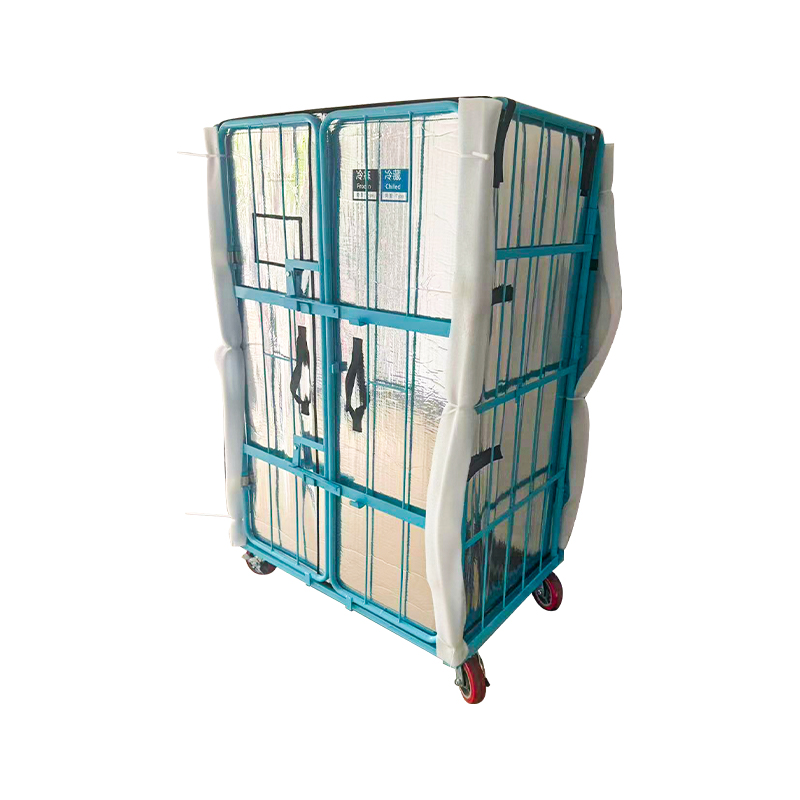
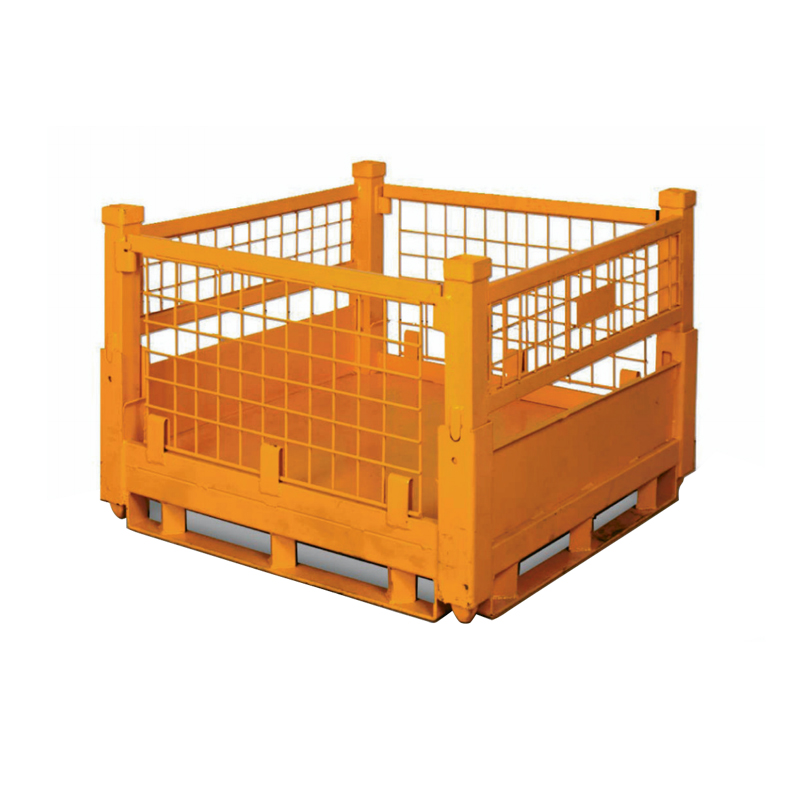 Folding Metal Wire Mesh Container with Tapered FeetFoldable stackable mesh stillage with tapered feet and powder coating; useful where consistent gate access and stable stacked storage are needed.View Product →
Finally, verify the chosen setup in the real aisle. The best gate size is the one that opens fully, exposes the part, leaves room for the picker and stays out of the way when the next task begins.
Copyright © 2024 Shanghai Betis Logistics Equipment Co., Ltd. All Rights Reserved.
 Custom Metal Storage Cages Manufacturers

 English
 中文简体
 日本語